Pet Odor Cleanup Success Story That Broke the Curse
Evangelize


August 23, 2026
The trouble started in the guest room, where a sweet-but-sour stench kept returning after every clean. The carpet looked innocent. The bedding was freshly washed. Yet the second the door closed, the room smelled like a wet dog had opened a juice bar in a locker room. This pet odor cleanup success story is for anyone who has scrubbed, sprayed, cursed softly, and realized that perfume is not the same thing as clean.
The culprit was an aging terrier, a rainy week, and a small accident nobody caught until it had dried deep into the rug. The first response was familiar: carpet powder, a heavily scented fabric spray, open windows, and wishful thinking. For roughly an hour, the room smelled like fake lavender performing an exorcism on a sewer. Then the funk rose again.
That is the rude little truth about pet odors: they do not haunt a home because you failed to add enough fragrance. They haunt it because the odor source is still there.
The Pet Odor Cleanup Success Story Behind the Smell
Pet odor is rarely one simple smell. Urine leaves behind compounds that can cling to carpet fibers, padding, upholstery, and even the floor beneath. Wet-dog odor comes from oils, moisture, and the microbial party that follows. Old pet bedding carries dander, body oils, drool, and whatever your animal dragged in after enthusiastically investigating a puddle.
When all of that gets covered with a strong air freshener, the result is not freshness. It is a chemical-scented truce that expires before dinner.
In this case, the guest-room smell became strongest near one corner of the rug. A blacklight helped narrow down the suspicious zone, though it is not magic – some cleaners, stains, and fibers can glow too. The useful clue was the nose test. The odor intensified close to the carpet, especially when the room was warm or humid. That pointed to a source embedded below the surface rather than stale air floating around the room like a cartoon ghost.
The cleanup worked because it followed the odor instead of trying to intimidate it with fragrance.
Step One: Treat the Source, Not the Air
For fresh urine, blot first. Press clean towels firmly into the affected area to lift as much moisture as possible. Do not rub it around like you are polishing a terrible decision. If the accident has reached a rug or carpet, use enough treatment to reach the same depth as the original mess. Surface-only cleaning can leave the real problem below, where it waits patiently to make your house smell suspicious again.
An enzyme cleaner is often the right first move for urine because it is designed to break down the organic material behind the odor. Follow the product directions exactly, including dwell time. This is not the moment for improvisation or a three-product chemistry experiment. Mixing cleaners can be unsafe, can damage materials, and can make a bad smell even more theatrical.
For older stains, the trade-off is time. You may need to repeat the treatment, particularly on thick carpet, upholstery cushions, or pet beds with lots of padding. If the contamination soaked through carpet backing or reached the subfloor, a professional deep clean or targeted repair may be necessary. No spray, natural or otherwise, can reverse structural damage or erase a source that is still physically trapped beneath the floor.
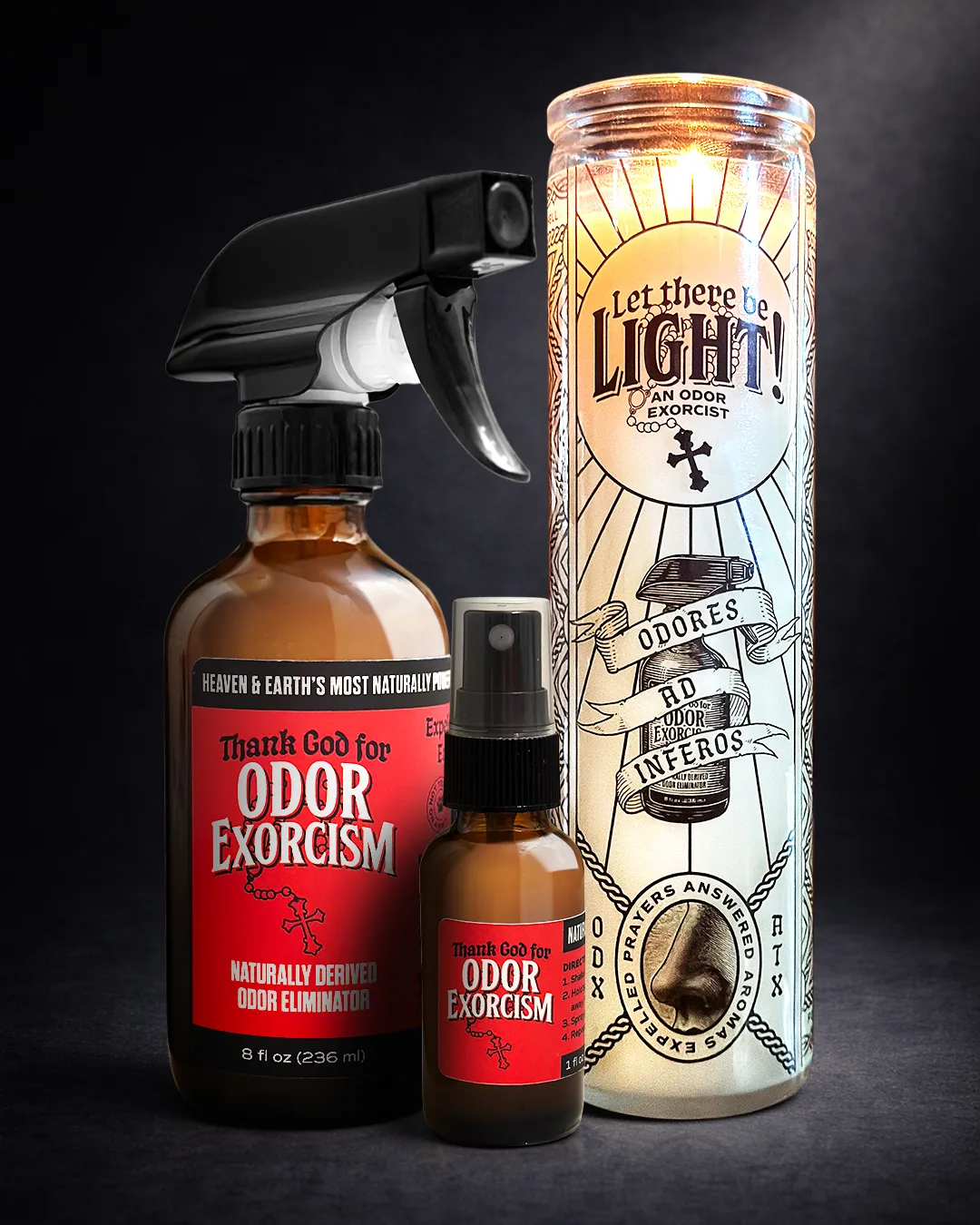
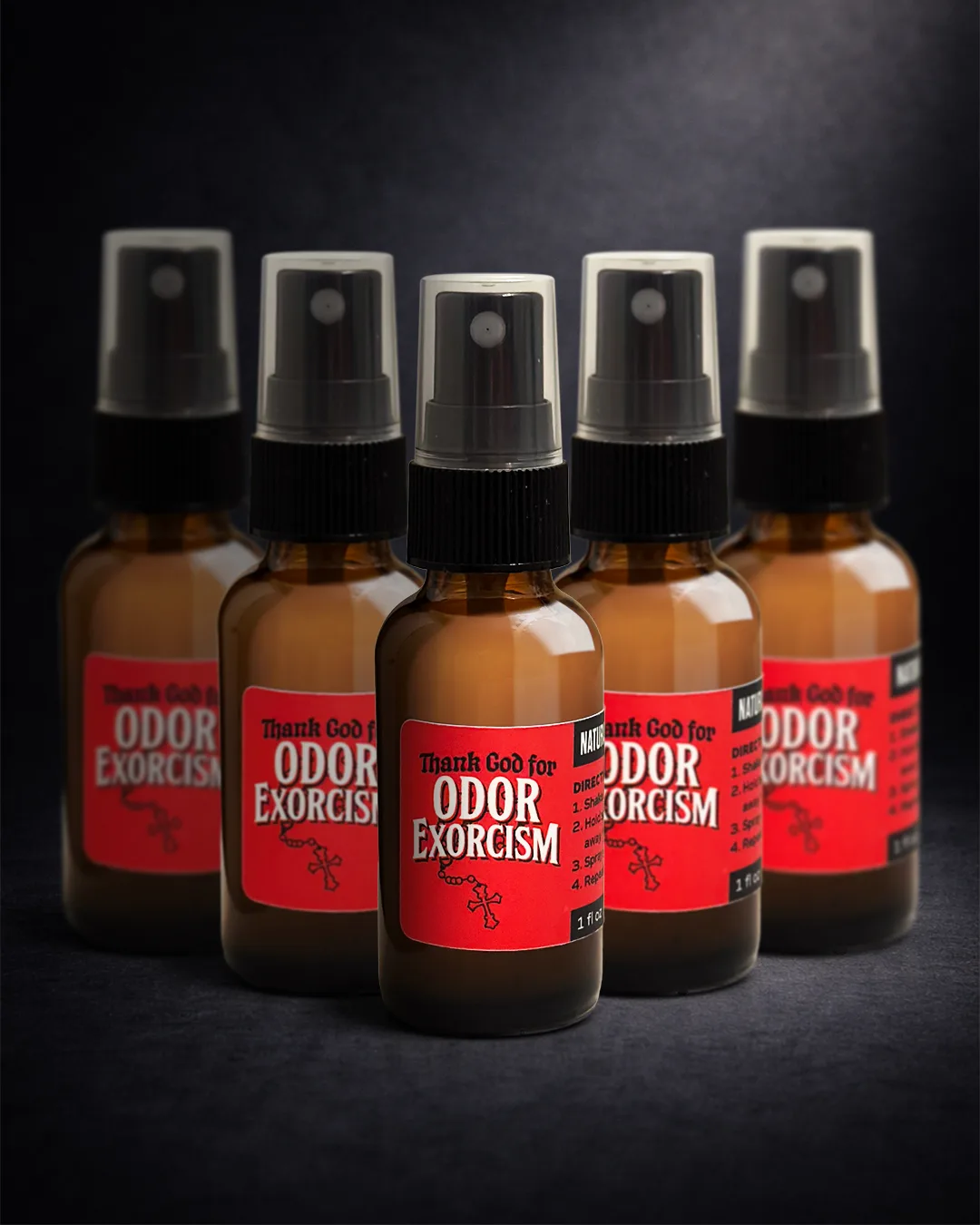
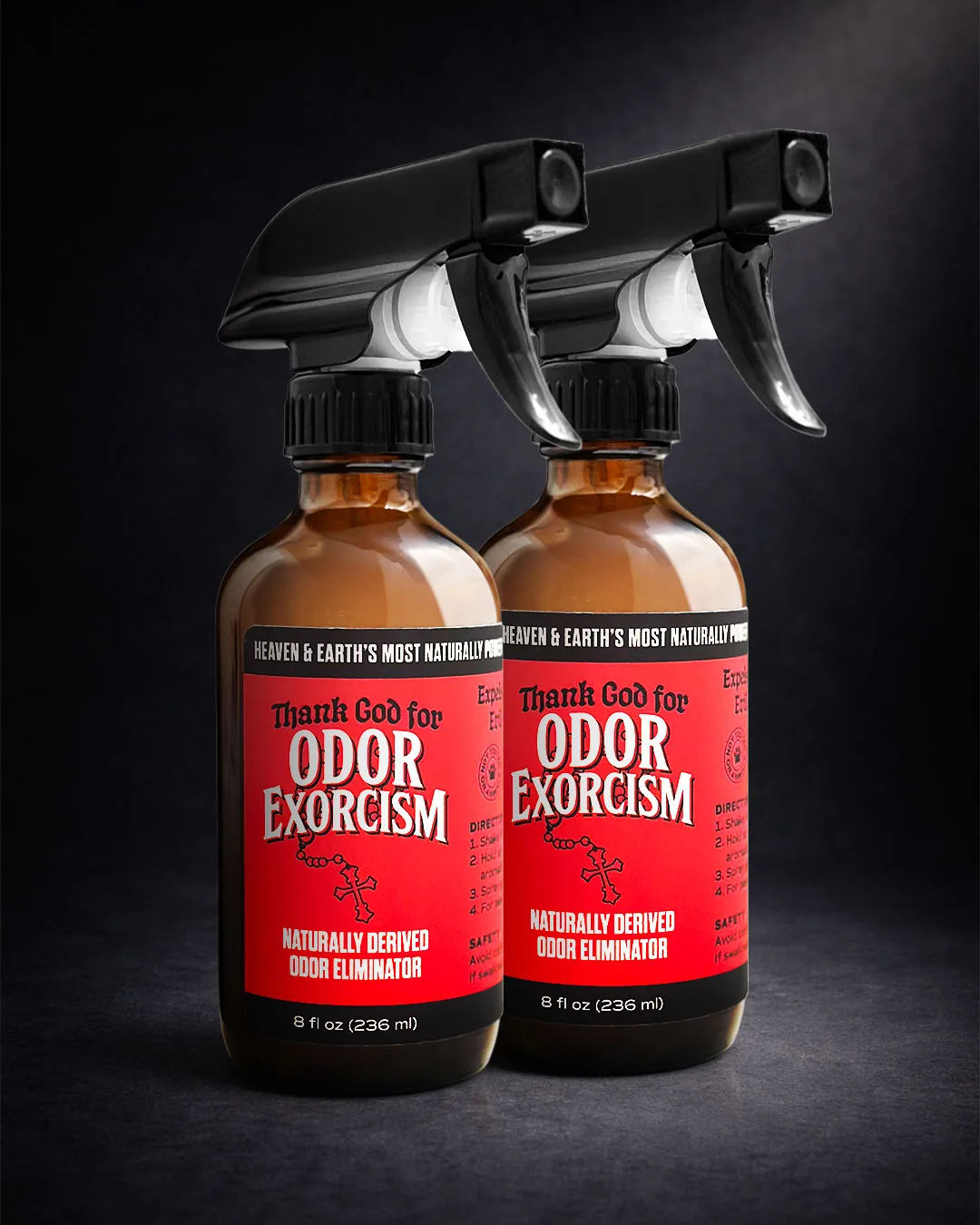
Once the source has been cleaned and allowed to dry, use an odor eliminator rather than another perfume cannon. Odor Exorcism is made for that final, deeply satisfying stage: neutralizing lingering funk on fabrics and household surfaces without filling the room with synthetic-fragrance fog. Test any spray in a hidden spot first, especially on delicate textiles, unfinished wood, or vintage upholstery.
Step Two: Clean the Places Pets Actually Touch
The guest-room rug was only part of the problem. The terrier had also claimed a throw blanket, the lower third of a linen chair, and one very unfortunate decorative pillow as his rainy-day headquarters. Cleaning the obvious spot while ignoring nearby fabrics is how a home gets trapped in the sequel.
Wash machine-safe bedding, blankets, and removable covers according to their care labels. Dry them completely. Damp fabric is an open invitation for mustiness, and no one needs another paranormal subplot. For non-washable upholstery, vacuum thoroughly before treating odor. Pet hair, dander, and dried dirt are tiny odor reservoirs with excellent job security.
Hard surfaces deserve attention too. Plastic crate trays, wood floors, baseboards, and the wall near a favorite sleeping spot can hold onto splashes, oils, and general animal atmosphere. Clean the surface appropriately first, then address any remaining odor. With finished wood, less liquid is usually wiser. Oversaturating wood can create a different household horror show involving swelling, staining, or warped boards.
Why “Smells Clean” Is Not the Goal
A home can smell aggressively floral and still have an odor problem. This matters for people who get headaches from fragrance, share small apartments with pets and kids, or simply do not want every room to smell like a department-store candle aisle during a power outage.
Masking products add a stronger scent over an existing odor. Sometimes that is enough for a quick, low-stakes situation, like a bathroom right before company arrives. But with recurring pet odor, masking is usually a bad bargain. It can make it harder to tell whether the source is gone, and the mixed scent often reads as “mystery perfume with undertones of Labrador.”
Neutralizing odors after proper cleaning gives you a cleaner read on your space. If the smell returns, you know there is more source cleanup to do. If it stays gone, you can enjoy a room that smells like itself – not like an artificial meadow fighting for its life.
The Small Habits That Kept the Curse Away
The success was not one dramatic spray-and-pray moment. It was a few realistic habits that stopped odor from building back up. The dog’s bedding went into a regular wash rotation. Towels lived by the door for rainy paws. The throw blanket was no longer treated as an heirloom object immune to laundering. And accidents were handled as soon as they were found, before they had time to settle in and start paying rent.
A quick weekly vacuum also helped. Vacuuming pulls up hair and dander before body oils and humidity turn them into a fabric-level funk festival. In homes with multiple pets, shedding breeds, or frequent rain, twice a week may be worth it. It depends on your pet, your floors, and how much chaos your household can generate before breakfast.
For litter boxes, crates, and pet beds, ventilation matters as much as product choice. Clean air needs a way to move. Crack a window when weather allows, run a fan after cleaning, and make sure washable items dry all the way through. If a pet keeps returning to the same accident spot, consider the non-cleaning side of the issue too: routine changes, anxiety, marking, mobility problems, or a health concern can all be part of the story. A sudden change in bathroom habits is worth discussing with a veterinarian.
A Better Ending Than “You Get Used to It”
By the end of the cleanup, the guest room no longer had a scent cloud waiting behind the door. It smelled like clean carpet, sun-dried bedding, and nothing in particular – which is the highest compliment a room can earn. The terrier remained delightfully ridiculous, the rainy weather continued its campaign of mud-based terror, and the cleanup routine became much less dramatic.
That is the real win in a pet odor cleanup success story. Not turning your home into a fake-fragrance cathedral. Not pretending pets do not make messes. Just finding the source, cleaning it thoroughly, neutralizing what lingers, and leaving the demons nowhere to hide.