Does Odor Spray Stain Clothes? The Honest Answer
Evangelize


September 8, 2026
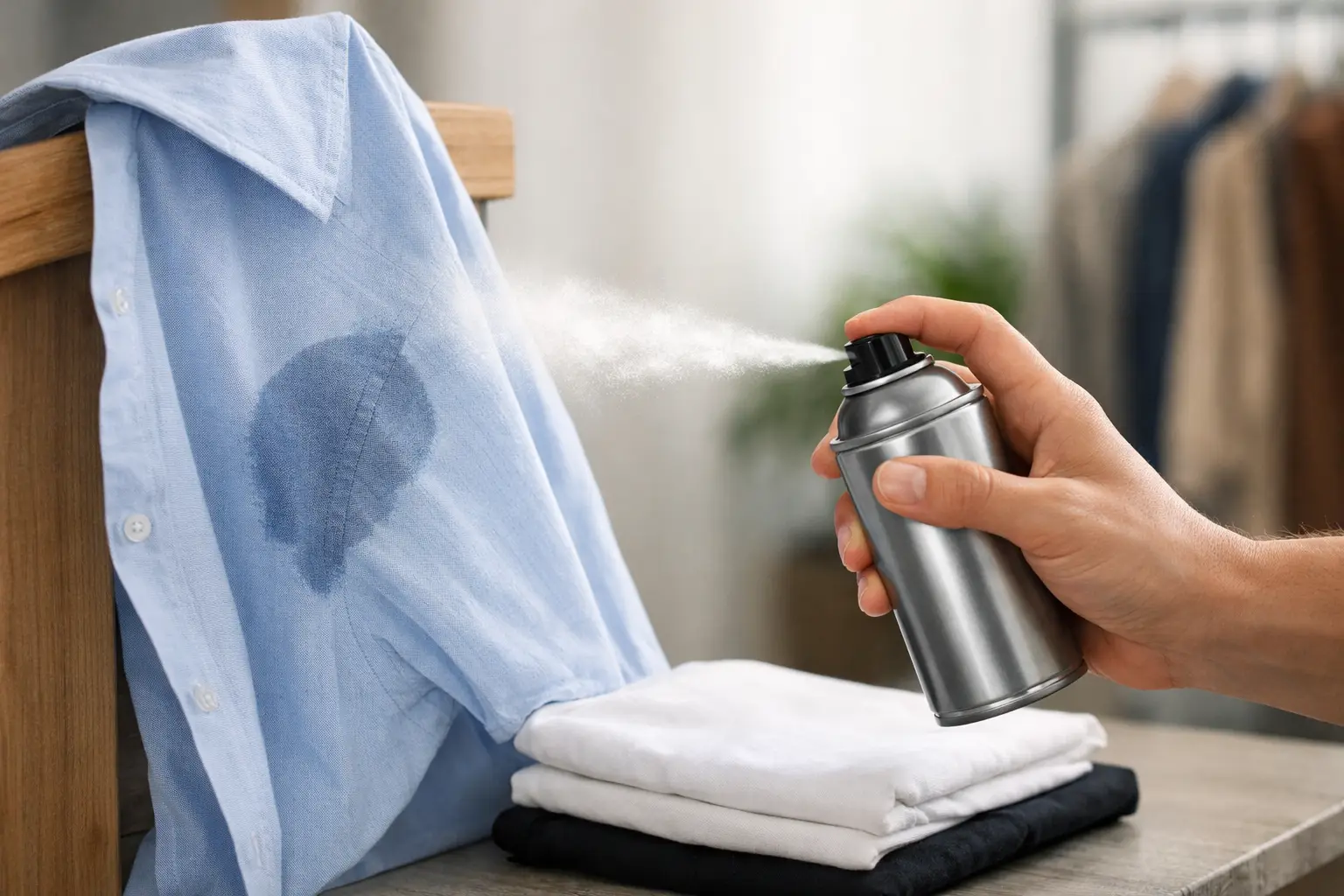
A mystery spot on a favorite shirt can make anyone suspect the nearest bottle. So, does odor spray stain clothes? Sometimes, yes – but the spray itself is not always the guilty party. Stains usually come down to the formula, the fabric, how heavily it was applied, and whether the garment already had a little invisible grime waiting to become visible.
The good news: a properly used fabric-safe odor eliminator should not turn your closet into a crime scene. The less comforting news: not every fragrance spray, room mist, or oily DIY potion belongs anywhere near silk, suede, or that cream-colored sweater you only wear when you are feeling emotionally stable.
Does odor spray stain clothes? It depends on the formula
There is a huge difference between an odor eliminator made for fabrics and a room spray that happens to smell like a haunted vanilla cupcake. Products designed for clothing, bedding, upholstery, and other soft surfaces are generally formulated to dry without leaving visible residue when used as directed. But “generally” is not a permission slip to saturate your cashmere.
The biggest staining suspects are oils, dyes, waxy ingredients, and heavy fragrance compounds. Essential oils are naturally derived, but natural does not automatically mean invisible on fabric. In high concentrations, oil-based ingredients can leave a darker spot, especially on pale, delicate, or absorbent materials. Some sprays also contain colorants that can transfer, while certain aerosol propellants or fabric treatments may leave rings or stiff patches.
Water-based sprays with no added dyes and a light, fine mist are usually the safer choice for everyday washable fabrics. That is why ingredient-aware shoppers should look past a pretty label and check what is actually inside the bottle. “Fresh linen” should describe the result, not conceal a synthetic-fragrance chemistry séance.
The fabric matters as much as the spray
Cotton tees, polyester activewear, washable blankets, and most everyday bedding can usually handle a light application better than delicate fabrics. Their fibers are more forgiving, especially if you spray from a distance and let the item air-dry completely.
Silk, leather, suede, velvet, rayon, wool, and dry-clean-only garments are a different congregation entirely. These materials can darken, develop water marks, lose texture, or react unpredictably to moisture and oils. Even plain water can leave a ring on some fabrics, so an odor spray is not the first thing to reach for.
Dark fabrics can hide a residue until it dries into a faint haze. Light fabrics may show an oily mark immediately. Upholstery can be equally dramatic: a microfiber sofa may tolerate a light mist, while a vintage velvet chair may hold a grudge for generations.
If an item has a care label, treat it like sacred text. “Dry clean only” means do not conduct an at-home chemistry experiment on it because the dog slept there once.
How to use odor spray on clothes without creating a stain
The safest approach is boringly simple, which is exactly how we prefer household maintenance. First, test the spray on an inconspicuous area, such as an inside hem, underarm seam, or hidden edge. Let it dry fully before judging the result. A spot can look harmless while wet and reveal a faint ring later.
Then hold the bottle several inches away and apply a light, even mist. You are treating odor, not pressure-washing a demon out of the fibers. Over-spraying is one of the most common reasons people see marks, especially when a spray pools instead of dispersing.
Give the garment room to dry before wearing, folding, or tossing it into a packed laundry basket. Damp fabric pressed against other clothing can transfer residue or trap odor rather than release it. Good airflow helps the spray do its job and lets you see whether a mark develops before it becomes a bigger problem.
For clothes with a strong odor – gym gear, jackets, thrifted finds, smoke-exposed layers, or the hoodie your teenager insists is “still clean” – start with a light pass. If the smell remains after drying, repeat lightly rather than soaking the fabric all at once.
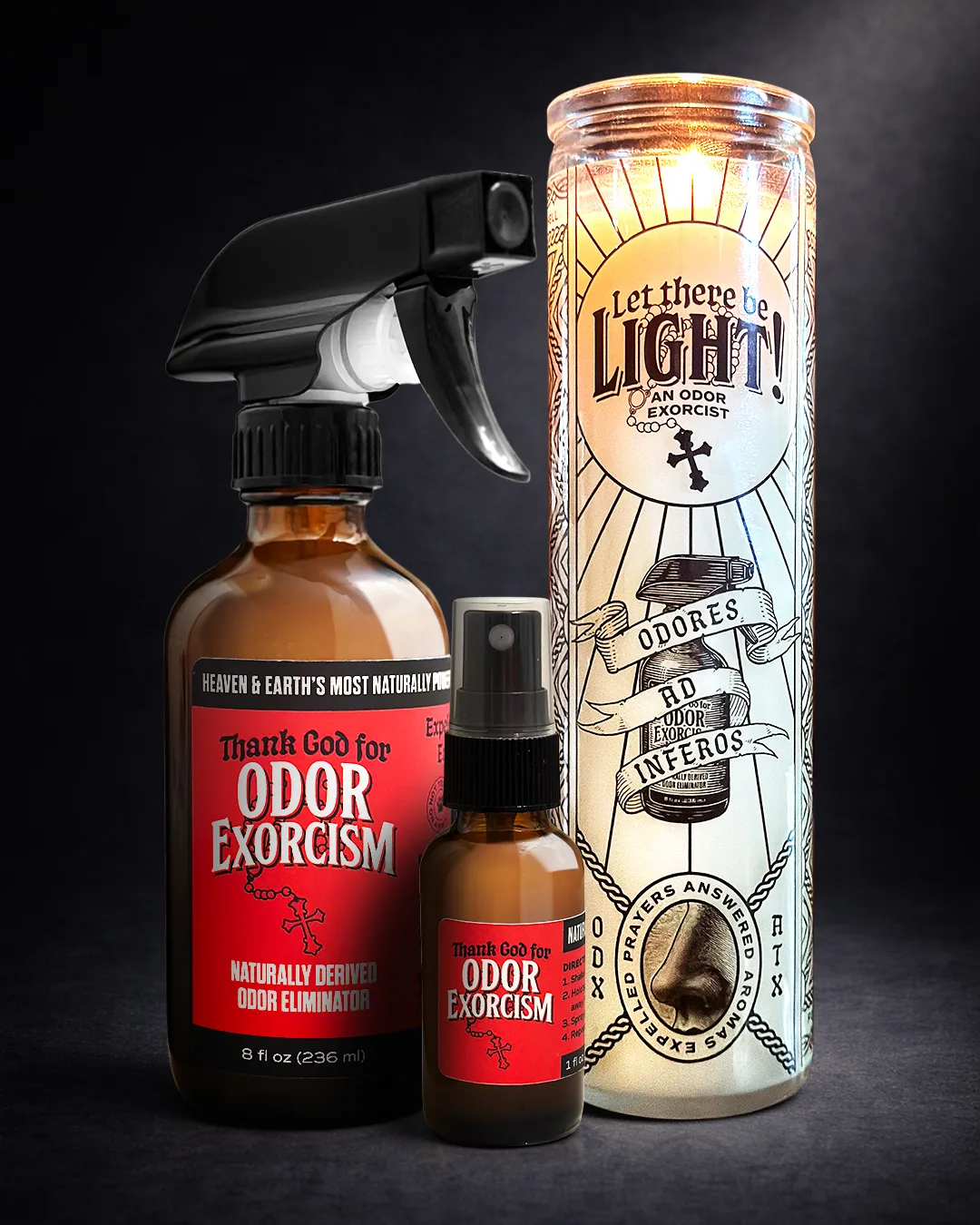
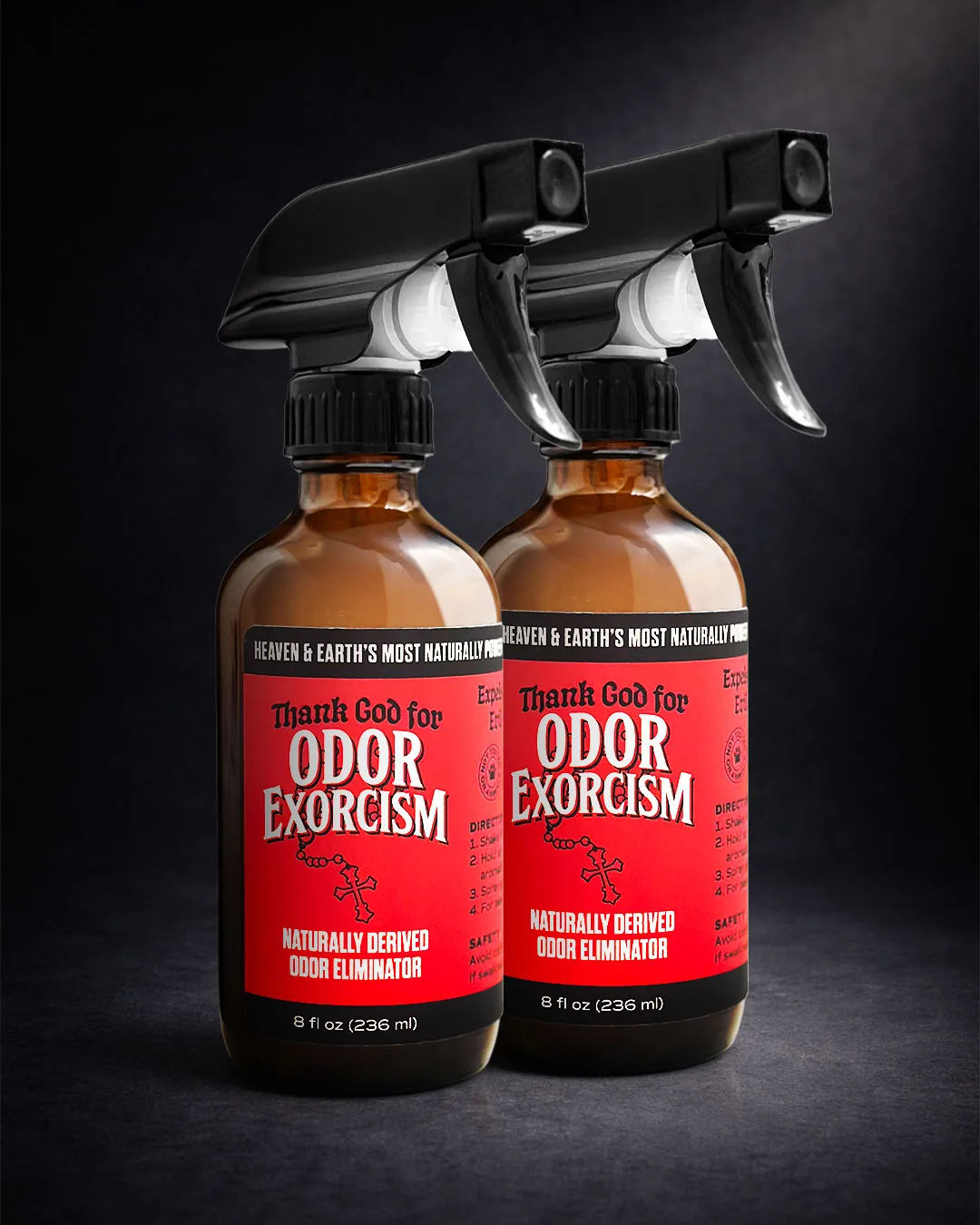
Odor Exorcism is formulated for household soft surfaces, including clothing, but the same rule still applies: test first, mist lightly, and give delicate materials the cautious treatment they deserve.
What if odor spray already left a spot?
Do not panic, and do not attack the spot with seven unrelated cleaners from under the sink. That is how a small mark gets promoted to a full-blown fabric catastrophe.
If the spray is still wet, blot gently with a clean white cloth. Do not rub. Rubbing pushes material deeper into the fibers and can spread the mark beyond its original suspicious little footprint. If the fabric is washable, rinse the area with cool water and follow the care label. A small amount of mild laundry detergent can help lift residue from many washable cottons and synthetics.
For an oily-looking spot, apply a little detergent directly to the affected area, let it sit briefly, then wash as directed. Check the garment before putting it in the dryer. Heat can set an oil-based stain, making it far more stubborn than the odor you were trying to remove.
For silk, wool, leather, suede, or anything labeled dry clean only, stop after gentle blotting and consult a professional cleaner. These fabrics are not impressed by internet folklore, dish soap heroics, or your cousin’s miracle stain hack.
Why some sprays leave rings even without oil
A ring does not always mean the formula contained oil or dye. It can happen when a fabric dries unevenly. If the center of a sprayed area dries first while moisture pushes outward, it may leave a faint outline at the edge. This is especially common on upholstery, densely woven fabric, and materials with old residue from detergent, body oils, pet dander, or previous cleaning products.
The fix is often prevention: use less product, apply it evenly, and avoid concentrating the mist in one tiny area. On larger fabric surfaces, a broad, light sweep is better than repeatedly spraying the same square inch like it owes you money.
Existing buildup can also make a safe spray look guilty. A shirt that has accumulated deodorant, fabric softener, detergent, or skin oils may react differently once moisture hits it. When possible, wash clothing before deodorizing it. Odor eliminator is excellent for refreshing between washes, but it is not meant to replace laundering a garment that has been through three workouts and an emotional support burrito.
Scent masking versus odor elimination
Some fabric products try to solve a smell problem by piling perfume on top of it. This can make clothes smell louder, not cleaner, and heavy fragrance ingredients can increase the odds of residue for sensitive users or delicate fabrics.
A true odor-focused spray aims to neutralize unpleasant smells rather than merely dress them in synthetic cologne and send them back into society. That matters for homes with pets, kids, shared laundry rooms, small apartments, and anyone who gets a headache from products that announce themselves from the next zip code.
Still, “natural” and “non-toxic” do not erase the need for smart use. Every formula is different, every fabric is different, and a patch test is a tiny inconvenience compared with replacing a shirt you genuinely loved.
A quick fabric-safety checklist
Before spraying, make sure the product is intended for fabric, the garment is colorfast and washable, and you have tested a hidden spot. Use a light mist, not a soak, then let the item dry in open air. If the fabric is delicate, structured, leather-like, suede, or dry-clean-only, skip the spray unless the manufacturer specifically says it is safe for that material.
That is not fear. That is household wisdom with a little self-preservation.
Your clothes should leave the room smelling like themselves on a very good day, not like they survived an air-freshener exorcism. Use the right formula lightly, respect the care label, and save the drama for the odors – where it belongs.