How to Deodorize Wooden Furniture Safely
Evangelize


November 4, 2026
That thrifted dresser looked like a design miracle until you opened the drawer and got hit with the scent of basement crypt. Wooden furniture holds onto odors differently than fabric or plastic. Its pores, cracks, unfinished undersides, and drawer interiors can trap years of smoke, mildew, pet accidents, perfume, and mysterious former-owner decisions.
To deodorize wooden furniture without damaging the finish, you need to deal with the odor source rather than blasting it with a fake floral fog. Wood deserves better than being scented into submission. So do your sinuses.
First, identify what foul spirit moved in
The smell tells you a lot about what the furniture needs. A stale, dusty smell may simply be trapped debris and old indoor air. Musty odors often point to excess moisture, mildew, or a piece that spent too long in a damp garage. Cigarette smoke is especially clingy because its residue settles into wood grain, drawer bottoms, and hardware.
Pet urine is its own demon. If urine soaked into unfinished wood, particleboard, or drawer interiors, a quick surface wipe will not solve much. You may need repeated treatment, proper drying time, and in severe cases, sealing the affected area after it is fully clean and odor-free.
Before you clean, take the furniture outside or into a well-ventilated space if possible. Open every drawer and cabinet door. Your first goal is to stop the odor from being trapped in a tiny wooden cave.
How to deodorize wooden furniture without wrecking it
Start gently. The finish on a vintage nightstand, a painted cabinet, and an unfinished pine bench do not have the same tolerance for moisture or cleaning products. When in doubt, test any method on an inconspicuous spot first, preferably beneath a drawer or along the back edge.
Remove dust, crumbs, and old residue
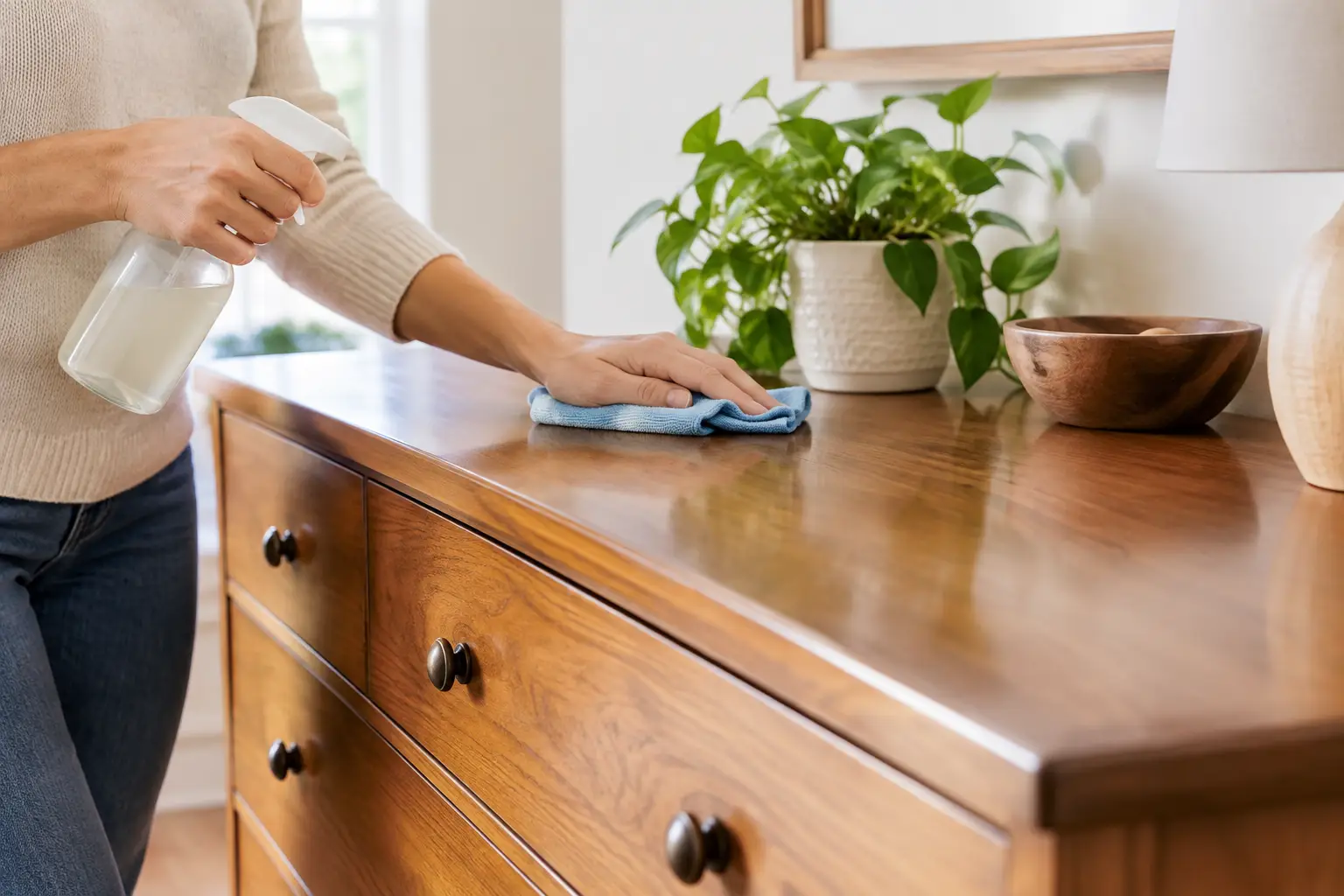
Vacuum drawer seams, corners, grooves, and cabinet interiors with a brush attachment. Then wipe finished wood with a soft microfiber cloth that is barely damp, not soaking wet. A little mild dish soap diluted in water can help lift grime, but wring the cloth out thoroughly and dry the surface right away.
Why the fuss? Too much water can swell wood, loosen veneer, leave water marks, or worsen the mildew problem you are trying to banish. Wood is not a bathtub. Treat it accordingly.
For sticky buildup from smoke, cooking grease, or old furniture polish, use a wood-safe cleaner according to its directions. Avoid harsh bleach, abrasive scrubbers, and mystery chemical cocktails. They can strip a finish faster than you can say, “Why is my dresser turning cloudy?”
Let fresh air do some holy work
Once the piece is clean, air it out for at least several hours. A shaded, dry, breezy location is ideal. Direct hot sun can fade finishes, dry out wood, and cause warping, especially with antiques or veneered furniture. Think fresh air, not desert punishment.
For drawers, remove them and stand them upright so air can circulate around all sides. If the odor is mild, this step alone can make a dramatic difference. Furniture that has been closed up for months often just needs a little atmospheric redemption.
Use odor absorbers inside drawers and cabinets
For lingering smells, place an open bowl of baking soda, activated charcoal, or odor-absorbing mineral packets inside the furniture. Close the drawers or doors and leave the absorber in place for 24 to 72 hours. Replace it if the smell remains strong.
Activated charcoal is often the better choice for heavy stale or smoky odors because it adsorbs odor compounds rather than simply adding a competing scent. Baking soda can help too, though it is not a miracle worker for deeply embedded smoke or urine.
Do not sprinkle baking soda directly into drawer tracks, cracks, or unfinished grain. You may spend the next six months finding little white ghosts in every corner.
Neutralize odor, then let the wood dry fully
A non-toxic odor-neutralizing spray can be useful on sealed wood, painted wood, laminate surfaces, and drawer interiors, as long as you use it lightly and test first. The goal is to neutralize the odor molecules on the surface, not saturate the wood until it feels like a swamp.
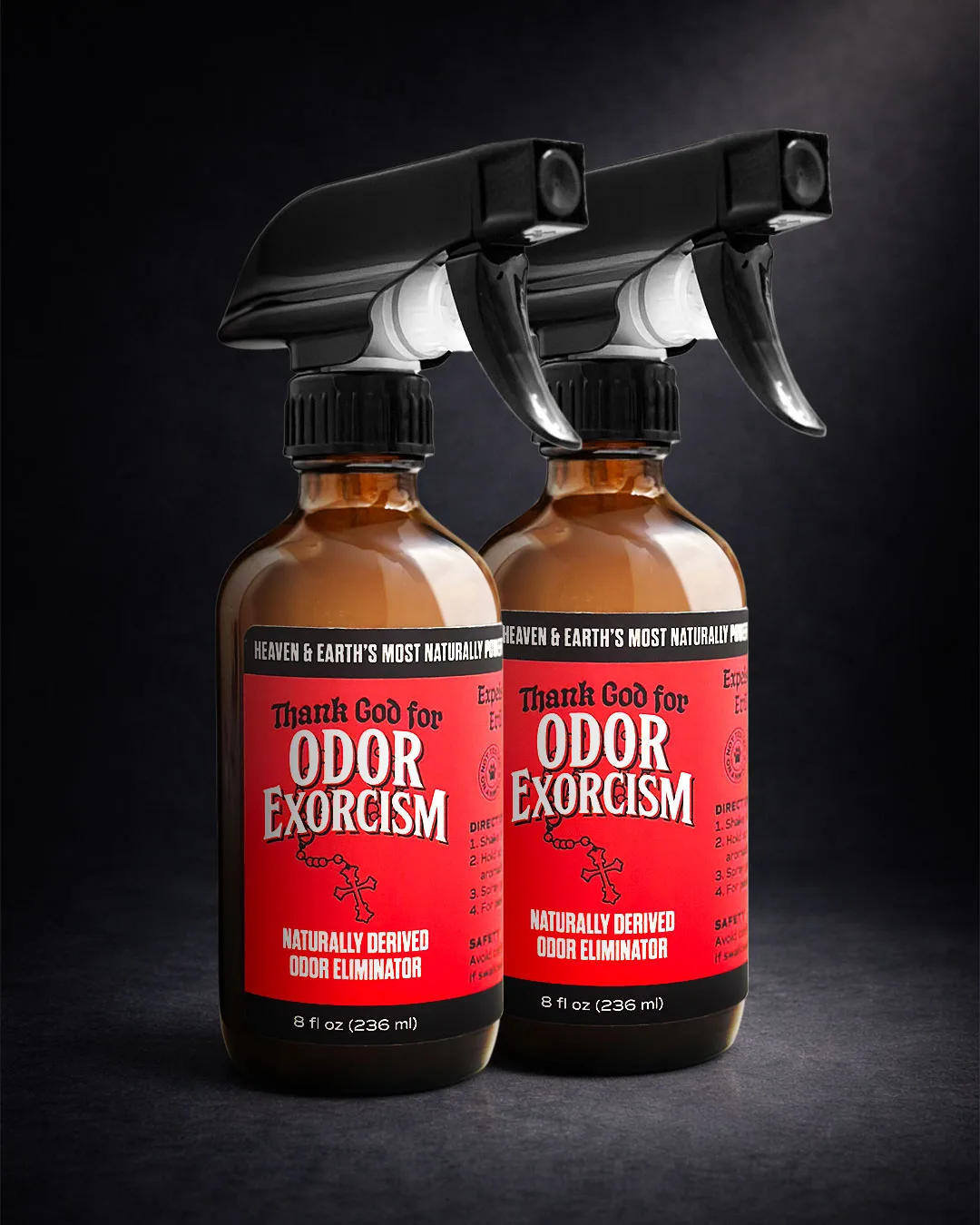
Odor Exorcism is made for the kind of household stench that thinks it can squat forever. Apply a light mist to a cloth or test area first, wipe gently when needed, and allow the furniture to air-dry with drawers open. For antique, unfinished, waxed, or delicate wood, keep product use minimal and favor dry deodorizing methods unless a furniture-care professional recommends otherwise.
When the smell is musty, smoky, or unmistakably pet-related
Some odors require more than one round of cleaning. That is not failure. That is just wood being wood: porous, stubborn, and occasionally possessed.
Musty furniture and mildew concerns
If you see visible mold or mildew, wear gloves and a well-fitting mask before handling the piece. Clean the surface carefully with an appropriate wood-safe mildew cleaner, following the label directions. Then address the environment that caused it. A damp basement, humid storage unit, or leaky wall can reintroduce the problem no matter how enthusiastically you clean.
Run a dehumidifier in the room if humidity is high, improve air circulation, and make sure the furniture is completely dry before putting items back inside. If the musty smell returns quickly, inspect the back panel, underside, and nearby wall for moisture damage.
Smoke odor that will not quit
Smoke residue is clingy and annoying, like an unwanted party guest with a fog machine. Clean every reachable surface, including the underside, drawer bottoms, backs, and hardware. Let the piece air out, then use charcoal absorbers in closed compartments for several days.
If smoke odor remains after multiple cleaning and airing cycles, the inside surfaces may need a stain- and odor-blocking sealer. This is usually a last resort, particularly for valuable vintage furniture. Sealing can change appearance, so consult a restoration professional for antiques, heirlooms, or fine veneers.
Pet urine in wood furniture
For fresh urine, blot immediately with clean cloths. Do not rub, which pushes moisture deeper into the grain. For old odors, an enzyme cleaner formulated for pet urine may help, but test it first and use only as directed. Enzymes need contact time to work, while wood needs protection from excess liquid. That is the trade-off.
If the urine reached raw wood or particleboard and the odor is powerful, removing or replacing a drawer liner, backing panel, or damaged section may be more realistic than endlessly spraying over it. A clean home is not built on denial, no matter how cute the dresser is.
What not to use on wooden furniture
Skip fragrance-heavy air fresheners. They can make the room smell like lemon smoke or lavender litter box, which is not an upgrade. Scent masking does not remove the source, and synthetic fragrance can be a dealbreaker for people with sensitivities, pets, or a low tolerance for chemical perfume clouds.
Also avoid soaking wood with vinegar, hydrogen peroxide, alcohol, or essential oils. Some of these products have a place in household cleaning, but they can discolor finishes, dull sheen, dry out wood, or leave their own lingering scent. A little vinegar may be tolerated by some sealed finishes, but it is not automatically safe just because it lives in your pantry.
Keep the odor from staging a comeback
Once your furniture smells normal again, keep drawers and cabinets dry and reasonably ventilated. Do not store damp towels, sweaty gym clothes, wet shoes, or pet bedding inside. Use drawer liners that can be washed or replaced, especially in entryway benches and mudroom storage.
If you live somewhere humid, charcoal packets in enclosed furniture can be a smart maintenance move. For pieces in basements, garages, or vacation homes, periodic airing prevents that stale closed-up smell from building its little kingdom.
The best way to deodorize wooden furniture is patient, targeted care: clean the residue, dry the piece, absorb what remains, and stop the moisture or mess that fed the odor in the first place. Give the wood a little air, a little respect, and absolutely no fake-perfume exorcism theater from the grocery aisle. The furniture can keep its character. The smell can go straight to hell.