What Absorbs Bathroom Odors Best? 6 Real Answers
Evangelize


August 18, 2026
A bathroom can look spotless, have fresh towels folded like a hotel display, and still smell like something unholy is hiding behind the toilet. So, what absorbs bathroom odors best? The honest answer is not one magic jar of powder. It depends on whether the smell is floating in the air, clinging to damp fabric, lurking in a drain, or issuing a formal threat from the trash can.
The best odor fix starts with identifying the sinner. Absorbers can help with lingering smells, but they cannot absolve a dirty toilet rim, a mildew-soaked bath mat, or a drain full of biofilm. Let’s separate the useful odor fighters from the scented distractions that merely put a floral veil on the demon.
What Absorbs Bathroom Odors Best?
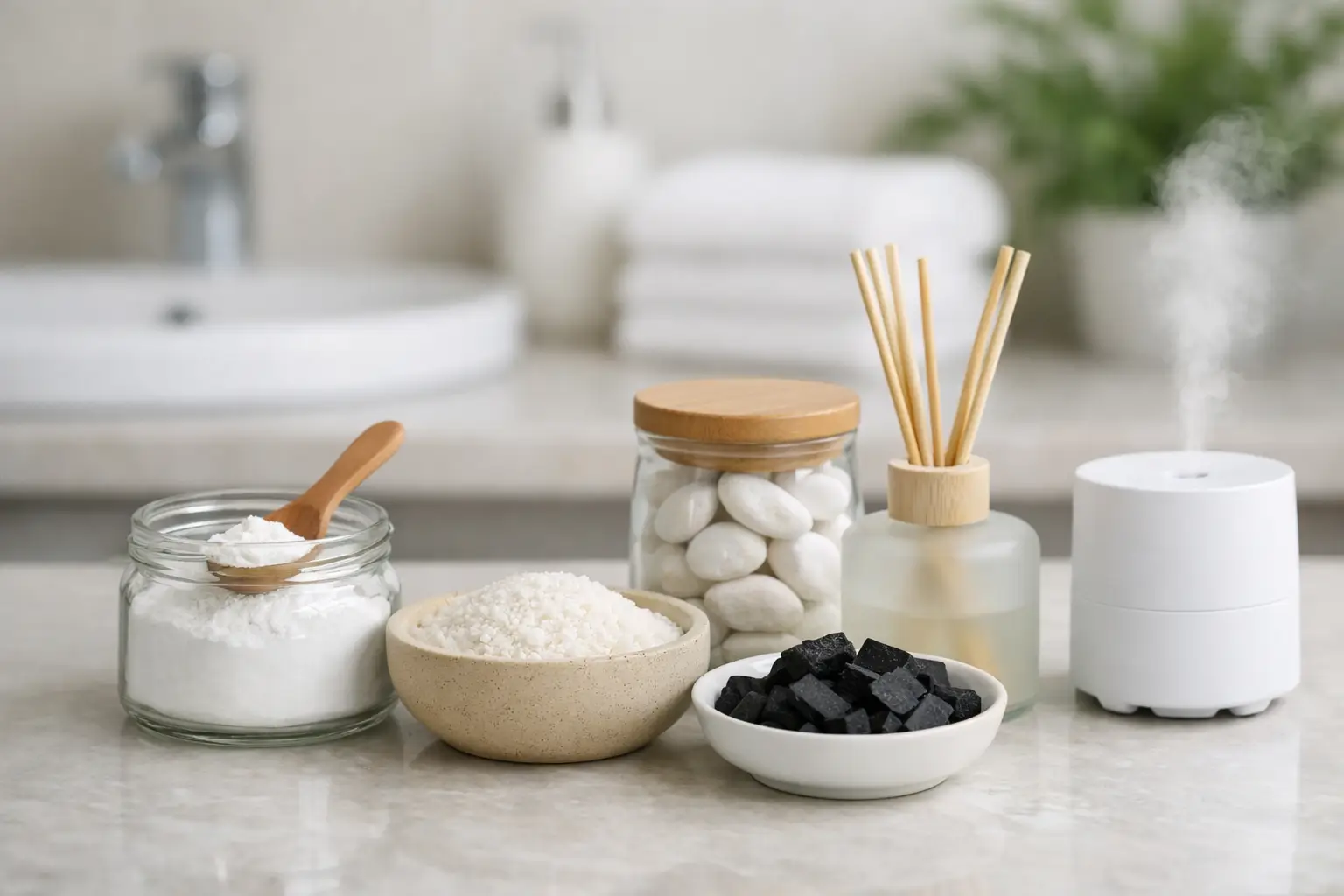
For everyday bathroom funk, activated charcoal is usually the strongest passive odor absorber. It has a highly porous surface that can hold onto many odor-causing compounds, and it works without adding fragrance to the room. Put charcoal in a breathable pouch near the toilet, trash can, or laundry hamper, and it can quietly reduce the stale-air situation.
But charcoal works slowly. It is a background player, not an emergency priest. If someone has just turned a small bathroom into a crime scene, charcoal will not restore peace in 30 seconds.
Baking soda is another reliable option, especially in a small open container near the trash or tucked into a cabinet where moisture and stale smells collect. It can help neutralize certain acidic odors and is cheap enough to replace regularly. Its weakness is moisture: once baking soda gets damp or packed down, it becomes far less useful.
For moisture-heavy bathrooms, moisture control may matter more than either charcoal or baking soda. A dehumidifier, working exhaust fan, and dry towels stop the damp conditions that feed mildew and musty odors. The smell may seem like an air problem, but it is often a humidity problem wearing a nasty little disguise.
Absorbing Smells Is Not the Same as Eliminating Them
This is where plenty of air fresheners get theatrically suspicious. They add a strong fragrance over a bad smell and call it a day. The result is often lavender mixed with toilet, which is not the spa experience anyone requested.
Odor absorbers remove or reduce odors gradually. Odor-eliminating sprays are meant to neutralize odor molecules on contact, especially on the surfaces where smells settle and linger. That distinction matters in a bathroom full of fabrics, porous grout, plastic trash cans, and damp towels.
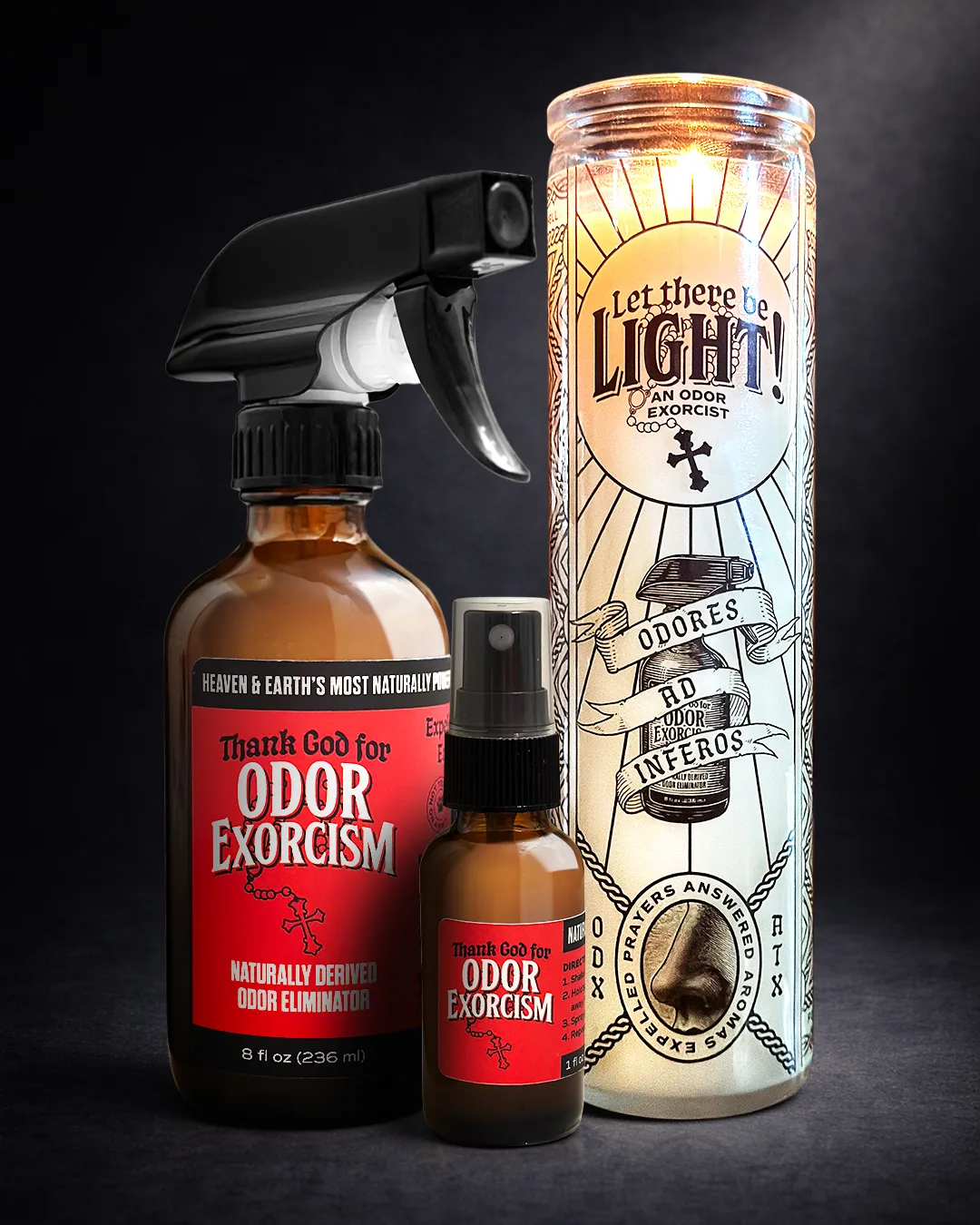
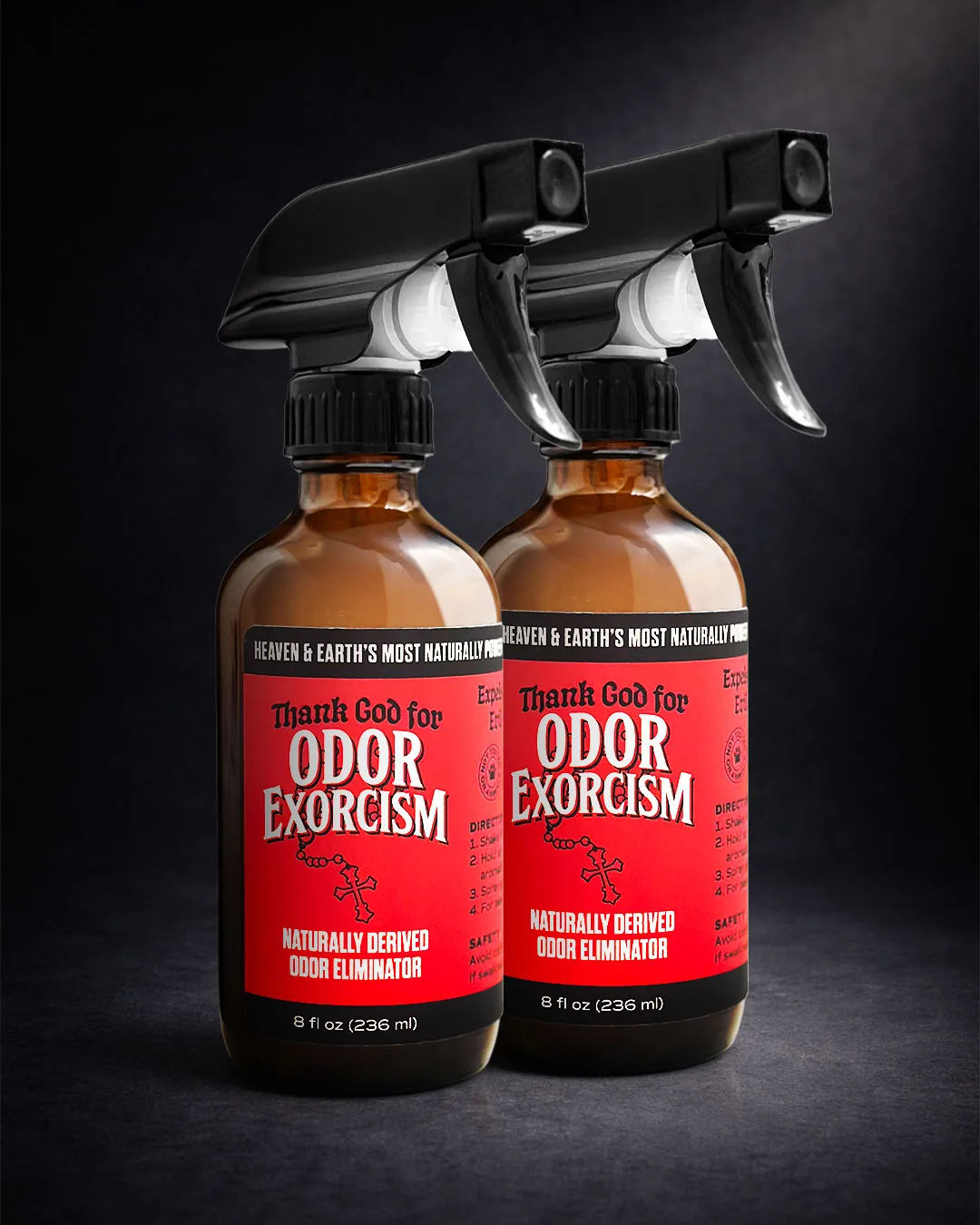
If the odor is trapped in a bath mat, shower curtain, hand towel, fabric hamper, or the outside of a trash can, spraying the room alone will not do much. The source needs attention. A naturally derived odor eliminator spray such as Odor Exorcism can be useful between washes or cleanings on appropriate soft and hard surfaces, helping banish the smell instead of trying to perfume it into submission.
That does not replace cleaning. Think of it as backup in the exorcism, not permission to ignore the possessed laundry pile.
The Best Fix Depends on the Type of Bathroom Smell
For toilet odors: Ventilation and fast neutralization
A quick burst of ventilation is your first move. Run the exhaust fan during and after bathroom use, or crack a window if you have one. Air movement pulls odors out instead of letting them settle into towels, rugs, and shower curtains.
For immediate odor control, an odor-neutralizing spray can work faster than a passive absorber. Charcoal can stay in the room to manage lingering background odor, but it cannot respond in real time. Keep the toilet clean, including the exterior base, underside of the seat, hinges, and floor around it. Those neglected areas often keep contributing to the smell long after the obvious mess is gone.
For musty odors: Dry the room before you scent it
Mustiness is commonly a moisture warning. Wash bath mats and towels, hang them so air reaches both sides, and do not leave wet laundry marinating in a closed hamper. Check the shower curtain liner for mildew, and look at caulk, grout, and the ceiling around the shower for signs of persistent dampness.
Use the exhaust fan for at least 20 minutes after a shower. If the fan barely whispers but does not move air, it may need cleaning, repair, or replacement. A charcoal pouch can help manage residual odor, but the long-term cure is getting moisture out before mildew moves in and starts paying rent.
For drain odors: Clean the drain, not just the room
A drain that smells like sewer gas, rot, or wet socks is not asking for a candle. It is asking for maintenance. Hair, soap residue, skin oils, and bacteria can form a smelly layer inside the drain and overflow channel.
Start by removing visible hair and debris. Clean the drain stopper and the overflow opening, then flush according to the fixture manufacturer’s guidance. If a drain is rarely used, its water trap can dry out and allow sewer gases to enter. Running water for a minute may restore that barrier. Persistent sewer smells, slow draining, leaks, or gurgling are signs to call a plumber – no amount of baking soda should be asked to perform a plumbing miracle.
For trash-can odors: Wash the container itself
Bathroom trash is small but mighty in the worst possible way. Used tissues, hygiene products, dental floss, and damp packaging can create concentrated odors fast. Empty it frequently, especially in a windowless bathroom, and wash the inside of the can rather than only changing the liner.
After it is clean and fully dry, a small charcoal pouch nearby can help. You can also put a small amount of baking soda in the bottom beneath the liner, provided the can stays dry. If it gets wet, replace it rather than letting it turn into a sad, chalky swamp.
The Bathroom Odor Fighters Worth Keeping Around
If you want a practical setup without turning the vanity into an aisle of chemical fog, keep a few tools with distinct jobs:
- Activated charcoal pouches for passive, fragrance-free odor control near the trash, toilet, or hamper.
- Baking soda for dry cabinets, trash-can bottoms, and other low-moisture spots.
- An odor-neutralizing spray for surfaces and fabrics that hold onto smells between full cleanings.
- A working exhaust fan or small dehumidifier to prevent dampness from creating the next odor problem.
- Washable bath mats, towels, and shower liners that are cleaned before they become a fungal congregation.
None of these needs to perfume the room. In fact, if you are ingredient-conscious or sensitive to heavy synthetic fragrance, less fragrance can be a major advantage. A bathroom should smell clean, not like a candle store lost a fight with a public restroom.
Common Mistakes That Keep Bathroom Odors Alive
The first mistake is treating every smell as an air problem. Odors cling to fabric and porous surfaces, so a freshly sprayed room can smell fine for five minutes while the bath mat continues plotting its comeback.
The second is relying on one absorber forever. Charcoal pouches need refreshing or replacing according to their instructions. Baking soda needs replacement when it hardens, gets wet, or has been sitting around for months. Even the holiest odor absorber eventually reaches capacity.
The third is sealing in humidity. Closing the bathroom door immediately after a hot shower traps moisture on walls, mirrors, towels, and textiles. Let the room vent. Your future nose will be grateful.
Finally, do not ignore a sudden or severe sewage-like odor. That can point to a dry trap, failed wax ring, venting issue, or another plumbing concern. Household odor products are useful for everyday funk, but they are not a substitute for solving a real mechanical issue.
A calm, clean-smelling bathroom is less about drowning the place in fragrance and more about a simple ritual: remove moisture, clean the source, ventilate the room, and use absorbers or neutralizers for the residue. The demons hate a routine.