Trash Odor Removers That Fight the Real Funk
Evangelize


October 21, 2026
A trash can can go from perfectly innocent to sulfurous nightmare with shocking speed. One chicken package, a few coffee grounds, and a forgotten produce scrap can summon a smell that seems to have its own lease agreement. The best trash odor removers do not just toss a floral curtain over the crime scene. They deal with the odor itself, while helping you keep the bin from becoming a tiny indoor swamp.
That distinction matters. A heavily perfumed spray may make your kitchen smell like tropical garbage instead of regular garbage. Not exactly the domestic serenity anyone ordered. If you are ingredient-conscious, have pets or kids around, live in a small apartment, or simply refuse to inhale a chemical fog every time you throw something away, the right approach is less about overpowering fragrance and more about practical odor control.
Why Trash Smells So Unholy
Trash odor is not one smell. It is a rotating cast of microscopic villains. Food waste breaks down, bacteria feed on moisture and organic material, and gases build up in the enclosed, warm environment of a bin. Meat, dairy, seafood, onions, old leftovers, pet waste, and soggy paper products are especially talented at making a room feel cursed.
The can itself often becomes part of the problem. Leaks seep beneath the bag. Sticky residue clings to the lid, rim, and interior walls. Even after the trash goes out, that residue keeps producing funk. A fresh liner over a dirty bin is like putting a clean sheet on a haunted mattress. Nice effort. Wrong target.
Humidity, heat, and time all make things worse. A covered kitchen can holds odors more tightly than an open one, but an open can releases them more freely into the room. Neither setup is magical if wet garbage sits around for days. The goal is to reduce the source, clean the surfaces that hold odor, and use a true odor eliminator where it makes sense.
What Good Trash Odor Removers Actually Do
There are several kinds of trash odor removers, and they are not interchangeable. Some absorb odors, some add fragrance, and some are designed to neutralize odor molecules. The best choice depends on where the smell lives and how bad the situation has become.
Absorbers help with ongoing maintenance
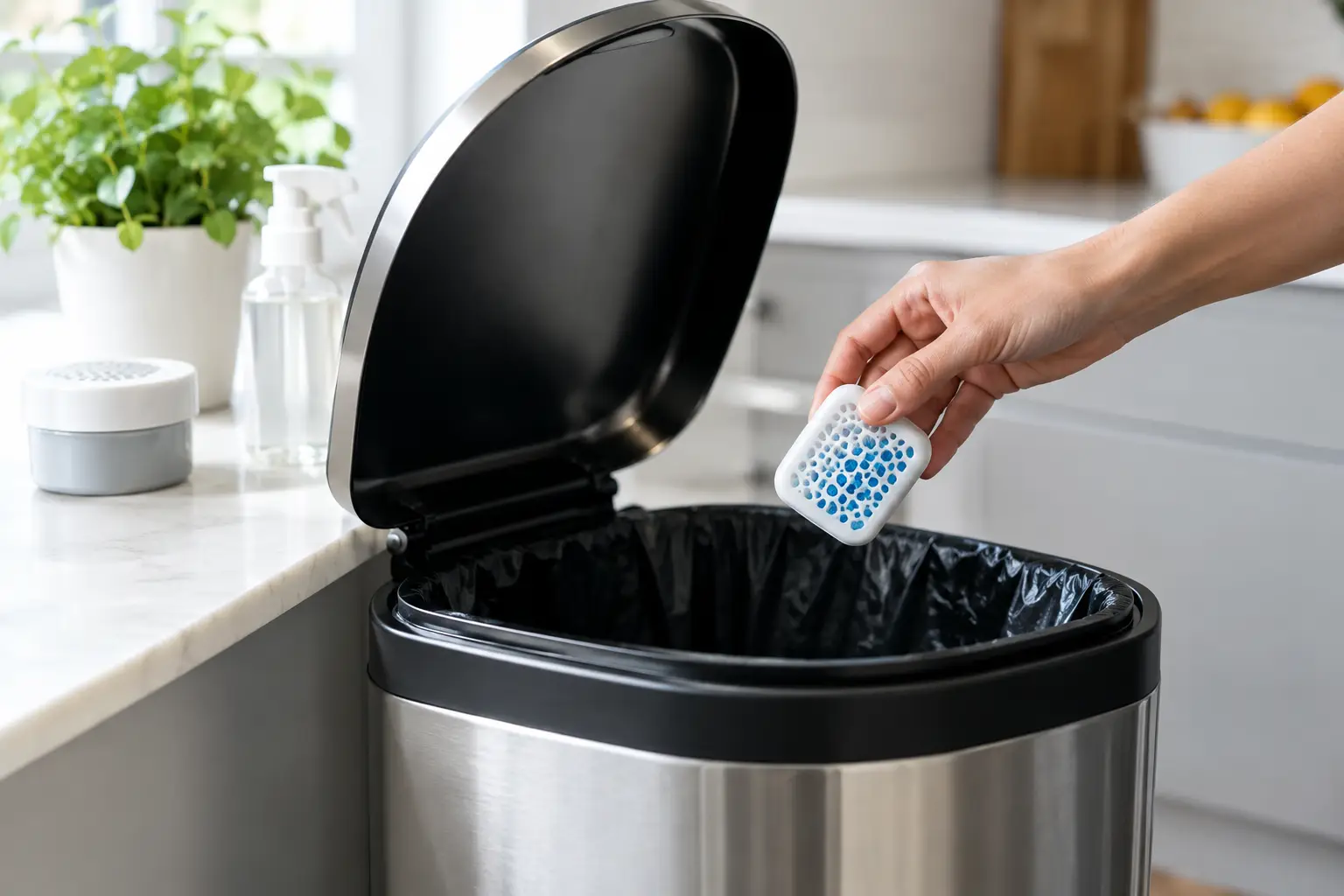
Baking soda, activated charcoal, and certain odor-absorbing inserts can help reduce low-level odors inside a dry or mostly dry bin. They are useful as support players, especially in bathroom cans, diaper pails, or under-sink trash where air circulation is limited.
Their weakness is that they do not clean up a spill or remove greasy residue. They can also become less effective once saturated. If the bin smells foul even when empty, an absorber alone is not going to perform an exorcism.
Fragrance only changes the soundtrack
Scented trash bags, plug-ins, and conventional air fresheners may make the area smell stronger, but stronger is not always better. Many are built to mask odors with synthetic fragrance. That can be irritating for fragrance-sensitive households, and it does nothing to address the gunk breeding under the liner.
A light, clean scent can be pleasant after the source has been handled. It should not be your whole strategy. If a product makes the room smell like lavender wrestling fish juice, the demon remains employed.
Neutralizing sprays target the surfaces holding funk
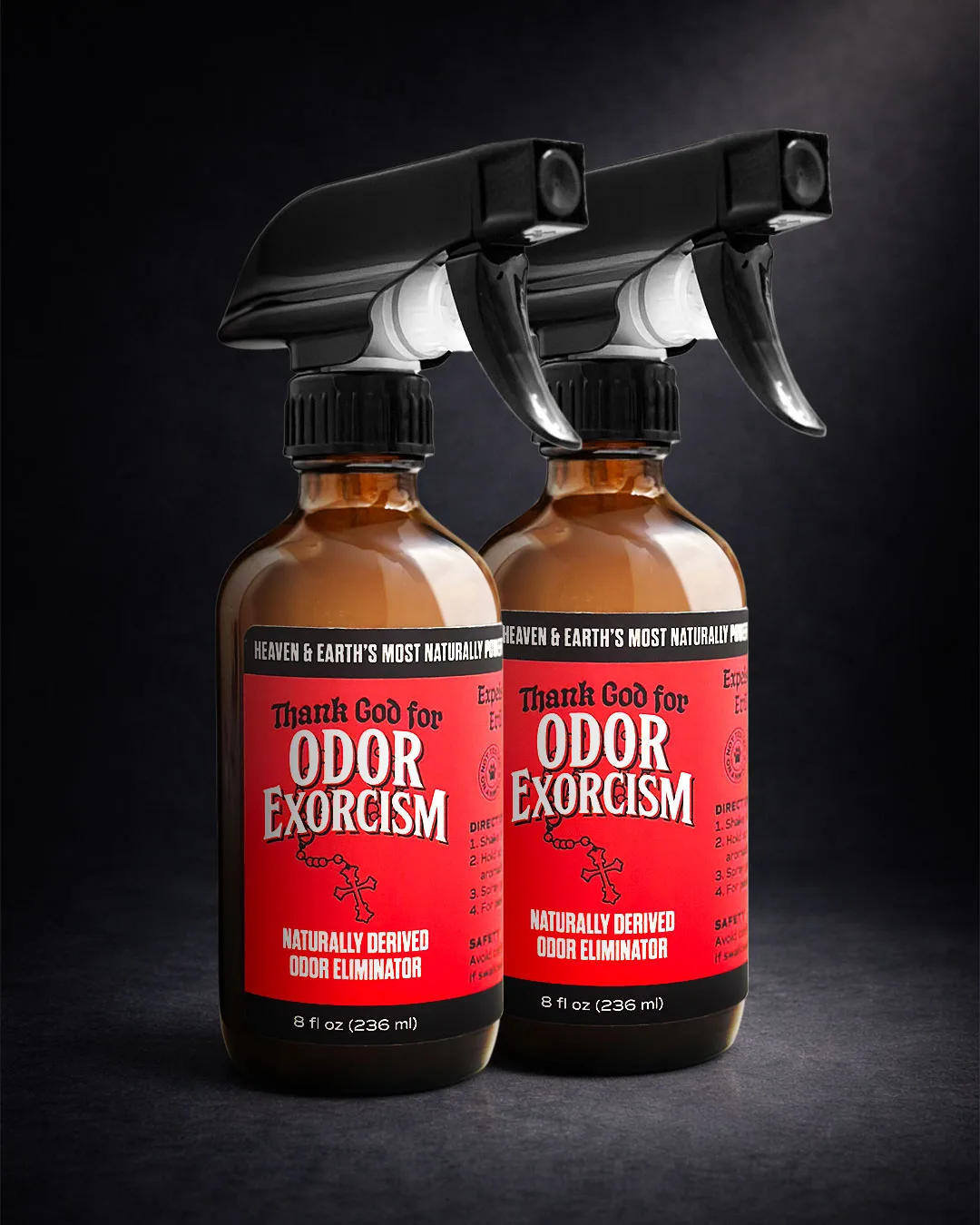
A naturally derived odor-eliminating spray is especially useful once the trash has been removed. Spray the interior walls, lid, rim, foot pedal, and the floor around the can if there has been a leak. Let the product work according to its directions, then wipe away residue if needed before inserting a clean bag.
This is where an odor neutralizer earns its keep. Rather than trying to perfume the air into submission, it helps address smells lingering on hard surfaces. For a trash can with a plastic liner, a wood cabinet enclosure, or nearby fabric surfaces such as a washable utility mat, treat the specific surface rather than spraying blindly into the room.
The Five-Minute Trash Can Reset
You do not need a hazmat suit and Gregorian chanting every trash day. A simple reset after taking out the bag can stop odor buildup before it becomes a household event.
First, inspect the bottom of the can and the underside of the lid. If there is liquid, residue, or stuck-on food, remove it with warm water and a suitable cleaner. Dry the can well. Moisture is a buffet invitation for odor-causing bacteria.
Next, use an odor-neutralizing spray on the interior, rim, lid, and pedal areas. Pay attention to grooves and hinges, where invisible splatter loves to hide. If your bin sits inside a cabinet, treat the cabinet base and nearby walls too, after checking that the product is appropriate for the surface.
Once the can is dry, add a fresh liner and an absorber if you like. Baking soda in a small, breathable container can help, but avoid dumping loose powder directly into a bin where it can turn into paste after a leak. Activated charcoal inserts are neater for many households.
Finally, deal with the stuff most likely to ferment. Bag wet food scraps tightly. Rinse messy containers when practical. Freeze seafood scraps, meat packaging, or particularly offensive leftovers until collection day if taking them outside immediately is not realistic. It may sound dramatic, but so is opening a can that smells like it has seen the underworld.
Trash Odor Removers for Different Household Problems
A standard kitchen bin needs regular cleaning because it gets the broadest mix of food waste. For apartment dwellers, taking out small bags more often can make a bigger difference than buying a more aggressively scented product. The trade-off is using more bags, but it may be worth it in a compact space where odors have nowhere to hide.
Bathroom trash is usually less intense, unless it contains diapers, pet-related waste, or heavily fragranced personal-care products. Here, a small charcoal absorber and a periodic wipe-down are often enough. For diaper pails, follow the manufacturer’s cleaning guidance and use an odor eliminator only on compatible exterior and interior surfaces.
Outdoor bins need a tougher routine, especially in summer. Rinse them periodically, clean off leaks, and allow them to dry in the sun when possible. Keep the lid closed to discourage pests, but do not expect a closed lid to erase what is decomposing inside. If maggots or heavy contamination are present, clean safely with gloves and follow local sanitation guidance.
Pet waste bins are their own circle of household hell. Use dedicated liners, empty them frequently, and clean the bin more often than your nose says is necessary. By the time your nose notices, the odor has usually settled into the plastic.
What to Avoid When the Bin Gets Bad
Do not mix cleaning chemicals in pursuit of a stronger result. Combining products, especially bleach with ammonia-containing cleaners or acids, can create dangerous fumes. More chemistry is not always more clean.
Also resist spraying fragrance into a full, wet, dirty can and calling it handled. The odor will return because the source never left. If you use essential-oil-based products, follow label directions and keep them out of reach of children and pets. Natural does not mean consequence-free when used carelessly.
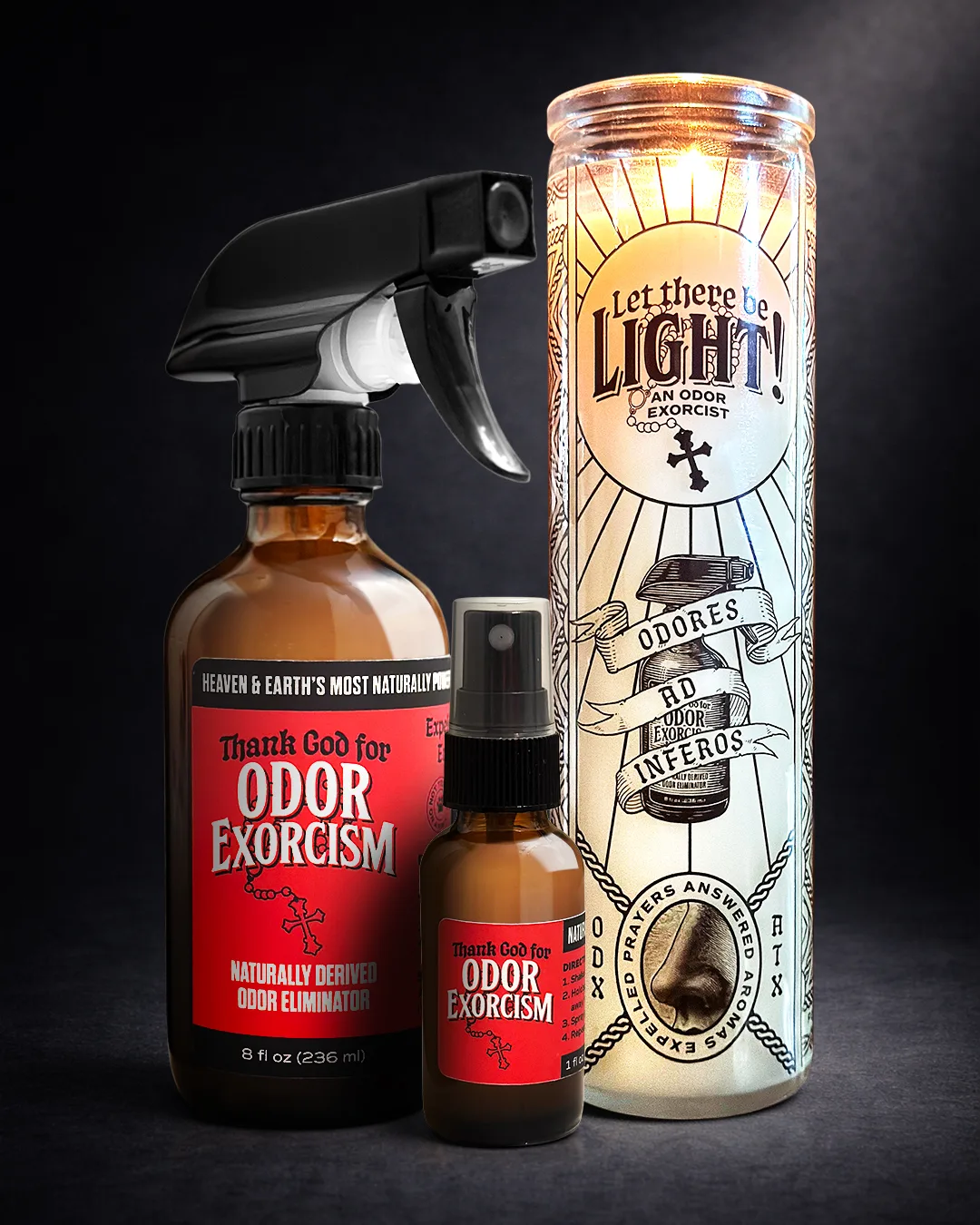
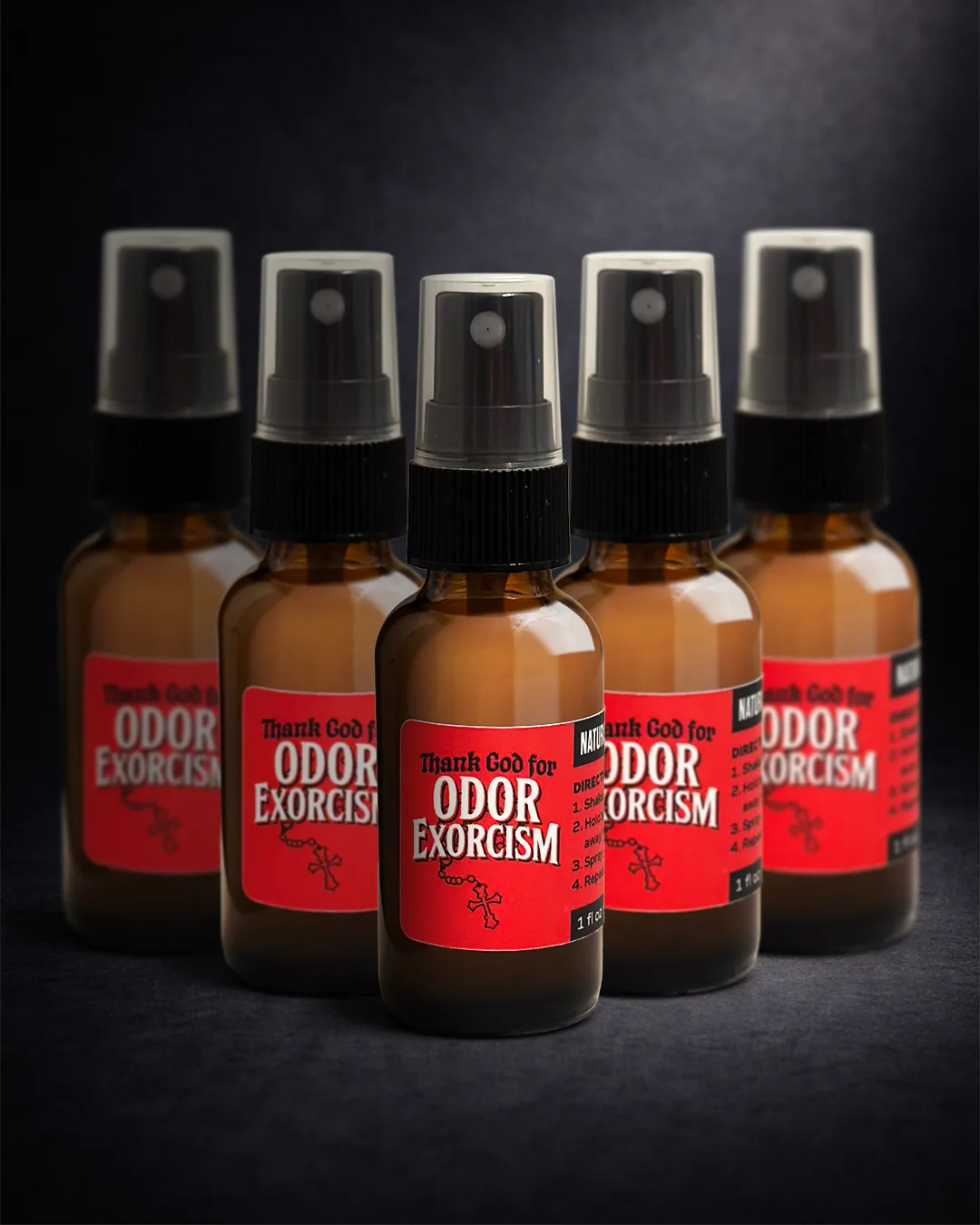
At Odor Exorcism, the philosophy is simple: evict the smell instead of decorating it. A non-toxic, essential-oil-based odor eliminator can fit beautifully into a cleaner home routine, particularly for the hard surfaces and soft household materials that hold onto stale smells after the trash is gone.
When the Smell Is Not Actually the Trash
If you have cleaned the bin and the odor keeps returning, investigate nearby suspects. A forgotten spill beneath the cabinet, a dirty garbage disposal, a damp mop head, a compost container, or a leak in the fridge can impersonate trash odor with alarming conviction. Plumbing odors can also drift up through a dry drain trap.
Try moving the empty, cleaned can to another room for a day. If the smell stays behind, the bin has been framed. Check surrounding surfaces and, if the odor resembles sewage or persists despite cleaning, consider whether a plumbing issue needs professional attention.
A trash can will never smell like a meadow after a week of takeout, and frankly, it should not have to. Empty it regularly, clean the surfaces that collect residue, and choose trash odor removers that neutralize rather than merely perfume the evidence. Your kitchen deserves better than an air freshener trying to perform last rites over a bag of old shrimp.