Removing Thrift Store Smells Without Covering Them Up
Evangelize



November 28, 2026
That vintage leather jacket looked like a cinematic masterpiece under the thrift-store lights. Then you got it home, opened the bag, and released a scent with the emotional weight of a haunted basement. Removing thrift store smells is part of the secondhand ritual, right alongside checking seams, hunting for missing buttons, and wondering who owned that lampshade before you.
The good news: most thrifted-item odor is fixable. The less-good news: blasting it with a floral fragrance bomb does not fix it. It just creates lavender mildew, a cursed pairing nobody requested. The goal is to remove or neutralize what is causing the smell while treating the item gently enough that your score survives the process.
Why Thrift Store Finds Smell So Strange
That familiar thrift-store smell is rarely one single thing. It is usually a layered ghost story: years of body oils, perfume, smoke, pet dander, basement air, dust, cleaning chemicals, and fabric sitting in a donation bin or warehouse. Natural fibers such as cotton, wool, and linen can hold odors especially well because their fibers absorb moisture and oils.
Sometimes the smell comes from storage rather than previous ownership. A jacket can arrive at a thrift store perfectly innocent, then spend weeks pressed against other donations in a poorly ventilated space. Add humidity, and you have the opening scene of Musty: The Reckoning.
The trick is figuring out what you are dealing with. A faint stale smell often responds to airing out and washing. Smoke, pet odor, heavy perfume, or mildew may need several rounds of treatment. If an item has visible mold, feels damp, or gives off a powerful mildew smell that will not budge, consider whether the bargain is worth bringing into your home. Some demons are better left at the thrift store.
Removing Thrift Store Smells Starts With Isolation
Do not toss a thrifted item straight onto your bed, sofa, or existing laundry pile. Keep it separate until it has been inspected and cleaned. Check pockets, seams, linings, cuffs, and under collars for stains, residue, insects, or any evidence of moisture damage.
Then give the item air. Hang washable clothing outdoors in a shaded, breezy spot for several hours, or near an open window indoors. Fresh airflow can disperse stale odors before you do anything more aggressive. Avoid leaving delicate fabrics in direct sun for too long, since sunlight can fade colors and weaken fibers. Leather, silk, wool, and vintage textiles deserve particular restraint. They have already survived enough.
For sturdy clothes, shoes, and accessories that cannot hang easily, place them in a clean, dry area with room around them. Cramping a smelly item into a plastic tote traps the odor and moisture like a tiny, bleak odor prison.
Wash What Can Be Washed, Carefully
Always read the care label first, even if you are convinced the garment has been lying to you for decades. Machine-washable cotton, denim, polyester, and many blends can usually be washed according to the label with a quality detergent. Use the warmest water the fabric allows, not the hottest setting your machine can summon from the underworld.
For a lingering musty odor, adding distilled white vinegar to the rinse cycle can help with some washable items. Use it sparingly and never mix vinegar with bleach or products containing bleach. Those combinations can create harmful fumes, which is a much more literal form of household horror than anyone needs.
Baking soda can also help freshen durable laundry, but more is not always better. Too much powder can leave residue, especially in high-efficiency machines. If the garment has a strong odor after one wash, let it dry completely and reassess before repeating the process. A second wash may be reasonable. Five frantic washes are how a soft vintage tee becomes a sad, warped dish rag.
Air-drying is often the smart choice for thrifted clothing. Heat can set some odors and stains, and it can shrink or damage older fabrics. Once the item is dry, smell it again. Do this before it joins the rest of your closet, where it could recruit your clean clothes into its musty little coven.
When Laundry Is Not an Option
Dry-clean-only pieces, structured blazers, wool coats, silk, suede, fur, and delicate vintage garments call for a lighter hand. Start with airing them out. For garments that can tolerate it, a fabric-safe odor neutralizer can be misted lightly according to its directions, with a patch test in a hidden area first.
Avoid soaking delicate fabrics or spraying them until they are wet. Moisture can cause water marks, distort shape, or worsen a mildew issue. If a valuable piece has persistent smoke, mold, or unknown staining, a professional cleaner is worth considering. A $12 coat is still not a $12 coat if it becomes an unwearable science experiment in your bathroom.
Treat Shoes, Bags, and Hard Goods Differently
Shoes are often odor headquarters because they collect sweat, bacteria, dust, and whatever mystery was happening inside a previous owner’s closet. Remove insoles when possible and air both pieces separately. For washable sneakers, follow the manufacturer guidance rather than tossing them into a hot washer on a prayer.
For non-washable shoes, let them dry fully, wipe hard surfaces with an appropriate cleaner, and use a light application of odor neutralizer on interior fabric after patch testing. Give them plenty of air time. If the insoles are beyond redemption, replacing them can make a huge difference.
Handbags need the same detective work. Empty every pocket, vacuum out crumbs and debris, and wipe plastic, coated canvas, or other hard interior surfaces with a material-appropriate cleaner. Leather and suede require products made for those materials. Do not saturate them with water, vinegar, or random internet potions. That is not restoration. That is a plot twist.
Thrifted furniture and home decor can hold stale smells too. Vacuum upholstery thoroughly using a brush attachment, including under cushions and along seams. Let upholstered pieces air out before bringing them into a small room. For hard surfaces such as wood, plastic, or metal, clean away dust and residue first. Odor loves grime because grime gives it something to cling to.
Neutralize Odor Instead of Perfuming It Into Submission
Air freshener can make a room smell temporarily different without making the source smell any less present. That is why a perfume-heavy spray on an old sweater can produce an unfortunate fragrance profile best described as “mall candle meets attic.” The aim is odor neutralization, not scent camouflage.
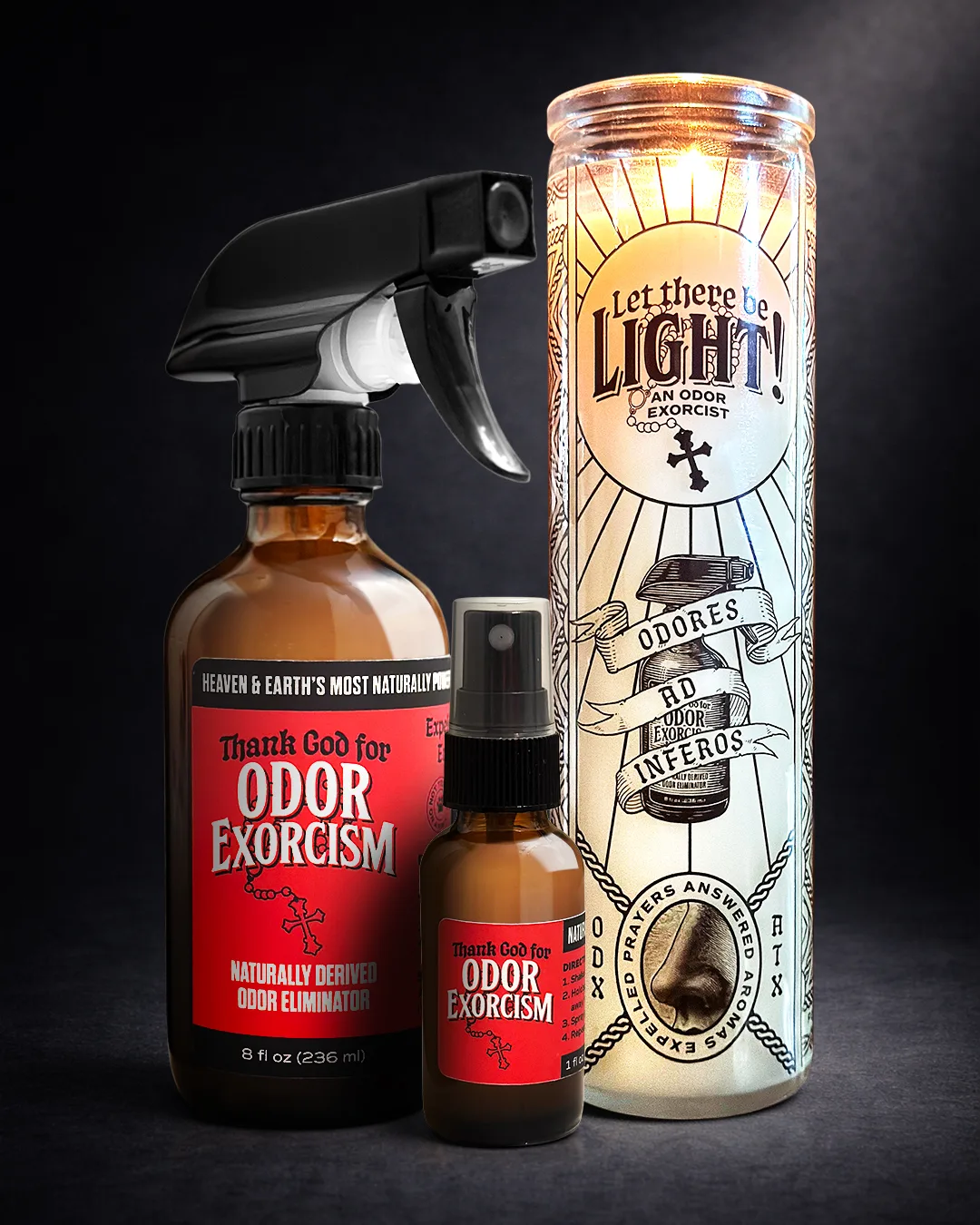
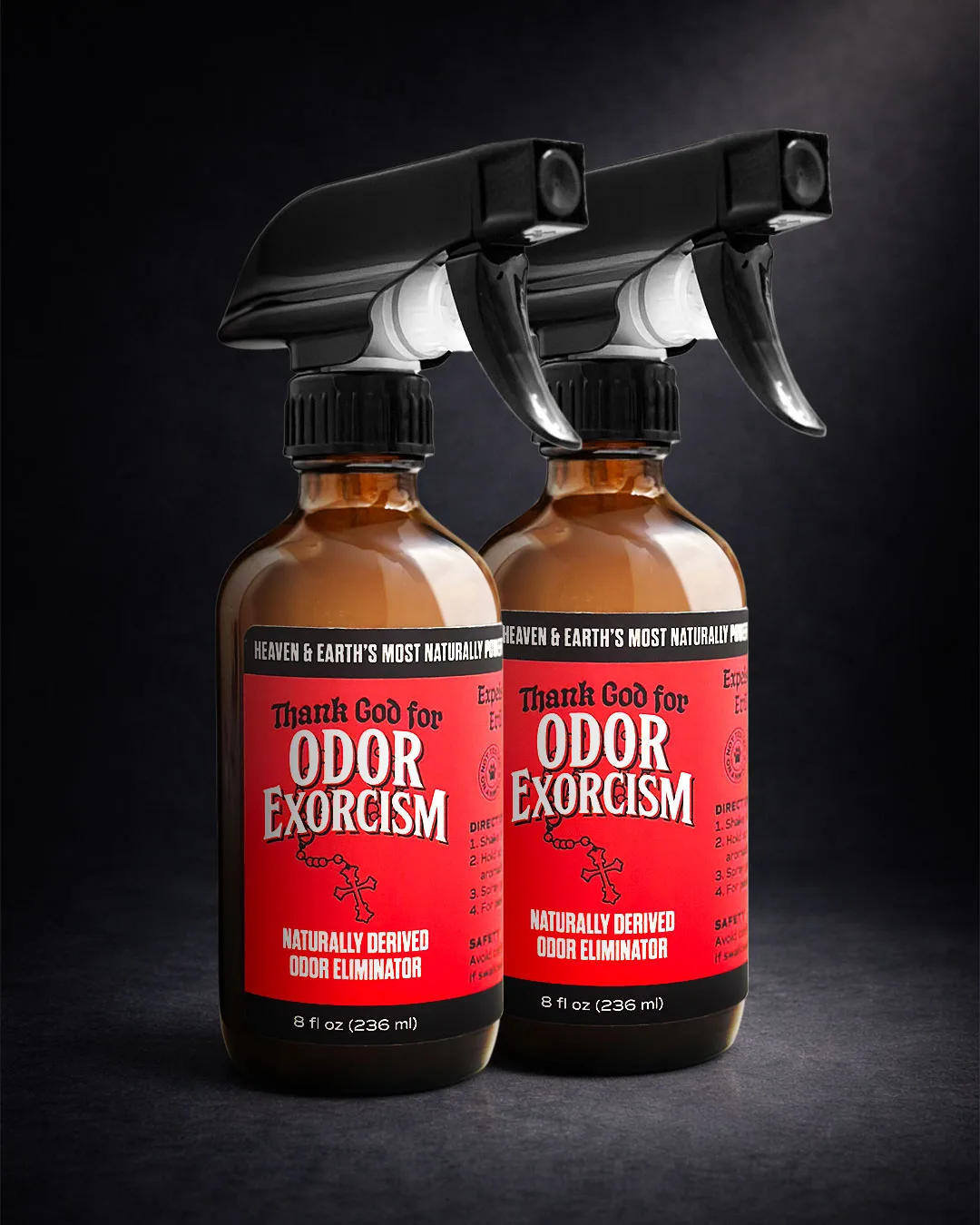
A naturally derived odor-eliminating spray can be useful between washes, on non-launderable items, and across surfaces such as upholstery, shoes, bedding, wood, and plastic. Odor Exorcism is designed for exactly this sort of domestic possession: knocking down unwanted smells without relying on the synthetic-fragrance fog machine common to conventional air fresheners.
Still, sprays work best as part of a process. First remove dirt, residue, or visible contamination. Then allow airflow and drying time. A neutralizer can handle the odor molecules left behind, but it cannot reverse rot, remove mold damage, or clean away a decade of sticky mystery from a vinyl purse.
Common Mistakes That Make the Smell Linger
The first mistake is sealing an item in a bag before it is fully dry. Moisture is a musty odor’s favorite houseguest. The second is using so much fragrance that you cannot tell whether the original smell is gone. Go light, let the item air, then check again with a fresh nose.
Another mistake is treating every material like cotton. A white T-shirt can tolerate a different cleaning approach than a 1970s wool blazer or a cracked leather handbag. When in doubt, test a small hidden spot and choose the gentler method first. You can always repeat a mild treatment. You cannot unshrink cashmere.
Finally, trust your instincts. If an item smells strongly of smoke, mildew, chemicals, or animal waste after repeated careful cleaning, letting it go is not wasteful. Secondhand shopping is about giving good things another life, not adopting every cursed relic that crosses your path.
A thrifted treasure should smell like your home, your closet, and maybe a little victory – not like the donation bin from which it rose. Give it air, clean it according to its material, and evict the odor before it starts paying rent.