Odor Eliminator Spray vs Air Purifier: Which Wins?
Evangelize


October 29, 2026
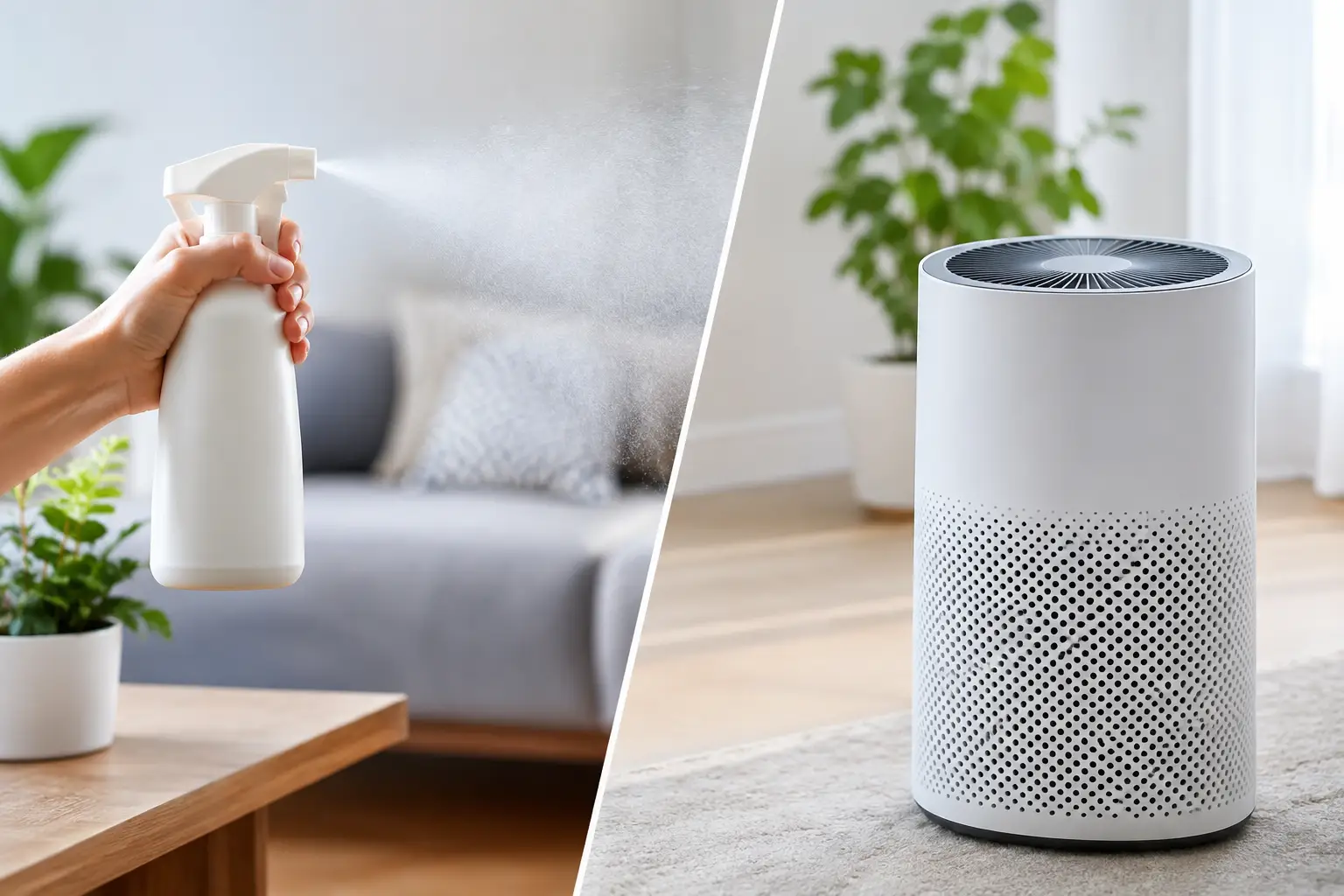
Your couch smells like wet dog. The trash can has developed opinions. Your bedroom carries a faint trace of gym bag that no candle can talk its way out of. In the showdown of odor eliminator spray vs air purifier, the right answer depends on where the stink is hiding – and no, a cloud of fake lavender is not an exorcism.
An odor eliminator spray and an air purifier do different jobs. One goes after odors where they live: fabrics, shoes, upholstery, bedding, plastic, wood, and other surfaces that have been quietly collecting evidence. The other cleans the air moving through a room, with results that depend heavily on the machine and its filters.
You may need one. You may need both. But buying an air purifier to fix a smelly rug is a little like calling a priest because your dishwasher needs cleaning. Dramatic? Sure. Effective? Not quite.
Odor Eliminator Spray vs Air Purifier: The Real Difference
Odors are not always floating around politely in the air waiting to be filtered. Many are produced by odor-causing compounds lodged in porous materials. Think pet beds, curtains, throw pillows, sneakers, car seats, laundry hampers, mattresses, and the mysterious corner of the sofa where life happens.
An odor eliminator spray is designed for direct treatment. Spray it onto the source according to label directions, let it work, and the goal is to neutralize the smell rather than bury it beneath a synthetic fragrance fog. This makes a spray especially useful when you can identify the offending item or area.
An air purifier pulls room air through filters. A standard HEPA filter is excellent at capturing airborne particles such as dust, pollen, dander, and some smoke particles. But HEPA alone is not an odor filter. For smells, volatile organic compounds, and certain gases, you generally need a purifier with a substantial activated carbon filter.
That word, substantial, matters. A thin carbon sheet may help a little with a passing whiff of cooking, but it may not do much against persistent pet odor, smoke residue, mildew smells, or a bedroom that has been marinating in unwashed laundry. The devil is in the filter media.
When an Odor Eliminator Spray Makes More Sense
Choose a spray when the odor has a physical address. If the smell gets stronger when you lean toward the rug, open the closet, sit on the couch, or pick up a shoe, treat the surface. Airing out the room may provide temporary relief, but the source will keep sending up little stink signals from the underworld.
Sprays are also practical for targeted, everyday jobs. Freshen bedding after a sweaty night. Treat upholstery after a pet nap. Rescue shoes before they become a biohazard. Use it on clothing between washes, inside a stale-smelling car, or on the curtains that absorbed last night’s fish dinner like they signed a contract.
The benefit is speed and precision. You are not waiting for a machine to cycle a room’s air several times while the smelly blanket remains on the floor, undefeated.
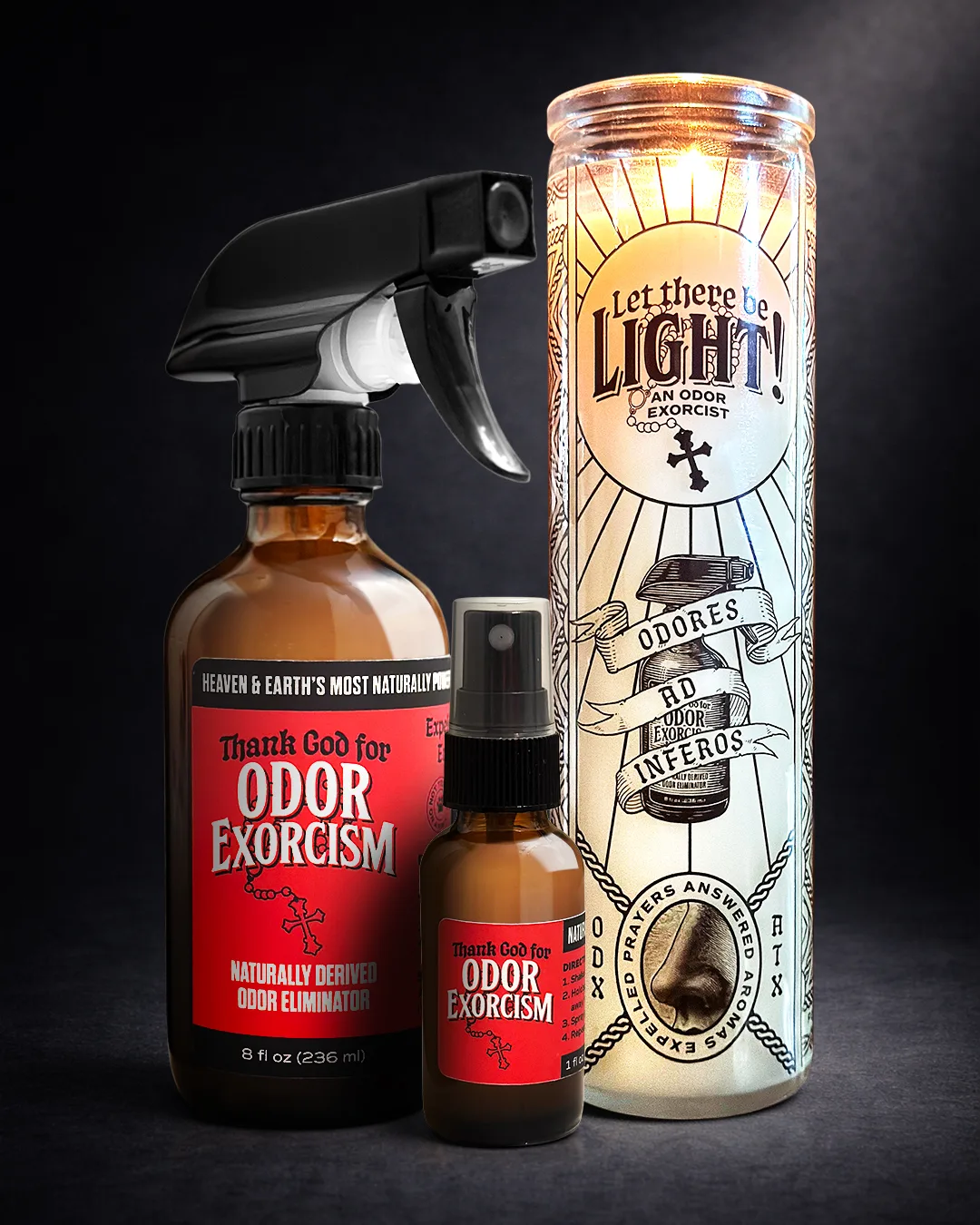
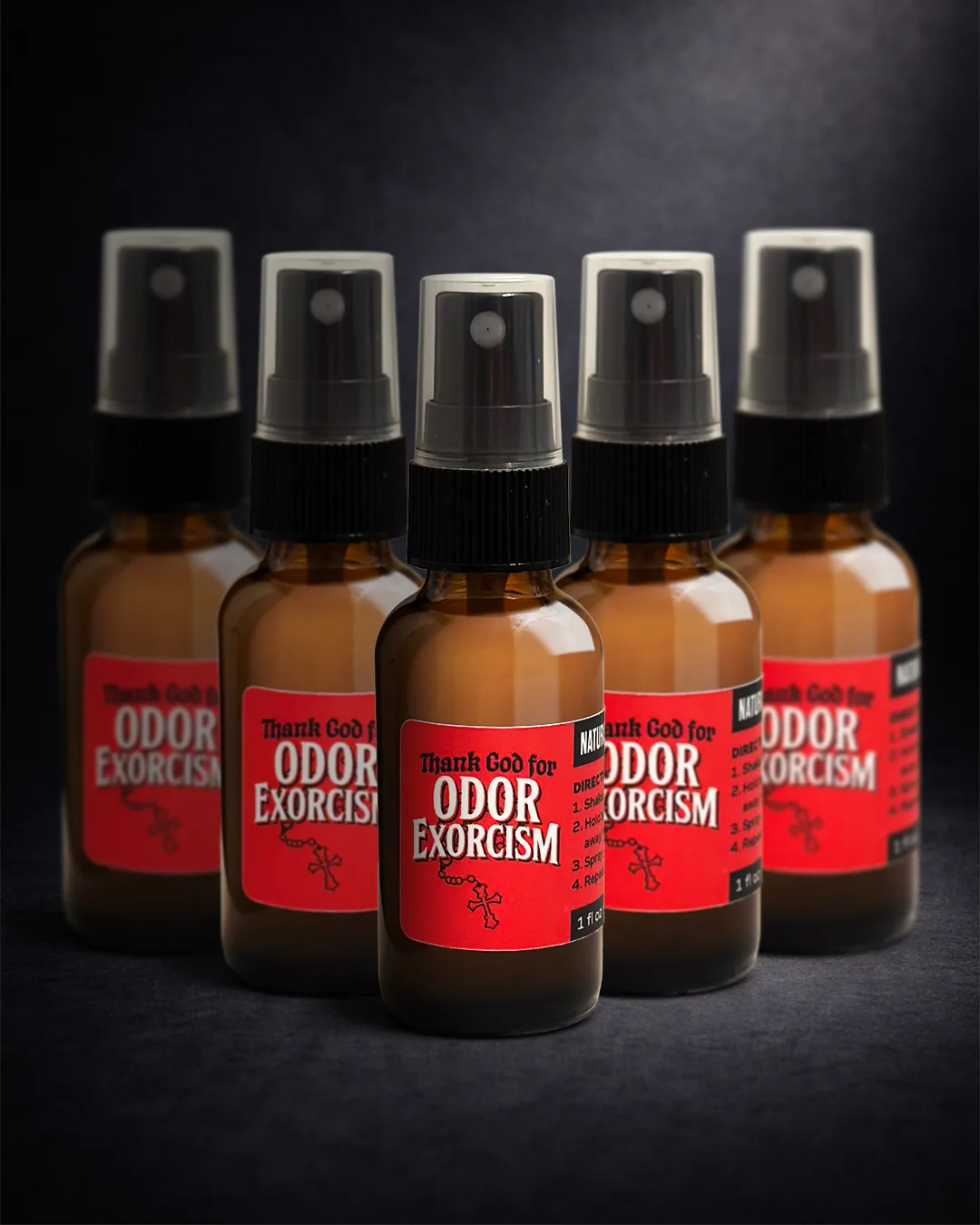
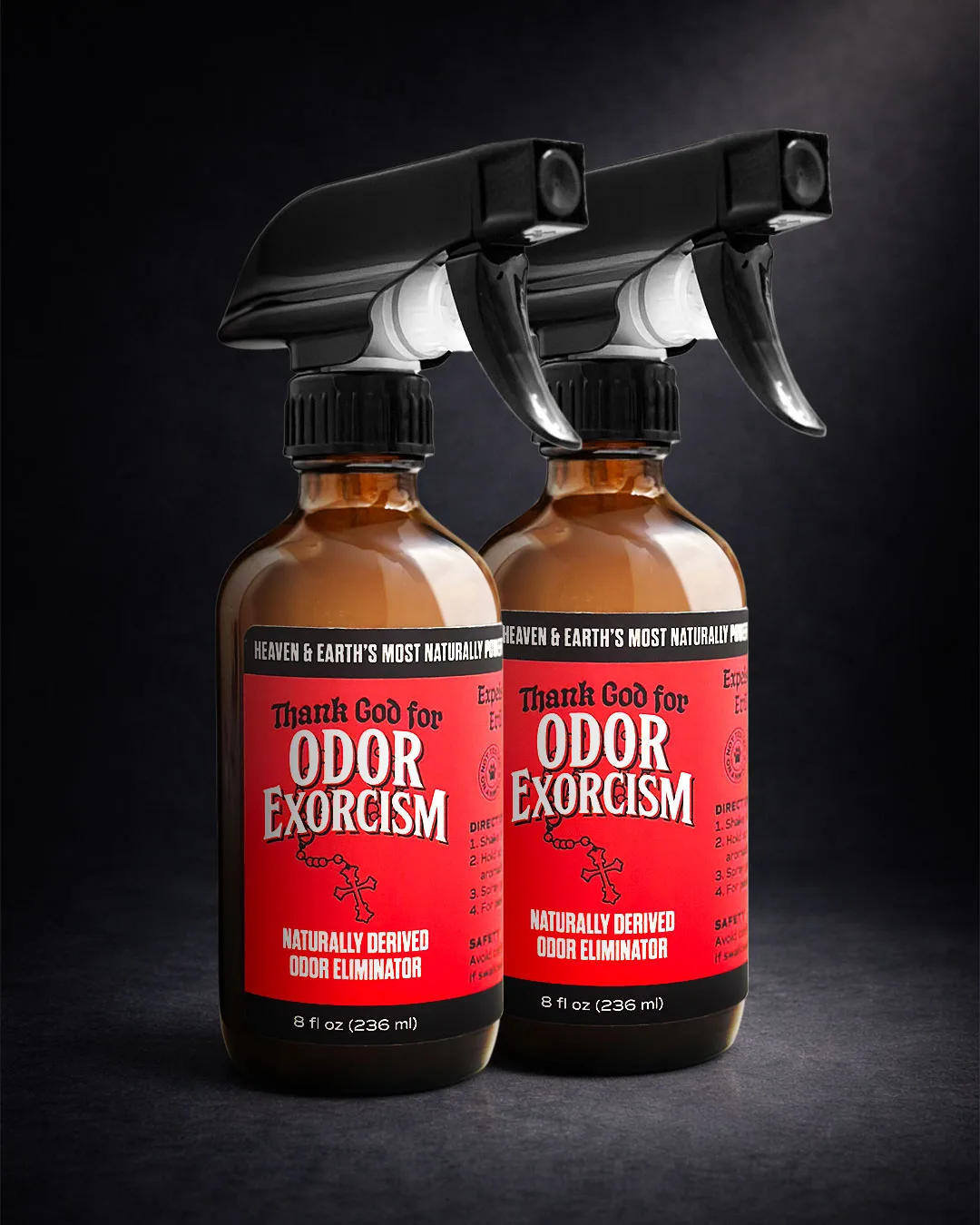
For ingredient-conscious households, this is also where formula matters. A naturally derived odor eliminator spray made without heavy synthetic fragrance lets you deal with the smell without replacing it with an aggressive perfume that announces itself three rooms away. Odor Exorcism is built around that very mission: evict the funk, not your sinuses.
That said, a spray is not a substitute for cleaning when a mess is still present. If a pet accident, spilled food, damp towel, dirty drain, mold growth, or overflowing trash is creating the odor, remove the source first. Spray is a powerful supporting character, not a magical excuse to ignore a crusty problem.
When an Air Purifier Earns Its Floor Space
An air purifier shines when the problem is broader than one stinky object. Maybe your apartment holds onto cooking odors after every meal. Maybe wildfire smoke has crept indoors. Maybe you have pets, allergies, dusty air, or a bedroom that feels perpetually stale despite regular cleaning.
A good purifier can continuously reduce airborne particles while the fan runs. This is especially valuable for people who want help with dander, pollen, dust, and smoke particles along with fresher-feeling indoor air. In those situations, a spray cannot do the purifier’s job because it is not meant to filter the volume of air in an entire room.
For odor support, look for an activated carbon filter, not just HEPA marketing in a shiny plastic shell. Check the purifier’s recommended room size and use it in a room that actually matches its capacity. A tiny desktop unit in a big open living room may look adorable while accomplishing approximately nothing.
Purifiers come with trade-offs. They cost more upfront, need replacement filters, take up space, make some noise, and require consistent use. Carbon filters eventually fill up and lose effectiveness, so replacing them is not optional if odor control is part of your plan. A neglected purifier can become household decor with a fan.
The Best Answer for Pets, Smoke, and Musty Rooms
For stubborn household odors, the strongest approach is usually source control plus the right tool for the remaining problem.
With pet odor, wash bedding and blankets, clean accidents promptly, treat the upholstery or carpet where the smell settled, and consider an air purifier for airborne dander and general room freshness. If the litter box is the culprit, clean it more often. The cat is not the villain here. The neglected litter is.
With smoke odor, start by removing ash, laundering washable fabrics, and cleaning hard surfaces. Smoke particles and residue cling to everything from curtains to cabinet fronts. A surface-safe odor eliminator spray can help address fabrics and materials that hold the smell, while a purifier with HEPA and activated carbon can support the air during and after cleanup.
With a musty room, do not just spray and pray. Mustiness often points to moisture, poor ventilation, a dirty HVAC filter, damp textiles, or mold. Find and fix the moisture source. Wash or dry affected fabrics thoroughly, clean surfaces, and use a dehumidifier or improve airflow if humidity is part of the curse. A purifier may help with airborne particles, but it cannot repair a leak or defeat an active mold problem.
Can You Use Both Together?
Absolutely. In fact, pairing them makes perfect sense in homes with pets, frequent cooking, smokers, allergies, or stubborn fabrics. Use the spray to neutralize odor at the source. Run the purifier to reduce airborne particles and help manage whatever is circulating through the room.
The key is not to treat either product as a license to skip basic cleaning. Take out the trash. Wash the dog bed. Let damp towels dry. Vacuum rugs and upholstered furniture. Clean the fridge spill before it evolves into a new life-form. Household freshness is less about one heroic product and more about refusing to let odors establish a permanent kingdom.
How to Choose Without Summoning Buyer’s Remorse
Ask one blunt question: can you identify where the smell is coming from? If yes, start with an odor eliminator spray and clean the source. If the smell feels spread through the room, or you also want help with dust, dander, pollen, and smoke particles, an air purifier is worth considering.
If you are buying a purifier mainly for odors, prioritize activated carbon and realistic room coverage. If you are buying a spray, choose one formulated to neutralize odors instead of simply perfuming the air, and always check that it is appropriate for the material you plan to treat.
A fresh home does not need to smell like an artificial tropical storm. It should smell like nothing much at all – because the demons in the couch, shoes, and laundry basket have finally been shown the door.