Can odor spray be used on bedding safely?
Evangelize



July 19, 2026
You climb into bed expecting a clean-sheet sanctuary and get hit with eau de yesterday’s sweat, wet dog, or mysterious bedroom funk. Rude. So, can odor spray be used on bedding? Usually, yes – provided you use a fabric-appropriate spray, follow its label, and don’t treat a few spritzes like a substitute for washing your sheets.
The goal is to neutralize the odor haunting the fabric, not pile on enough perfume to wake the neighbors. Used correctly, odor spray can freshen pillows, comforters, duvets, mattress covers, and sheets between laundry days. Used recklessly, it can leave residue, overwhelm sensitive noses, or trap the real problem beneath a floral fog machine.
Can Odor Spray Be Used on Bedding? Yes, With Rules
Bedding is fabric, but it is also fabric that sits against your skin and face for hours. That makes product choice and application more consequential than spraying a throw pillow in the living room. Choose an odor eliminator specifically labeled for fabric or soft surfaces, and check whether the manufacturer gives instructions for linens, bedding, or upholstery.
A fabric-safe odor eliminator works best as a light refresh. It is useful after a sweaty night, when pets have claimed the bed as their kingdom, when a guest room smells stale, or when laundry day is still a day away. A few light sprays can make the room feel reset without stripping and washing every layer of the bed.
What it cannot do is clean away body oils, skin cells, allergens, spills, or whatever unholy substance caused the smell in the first place. If your bedding is visibly soiled, has a spill, smells sour after spraying, or has been exposed to mildew, it needs laundering or deeper cleaning. The exorcism has limits.
Pick an Odor Eliminator, Not a Scent Disguise
Conventional room sprays are often designed to scent the air, not treat fabric odors. They may smell powerful for 15 minutes, then leave the original funk waiting patiently underneath. Some can also contain heavy fragrance ingredients that make a pillowcase feel like a perfume counter, which is not everyone’s preferred sleep ritual.
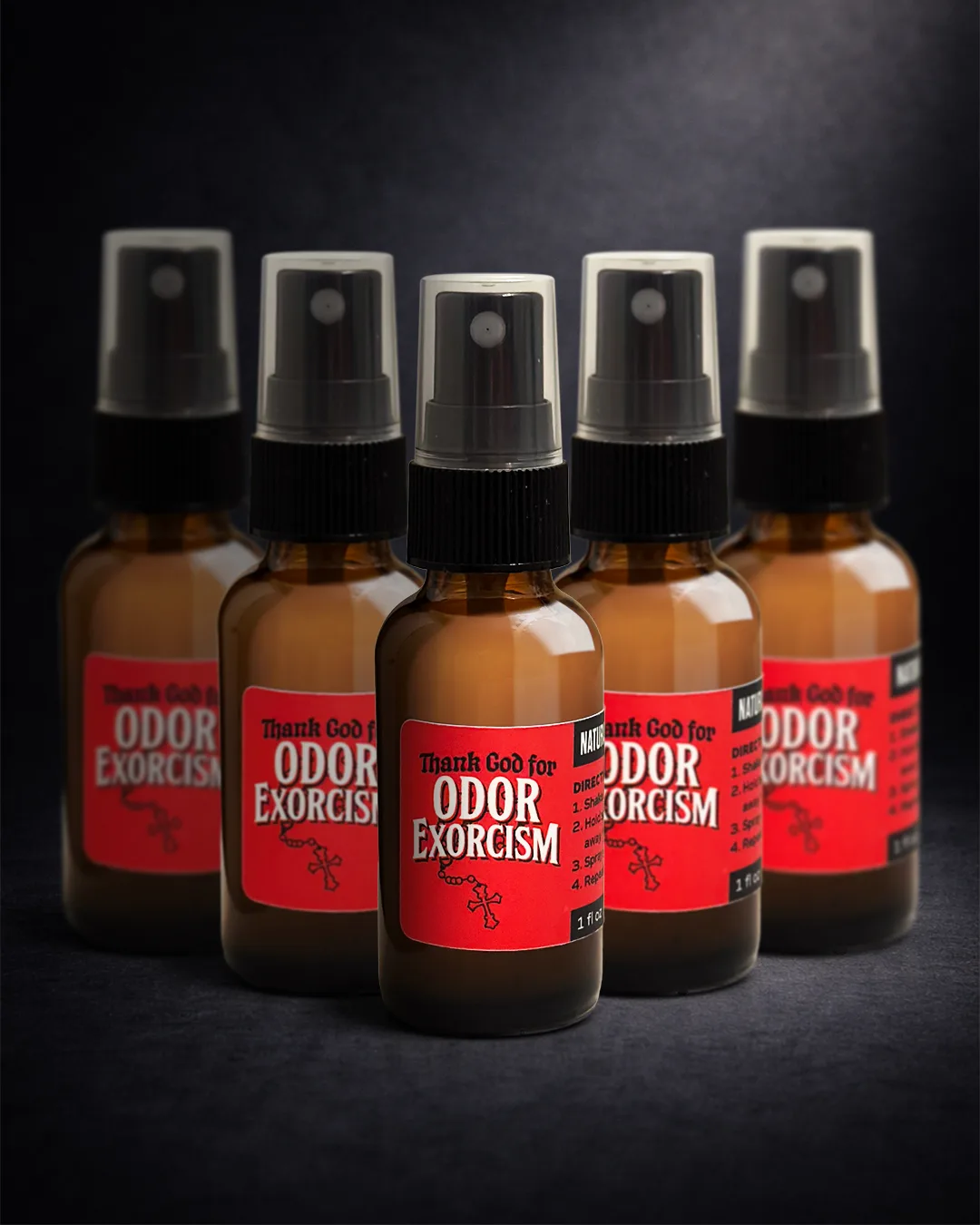
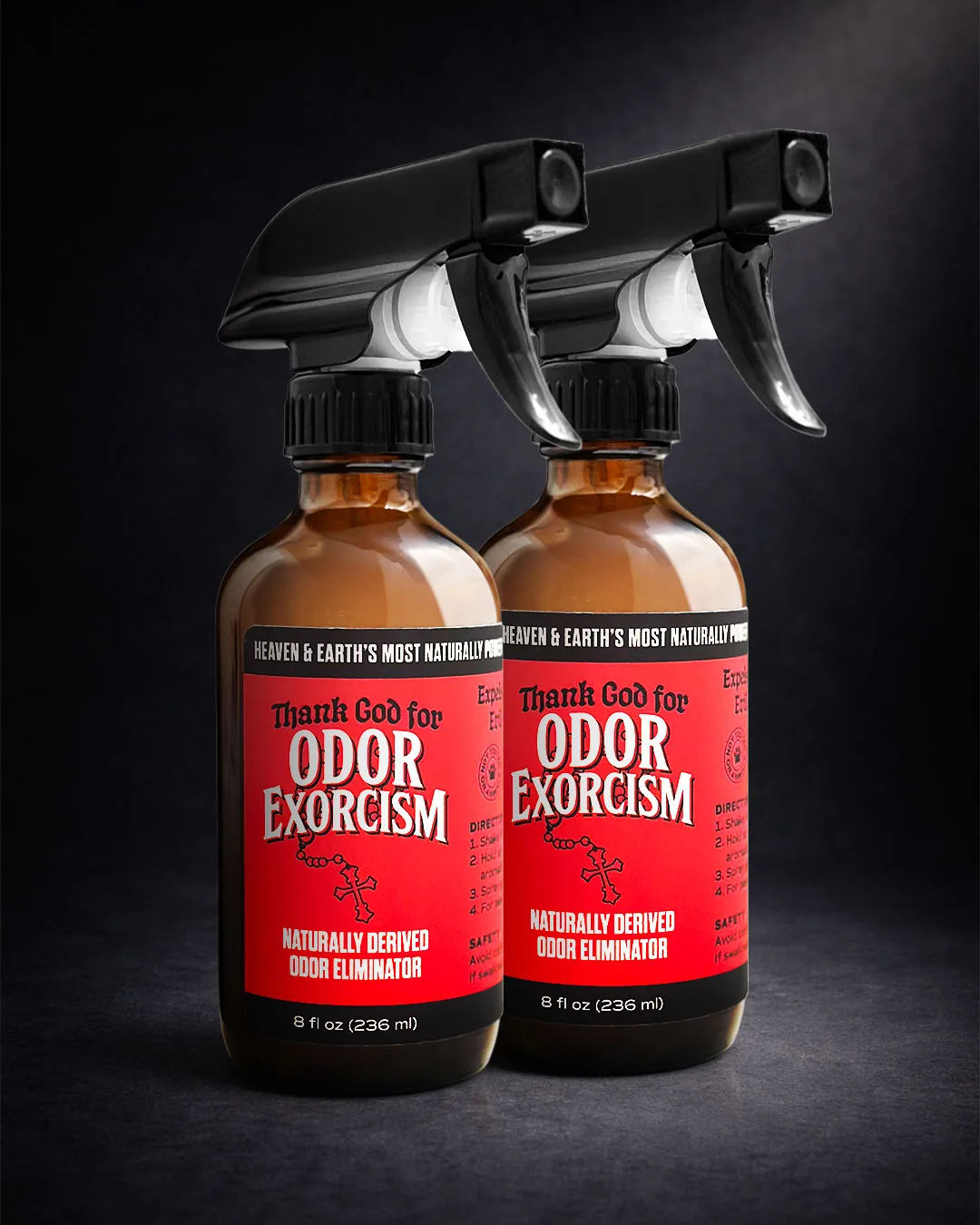
Look for a formula intended to neutralize odors on contact and formulated for soft household surfaces. Ingredient-aware households may also prefer naturally derived, non-toxic options over synthetic fragrance-heavy sprays, especially for items that touch skin. Odor Exorcism is made for this exact sort of domestic haunting: treating smells on soft and hard surfaces without turning the whole bedroom into a chemical cathedral.
Even with a gentler formula, the label is the boss. Follow dilution, surface, and ventilation directions. If a product says not to use it on silk, leather, unfinished materials, or a particular fabric, believe it. The label has seen things.
Be careful with delicate bedding
Cotton sheets, many polyester blends, and washable comforters are usually the simplest candidates for a light fabric spray. Delicate materials need more caution. Silk, wool, linen with special finishes, velvet, down-filled items, antique quilts, and dry-clean-only bedding can stain, spot, or react poorly depending on the formula.
Colorfastness matters, too. Before spraying a large area, test a hidden corner of the comforter or the underside of a pillow sham. Let it dry completely, then check for discoloration, stiffness, rings, or scent intensity that feels too strong for your bedroom. This takes five minutes and can prevent a very dramatic conversation with an expensive duvet.
How to Spray Bedding Without Overdoing It
Start by pulling back the bedding and giving it a little air. If possible, open a window or run a fan. Fresh airflow helps odors dissipate and prevents you from using twice as much product because your nose has gone temporarily blind to the problem.
Hold the bottle several inches away and mist lightly across the surface. You want an even veil, not damp patches. Focus on the areas that actually hold odor: the top sheet, pillow surfaces, the comforter near where pets sleep, or the fabric around a spill after it has been properly cleaned.
Then let the bedding dry fully before climbing back in. This is especially smart for pillows, mattress toppers, and thick comforters, where moisture can linger. Spraying a made bed and immediately burrowing under the covers is a fast route to damp fabric and disappointment.
For most beds, a couple of passes is enough. If you can smell the spray more loudly than the room itself, you probably used too much. More product is not more holy.
When a Spray Is Helpful – and When Laundry Wins
Odor spray earns its place in the gap between cleanings. It is particularly handy for a freshly made bed that picked up a little stale-room smell, a comforter that cannot be washed every few days, or a mattress that needs a refresh after stripping the sheets.
It also helps in real-life situations where perfection is not on the schedule: a kid’s room after a sleepover, a dorm bed after a long week, a pet-friendly sofa bed, or a guest room that has been closed up since the last holiday gathering. A quick fabric refresh can make the space feel cared for without creating another mountain of laundry.
But spray is not the answer to every smell. Wash bedding promptly after illness, accidents, heavy sweating, food spills, or exposure to smoke. If you notice persistent mustiness, inspect the mattress, box spring, bed frame, nearby carpet, curtains, and walls. The odor may be coming from a damp source, pet accident, HVAC issue, or mold problem rather than the sheets themselves.
If a mattress smells deeply embedded, spot-clean according to its care label, allow it to dry completely, and consider a mattress protector going forward. Spraying over moisture or contamination is not banishing the demon. It is giving the demon a scented cape.
A Better Bedding-Freshness Routine
For ordinary use, wash sheets and pillowcases regularly, ideally about once a week for most people. If you sweat heavily, share the bed with pets, have allergies, or sleep while wearing hair products and skincare, you may want to wash them more often. Comforters, blankets, and duvet covers follow their own care labels and usually need less frequent laundering.
Between washes, make the bed after allowing it to air out for a few minutes. Rotate pillows, vacuum the mattress surface occasionally, and use a washable mattress protector. These boring little rituals do more for a fresher bed than any dramatic cloud of fragrance ever will.
An odor spray belongs in that routine as the finishing touch: a light refresh after airing out the bed, before guests arrive, or whenever the room feels slightly stale. It should make bedding smell clean, not announce itself from the hallway.
Common Bedding Spray Questions
Can you spray odor eliminator directly on pillows?
You can if the product is labeled fabric-safe and the pillow material can tolerate it. Mist lightly, test first, and let the pillow dry completely. For down, feather, memory foam, or specialty pillows, check the care tag before applying anything.
Can you spray a mattress with odor spray?
A light mist can help refresh a mattress surface, but do not saturate it. Mattresses are thick, slow to dry, and deeply opposed to unnecessary moisture. Strip the bed, spray sparingly if the label allows, and let the mattress air dry before replacing sheets.
Is odor spray safe for sheets that touch skin?
That depends on the formula, your sensitivities, and the product directions. Choose a spray intended for fabrics, use it lightly, let it dry, and stop using it if it causes irritation or headaches. People with fragrance sensitivities, asthma, or very reactive skin may prefer to skip sprays on pillowcases and rely on washing and ventilation instead.
A bed should smell like rest, not like a cover-up. Use odor spray as a small act of household maintenance, keep laundry in the rotation, and reserve the full-scale exorcism for smells that refuse to leave quietly.