How to deodorize a mattress naturally
Evangelize


June 1, 2026
That weird mattress smell usually shows up at the least romantic moment possible. You change the sheets, fluff the pillows, and then—bam—a faint mix of sweat, stale air, body oil, and mysterious bedroom funk rises from the bed like it pays rent. If you’re wondering how to deodorize a mattress naturally, the good news is you do not need to gas your bedroom with fake lavender fog and call it self-care.
A mattress is basically a giant sponge with commitment issues. It holds onto moisture, skin cells, dust, and odor-causing residue over time, especially if you sleep hot, have pets, snack in bed, or live in a humid climate. The trick is not just covering the smell. The trick is removing what’s feeding it.
How to deodorize a mattress naturally without making it worse
Natural mattress deodorizing works best when you treat the cause, not just the symptom. A lot of people go straight for heavy fragrance sprays, and that’s where the demons win. Strong synthetic scents can temporarily overpower stale odors, but they often leave behind a worse problem—a mattress that smells like old sweat wearing a cheap perfume.
Start by stripping the bed completely. Wash all bedding in hot or warm water, depending on the care label, because putting fresh sheets back on a smelly mattress is just putting a clean cape on a cursed object. While the bedding is in the wash, vacuum the mattress slowly and thoroughly. Use the upholstery attachment and go over the full surface, the seams, and the edges. This removes dust, hair, skin flakes, and other tiny offerings to the odor underworld.
After vacuuming, assess what kind of smell you’re dealing with. General stale odor is one thing. Sweat odor, pet odor, mildew, and old spills can each need a slightly different approach. Natural methods work well for most everyday funk, but if the mattress has deep mold growth or extensive water damage, you may be dealing with more than a deodorizing problem. Some mattresses are salvageable. Some are haunted beyond reason.
The best natural method for most mattress odors
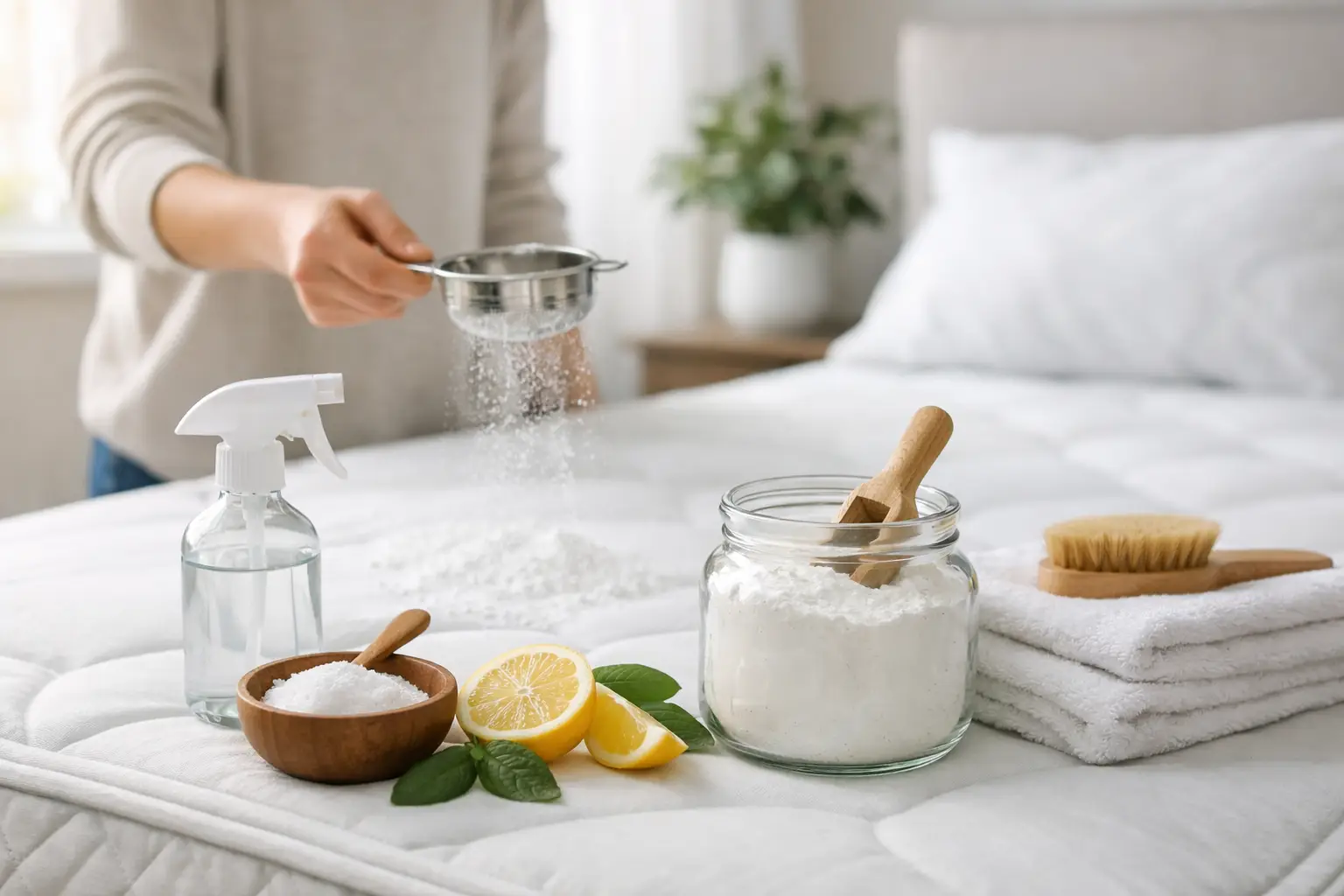
For regular odor buildup, baking soda is still the old saint of the process. It helps absorb lingering smells and moisture without loading your sleeping surface with harsh chemicals. Sprinkle a generous, even layer over the mattress and let it sit for at least several hours. If you can leave it for a full day with good airflow in the room, even better.
Open the windows if weather allows. Run a fan. Let sunlight in if you can. Fresh air and dry conditions help more than people realize, especially with that closed-up bedroom smell that settles into fabric over time. Heat and airflow help the mattress release trapped moisture, and moisture is often the little goblin behind persistent odor.
Once the baking soda has had time to work, vacuum it up thoroughly. Don’t rush this part. Leftover powder trapped in seams is annoying at best and gritty at worst.
If the mattress still smells faintly stale after one round, repeat it. Natural deodorizing can take a second pass, especially if the odor built up over months. That’s not failure. That’s just what happens when human beings spend a third of their lives sweating into foam.
When to use a natural odor eliminator spray
Sometimes baking soda alone is not enough, especially for surface odors from sweat, pets, body oil, or light accidents. This is where people get tempted by conventional fabric sprays that smell like a department store candle fighting for its life. You can do better.
A natural odor eliminator spray can help neutralize smell on the mattress surface without relying on a wall of synthetic fragrance. The key is restraint. You do not want to soak your mattress. Lightly mist the surface, let it air out completely, and only remake the bed when the mattress is dry.
This matters because too much liquid can sink into the mattress and create the exact damp environment that odors love. A light application is smart. A saturation event is a cry for help. If you want a low-tox option that fits this whole anti-chemical-exorcism mission, this is one place a product like Odor Exorcism makes sense—especially when the goal is neutralizing odor instead of dressing it up in fake flowers.
Sweat, mildew, and pet smells need different tactics
Sweat odor is usually a mix of body oil, salt, and moisture that has built up over time. For this, vacuuming, baking soda, and airflow often do a lot of the heavy lifting. A light mist of a natural odor eliminator afterward can help finish the job.
Mildew smell is trickier. If your mattress smells musty because it has been exposed to humidity, poor ventilation, or a spill that did not dry properly, you need dryness above all else. Use fans, open windows, and sunlight if possible. Baking soda can help absorb lingering damp smell, but if the odor is strong and keeps returning, there may be moisture deeper inside the mattress. That is where natural deodorizing has limits.
Pet odor depends on whether you’re dealing with fur funk or an actual accident. General pet smell can often be handled with vacuuming and baking soda. Urine is another beast. Blot first if the accident is fresh. Then use a small amount of appropriate cleaning solution designed for odor removal, avoid oversaturating the area, and give it ample time to dry. Natural methods help, but old urine that penetrated deep into foam may require more aggressive treatment or replacement.
A few natural ingredients people overuse
Essential oils get a lot of hype, but straight essential oil on a mattress is not always a great idea. Some oils can irritate skin, trigger sensitivities, or leave oily residue on fabric. If you like a fresh scent, it’s better to use a properly formulated spray rather than playing bedroom chemist with a dropper bottle and blind confidence.
White vinegar is another common suggestion. It can help with some odor issues, but it also has a strong smell of its own and adds moisture. Used carefully in very small amounts, it may help spot-treat certain areas. Used recklessly, it can leave your bedroom smelling like a salad bar with emotional problems.
Hydrogen peroxide sometimes comes up for stains, but it can discolor fabrics and should be tested carefully. Natural does not automatically mean risk-free. The least chaotic approach is usually the best one.
How to keep the funk from coming back
Once you’ve done the hard work, prevention is easier than another full-scale odor exorcism. Use a breathable mattress protector and wash it regularly. Wash sheets often, especially if you sleep hot or share the bed with pets. Let the bed air out in the morning before pulling everything tight. That one small habit helps moisture evaporate instead of getting trapped all day.
If your room tends to run humid, a dehumidifier can make a real difference. Humidity doesn’t just make a room feel gross. It helps smells cling to soft surfaces and stick around longer than they should. Mattress odor is often less about one dramatic event and more about a slow, boring build-up of dampness and residue.
It also helps to rotate the mattress as recommended by the manufacturer. This will not magically eliminate odor, but it can improve wear and airflow patterns over time. And if you eat in bed, consider this your loving rebuke from the church of clean sheets.
How often should you deodorize a mattress naturally?
For most households, every few months is enough for general maintenance. If you have allergies, pets, night sweats, small kids, or a talent for spilling things where you sleep, you may want to do it more often. A quick vacuum and baking soda treatment seasonally can keep the bedroom from crossing over into stale territory.
You do not need a dramatic twelve-step ritual every weekend. You just need consistency. Little maintenance beats waiting until your mattress smells like a gym bag possessed by regret.
If your mattress still smells bad after repeated cleaning, thorough drying, and fresh bedding, trust your nose. Some odors are a sign the materials have absorbed too much over time. There is no shame in admitting that the spirit has left the mattress.
A clean bed should smell like almost nothing at all—maybe a hint of fresh fabric, maybe clean air, but not a perfumed cover-up and definitely not old funk in disguise. That’s the real goal: less fragrance theater, more actual peace.