Aerosol Freshener Comparison for Cleaner Air
Evangelize


September 9, 2026
That post-gym shoe pile, the dog bed that has seen things, and the mysterious couch funk do not need a floral fog machine. This aerosol freshener comparison looks at what aerosol cans actually do, where they can be useful, and why a surface-focused odor eliminator may be the better weapon when household smells start acting possessed.
Aerosol Freshener Comparison: Masking vs. Removing
The biggest difference is not the can, the trigger, or whether the label has a picture of a suspiciously happy lavender field. It is the job the product is designed to do.
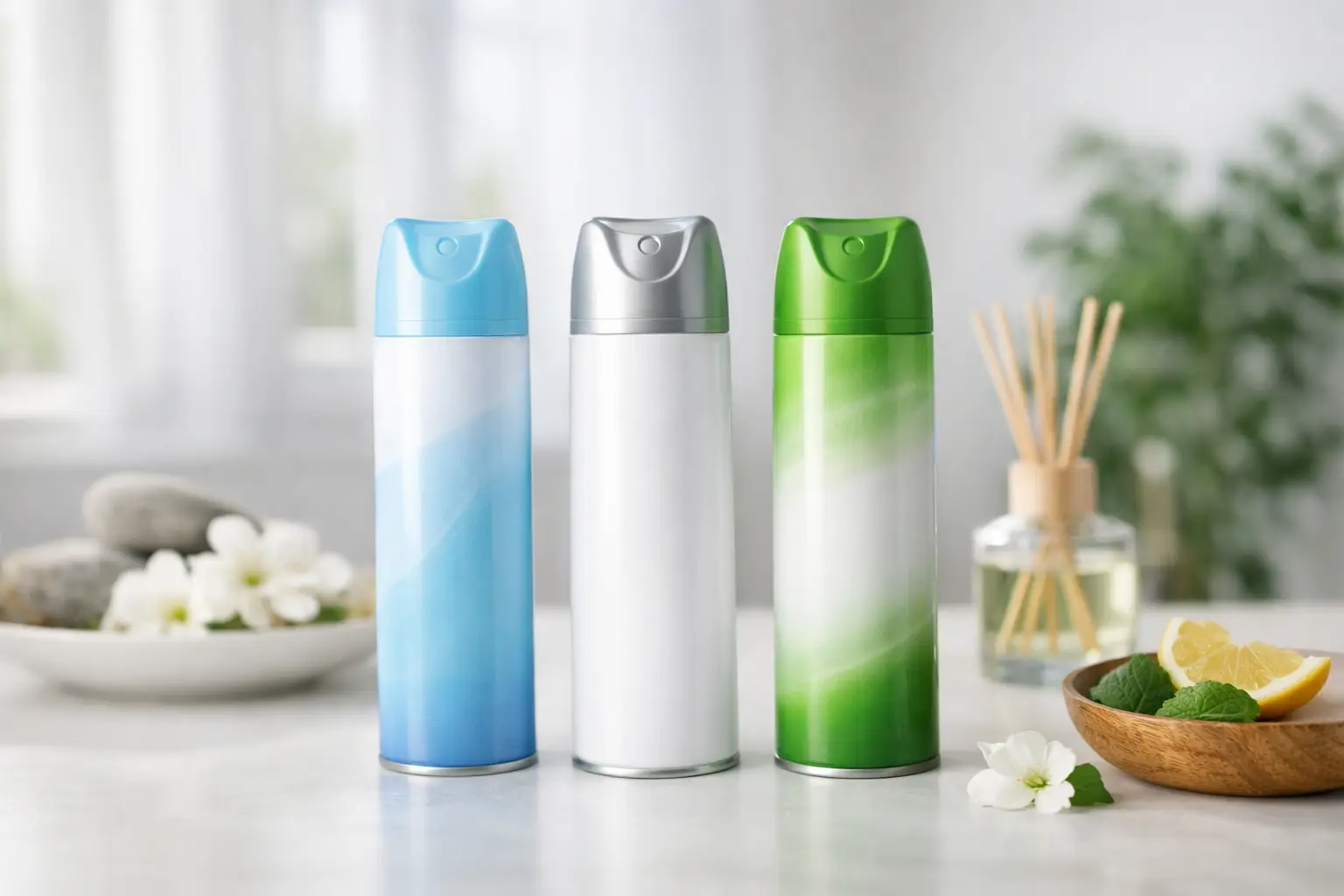
Most aerosol fresheners are built to scent the air quickly. Press the nozzle, release a fine mist, and the room smells like tropical rain, fresh linen, vanilla cupcake, or whatever marketing department decided heaven smells like this quarter. That immediate scent can be satisfying, especially after cooking fish, taking out trash, or realizing guests will arrive in six minutes.
But scenting air and addressing odor are not the same thing. An unpleasant smell often comes from odor-causing compounds lodged in fabric, carpet, bedding, shoes, upholstery, or a grim little corner near the litter box. Spraying fragrance into the air can compete with that smell for your attention. It does not necessarily deal with the source itself.
A true odor eliminator is intended to be used closer to the problem: on the fabric, surface, or material holding onto the odor. That distinction matters. If your curtains smell musty, the air may smell better for a moment after an aerosol blast, but the curtains are still plotting their comeback.
What Is Actually in an Aerosol Freshener?
An aerosol product uses pressurized propellants to push its formula out in a spray. The exact ingredients vary by product, but aerosol fresheners commonly combine fragrance ingredients, solvents, and propellants. The result is a wide, quick-reaching mist that can perfume a room faster than you can say, “Why does my apartment smell like wet towels?”
That delivery system has real advantages. It is fast, convenient, and useful for brief odor events in open air. A quick, targeted burst can take the edge off a bathroom, entryway, or kitchen garbage zone. It also takes almost no effort, which is why aerosol cans have haunted American cabinets for decades.
The trade-off is control. A broad mist can land on nearby surfaces, linger in the air, and make a small problem feel like an entire-room fragrance event. For ingredient-conscious households, synthetic fragrance can be a deal breaker or at least a reason to read the label with a skeptical eye. People with scent sensitivities, kids, pets, or simply a strong aversion to air that smells like aggressively moisturized fruit may prefer a lighter-handed approach.
Not every aerosol formula is identical, and not every scented product is automatically villainous. The useful question is simpler: What are you trying to fix, and what are you comfortable putting into your home?
When an Aerosol Can Makes Sense
There is no need to perform a dramatic cleansing ritual every time a room gets a little stale. Aerosol fresheners have a place when you want a short-lived burst of scent and the odor source has already been handled. Think of a freshly cleaned bathroom, a kitchen after the trash has gone out, or a quick refresh before company arrives.
They are less convincing when the same odor returns every day. If the bedroom smells like laundry that forgot its purpose, if the sofa has absorbed a year of popcorn and pets, or if shoes are generating a low-grade curse in the closet, repeated air spraying becomes a loop: spray, smell, spray again, question your life choices.
Persistent odors usually call for source control. Wash what can be washed. Dry damp materials thoroughly. Empty bins. Clean the pet area. Then use an odor eliminator suitable for the affected surface. This is less theatrical than nuking a room with perfume, but it tends to work better.
Aerosol Spray vs. Pump Odor Eliminator
A pump spray gives you more precision. Rather than releasing a cloud across half the living room, you can apply it directly to the blanket, upholstered chair, gym bag, mattress cover, or sneakers creating the issue. This approach is especially useful for soft surfaces, because fabrics hold odors far more stubbornly than open air.
The formula matters just as much as the bottle. Some sprays are mainly fragrance products in a different package. Others are formulated to neutralize odors while using naturally derived ingredients and essential oils for scent. If clean-air living is the goal, look beyond claims like “fresh” or “odor control.” Those phrases can mean almost anything, including “we put perfume in it and hoped for the best.”
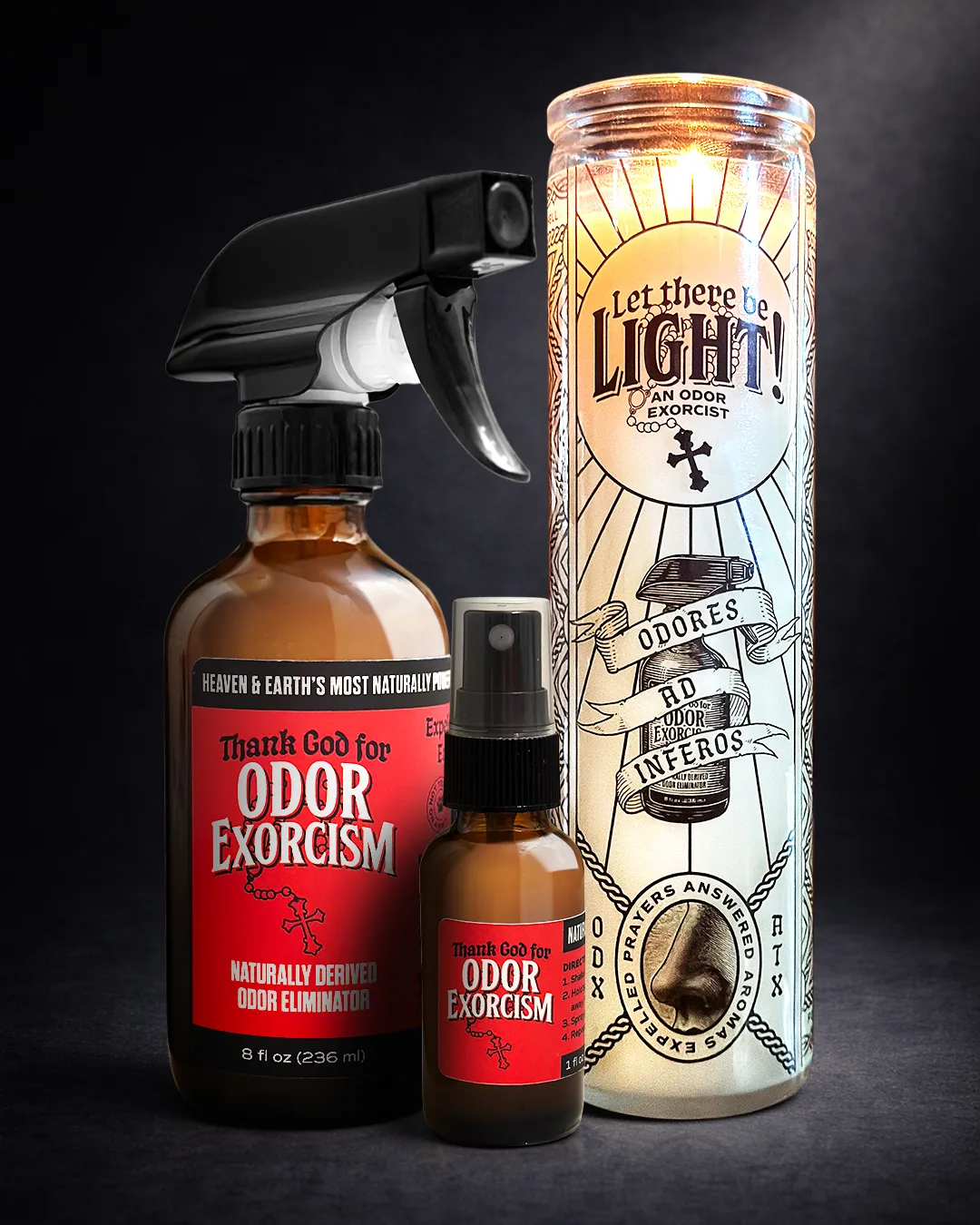
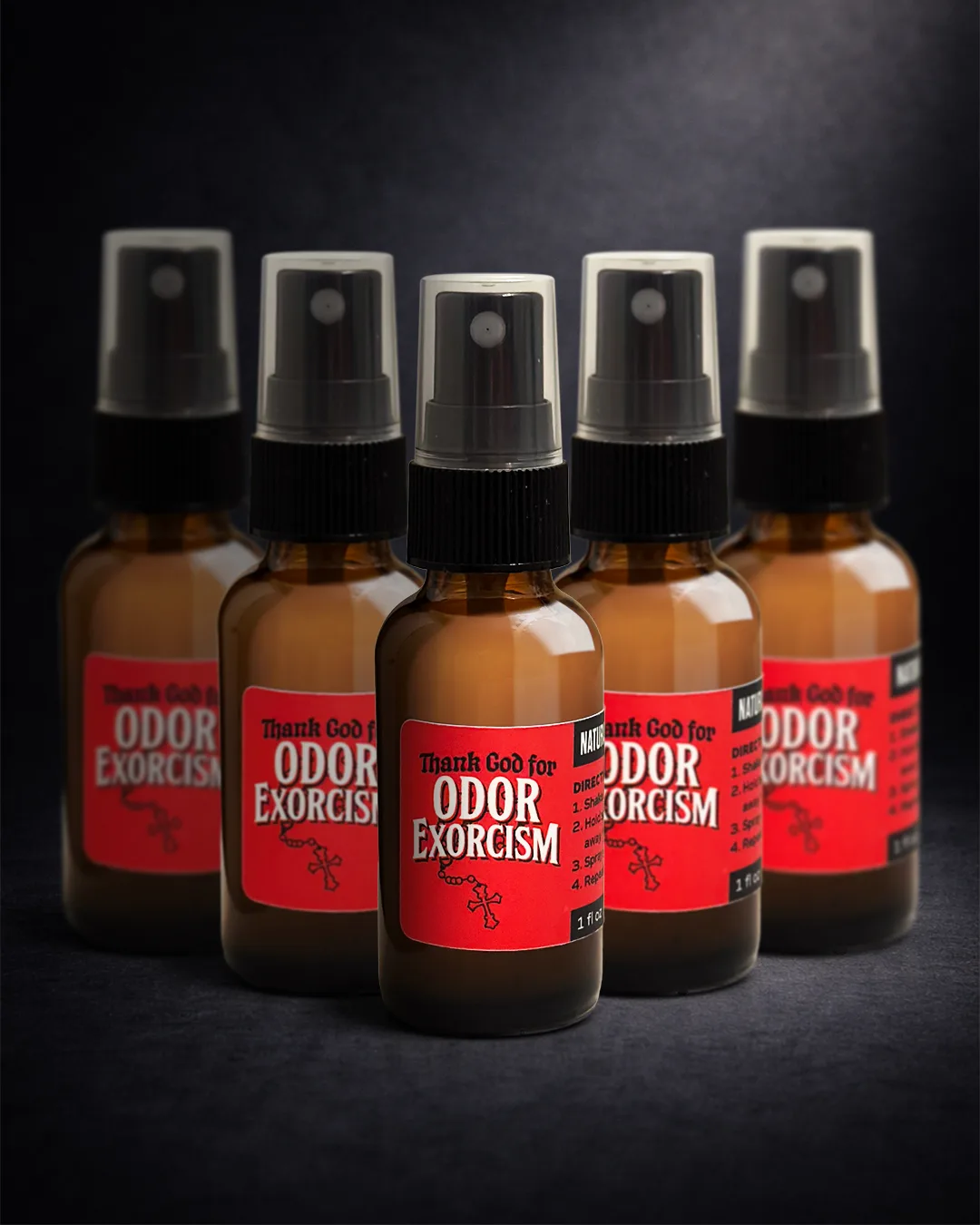
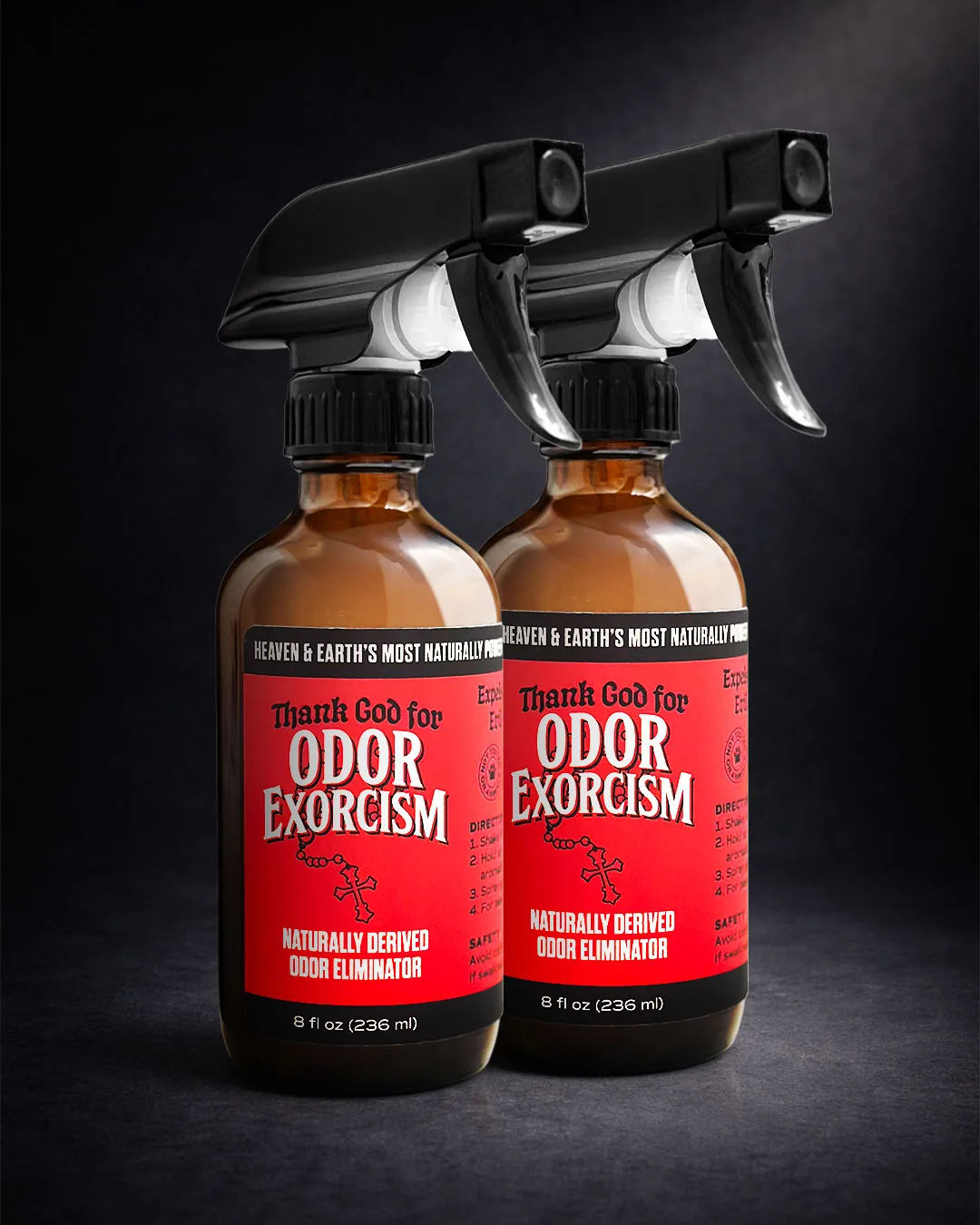
Odor Exorcism takes the latter route seriously: a naturally derived, essential-oil-based spray designed to neutralize odors on contact across household surfaces, without relying on a heavy synthetic-fragrance cloud. That makes more sense for the places odors actually hide, from bedding and carpets to plastic bins and shoes.
How to Choose Without Getting Bamboozled by the Label
A freshener label can be a tiny work of fiction. “Mountain breeze” says nothing about the ingredient list, the intensity of the scent, or whether it is appropriate for the surface you need to treat. Before bringing home another can or bottle, assess the product against your actual situation.
First, decide whether you need air scent, odor removal, or both. A scented aerosol may be enough for a temporary room refresh. For recurring odor in textiles or hard surfaces, look for a product that specifically states it neutralizes or eliminates odor and is suitable for the material involved.
Next, inspect the fragrance and ingredient positioning. If you avoid synthetic fragrance, seek transparency and naturally derived formulas. Essential oils are not scent-free, and “natural” does not mean every product suits every person or pet. Use products as directed, keep them out of reach of children, and test a small inconspicuous area before treating a valued fabric or finish. Even a sacred velvet sofa deserves a patch test.
Finally, consider scent strength. A strong fragrance may feel satisfying in a large, well-ventilated room, yet turn punishing in a dorm, apartment, nursery, or car. The best odor product should make the room feel clean, not announce itself from three zip codes away.
The Practical Verdict for Real Homes
Choose an aerosol freshener when the odor source is gone and you want a fast, temporary fragrance boost. Use it sparingly, ventilate when possible, and resist the urge to turn a two-second bathroom issue into a perfume apocalypse.
Choose a targeted odor eliminator when the smell lives in something: the blanket, the rug, the hamper, the shoes, the dog bed, the plastic storage tote with an unsettling backstory. Treating the source is usually more effective than freshening the air around it.
For many homes, the answer is not loyalty to one format. It is using the right tool at the right moment. But if your goal is a cleaner-smelling space without burying it beneath a synthetic floral séance, start at the source. Your nose, your couch, and anyone trapped in the car with your gym bag will be grateful.