How to Neutralize Bathroom Odors for Real
Evangelize


October 1, 2026
That mystery bathroom smell is rarely a mystery. It is usually a tiny crime scene hiding in plain sight: a damp hand towel, a sour bath mat, a toilet base that needs attention, or a fan that has been gathering dust like it pays rent. To neutralize bathroom odors for real, you have to evict the source instead of fogging the room with enough fake fragrance to summon a headache.
A bathroom is built for odor drama. It is warm, humid, full of fabrics, and often has limited airflow. That makes it the perfect little haunted house for mildew, bacteria, drain gunk, and stale air. The good news: you do not need to bleach every surface into the next dimension. You need a smarter routine that targets what is actually causing the stink.
Why Bathroom Odors Keep Coming Back
Most air fresheners treat odor like a witness protection problem. They cover it with a louder scent and hope nobody asks questions. A blast of tropical rain, lavender meadow, or “mountain breeze” may make the room smell less like a bathroom for five minutes. It does not remove the odor molecules embedded in fabrics, clinging to surfaces, or rising from the drain.
Bathroom odors usually come from moisture plus organic material. Think skin cells, soap residue, hair, toothpaste splatter, dirty water, and the occasional toilet mishap. When moisture hangs around, microbes get comfortable. Then the musty, sour, or ammonia-like smell starts making guest appearances.
The fix depends on the smell. A mildew smell calls for drying and cleaning fabrics. A sewer-like smell may point to a dry drain trap or plumbing issue. A lingering urine odor needs surface-level cleaning in places that are easy to miss. There is no single magic move, despite what the aerosol can with a beach photo would like you to believe.
How to Neutralize Bathroom Odors at the Source
Start by opening the window or turning on the exhaust fan before you clean. Ventilation does not erase odor sources, but it clears humid air so the room can dry properly afterward. If your fan sounds like it is fighting for its life and barely moves air, clean the cover and consider having it checked. A working fan is less glamorous than a candle, but it does more for a stubborn bathroom funk.
Wash the soft stuff more often than feels necessary
Towels, washcloths, bath mats, shower curtains, and fabric hampers are odor sponges in a room full of steam. If a towel smells musty even after it dries, it is overdue for a wash. Hang towels spread out instead of folded over a hook, and do not leave damp clothes on the floor to evolve into a new species.
Wash bath mats regularly and let them dry completely between uses. For shower curtains and liners, look closely at the lower edge and folds. Mildew loves those spots because apparently it has no standards. Clean according to the material’s care directions and replace a liner that stays stained or smelly after cleaning.
Clean the places that do not make the chore list
The toilet bowl gets attention because it is obvious. The toilet’s exterior is where odors can quietly linger, especially around the seat hinges, underside of the rim, base, and nearby floor. Wipe these areas with an appropriate cleaner and use a separate cloth from the one you use on the sink. This is not the moment to test your commitment to minimalism.
Also clean the trash can, including the underside of the lid and the interior bottom. Empty it before it becomes a damp collection of tissues, cotton pads, and unholy mystery moisture. If the can itself holds odor, washing it and letting it dry in the sun or a ventilated spot can make a surprising difference.
Do not ignore the vanity. Hair tools, cups, makeup bags, and toothbrush holders collect residue and standing water. Give them a wipe-down, dry the counter, and check beneath organizers where spilled products can turn tacky and sour.
Deal with drains before blaming the toilet
A bathroom drain can smell funky even when it is not visibly clogged. Hair, soap, skin oils, and product residue build up inside, creating a snack bar for odor-causing microbes. Remove hair from the stopper or drain cover, then clean the accessible surfaces with a bathroom-safe cleaner and a small brush.
If the smell is distinctly sewer-like, run water in rarely used sinks, tubs, or showers. The curved pipe beneath the drain holds water that blocks sewer gases. When it dries out, those gases can enter the room. If adding water does not help, or if you notice slow draining, gurgling, leaks, or a persistent sewage smell, call a plumber. No essential oil blend can exorcise a plumbing problem.
Dry the shower, not just your hands
A quick squeegee after showering is one of the least exciting habits with one of the best returns. It removes water from tile, glass, and doors before it feeds mildew. Leave the shower door or curtain open enough for air to circulate, and run the exhaust fan during the shower and for a while afterward.
If you share a bathroom with teenagers, roommates, or a family member whose showers last longer than a prestige TV series, make drying tools easy to grab. Put the squeegee where people can see it. A habit is more likely to happen when it is not buried in a cabinet behind twelve half-empty bottles.
Choose Odor Elimination Over Perfume Warfare
Once the bathroom is clean and dry, use a product that is designed to neutralize odor rather than bury it beneath synthetic fragrance. That distinction matters in a small room where a heavy aerosol can quickly become its own atmospheric emergency.
A naturally derived odor eliminator spray can be especially useful on the non-washable or awkward surfaces that hold on to stale smells: the outside of the trash can, the bath mat between washes, fabric shower curtains, upholstered stools, hamper interiors, or the floor around the toilet. Always follow the label, test a hidden spot first, and avoid spraying electronics, slippery floors, or surfaces that should stay dry.
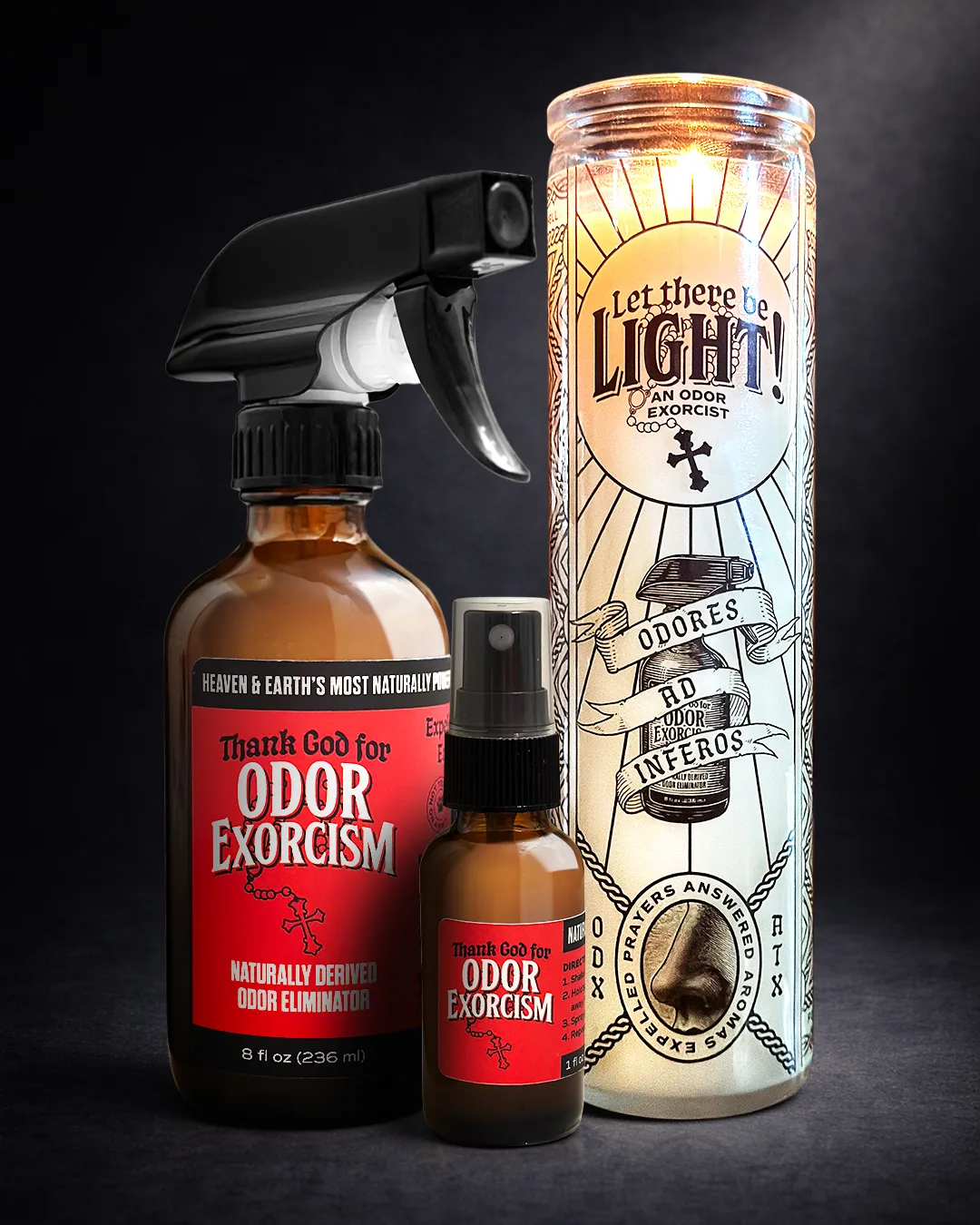
Odor Exorcism is made for this kind of household haunt. Its essential-oil-based formula is intended to neutralize bad smells on contact, without turning your bathroom into a chemical perfume aisle. That does not replace cleaning. It makes your clean bathroom smell clean, which is a dramatically more civilized outcome.
Candles can add atmosphere too, but use them as a finishing touch, not as evidence disposal. Never leave one unattended, and do not burn one to cover a strong sewer smell, active mold problem, or anything that suddenly seems electrical or smoky. Some demons require a professional, not a wick.
The Bathroom Odor Habits That Actually Stick
You do not need a color-coded cleaning calendar worthy of a military operation. You need a few small resets that prevent buildup. After showers, run the fan and spread out towels. Every few days, wipe the toilet exterior, sink area, and trash can. Once a week, wash bath mats or towels as needed, clear the drain cover, and clean the surfaces around the toilet.
Pay attention to changes. A new odor is useful information. Mustiness may mean hidden moisture behind a vanity or under a mat. A recurring urine smell may mean splashes are reaching the wall, grout, or floor seams. A sulfur or sewer odor may be plumbing. If cleaning does not touch it, stop adding fragrance and investigate the source.
When a Bathroom Smell Means Something Bigger
Some odors deserve more than a scrub brush. Persistent moldy smells, soft drywall, peeling paint, water stains, leaks under the sink, or recurring sewage odors can signal a moisture or plumbing problem. Renters should document the issue and notify property management. Homeowners should bring in the right pro before a small, stinky problem turns into an expensive renovation with a horror-movie budget.
The same goes for bathrooms with no exhaust fan. A window helps, but it may not be enough in a frequently used bathroom or humid climate. Better ventilation can protect paint, grout, fixtures, and indoor air quality while making odor control much easier.
A bathroom should smell like nothing at all, or like the clean scent you intentionally chose after the cleaning is done. Keep it dry, clean the sneaky surfaces, treat fabrics as the odor traps they are, and let odor elimination do the final banishing. Your nose deserves a room that does not fight back.