How to remove trash can odor for good at home
Evangelize


July 11, 2026
A trash can can look perfectly innocent from three feet away, then open its lid and release the kind of stench that makes everyone in the kitchen suddenly remember an urgent appointment elsewhere. The good news: learning how to remove trash can odor is less about covering it with fake lemon fog and more about removing the grimy residue feeding the smell.
The bag is rarely the whole problem. Leaks seep into the bottom, splatters cling beneath the rim, and moisture turns your bin into a tiny, unlicensed swamp. Deal with those odor sources directly, and your trash can can go back to its rightful role: holding garbage quietly, not haunting the room.
How to Remove Trash Can Odor Without Masking It
Start by taking the trash outside and removing the liner. If the liner leaked, do not just toss in a new bag and hope for divine intervention. That is how odors settle in and become a recurring household demon.
Use warm water and dish soap to wash the inside, outside, lid, rim, hinges, and bottom of the can. A scrub brush or old dish brush helps reach textured plastic and the narrow trench beneath the lid, where old food residue likes to establish its kingdom. For stuck-on grime, let warm, soapy water sit for five to 10 minutes before scrubbing.
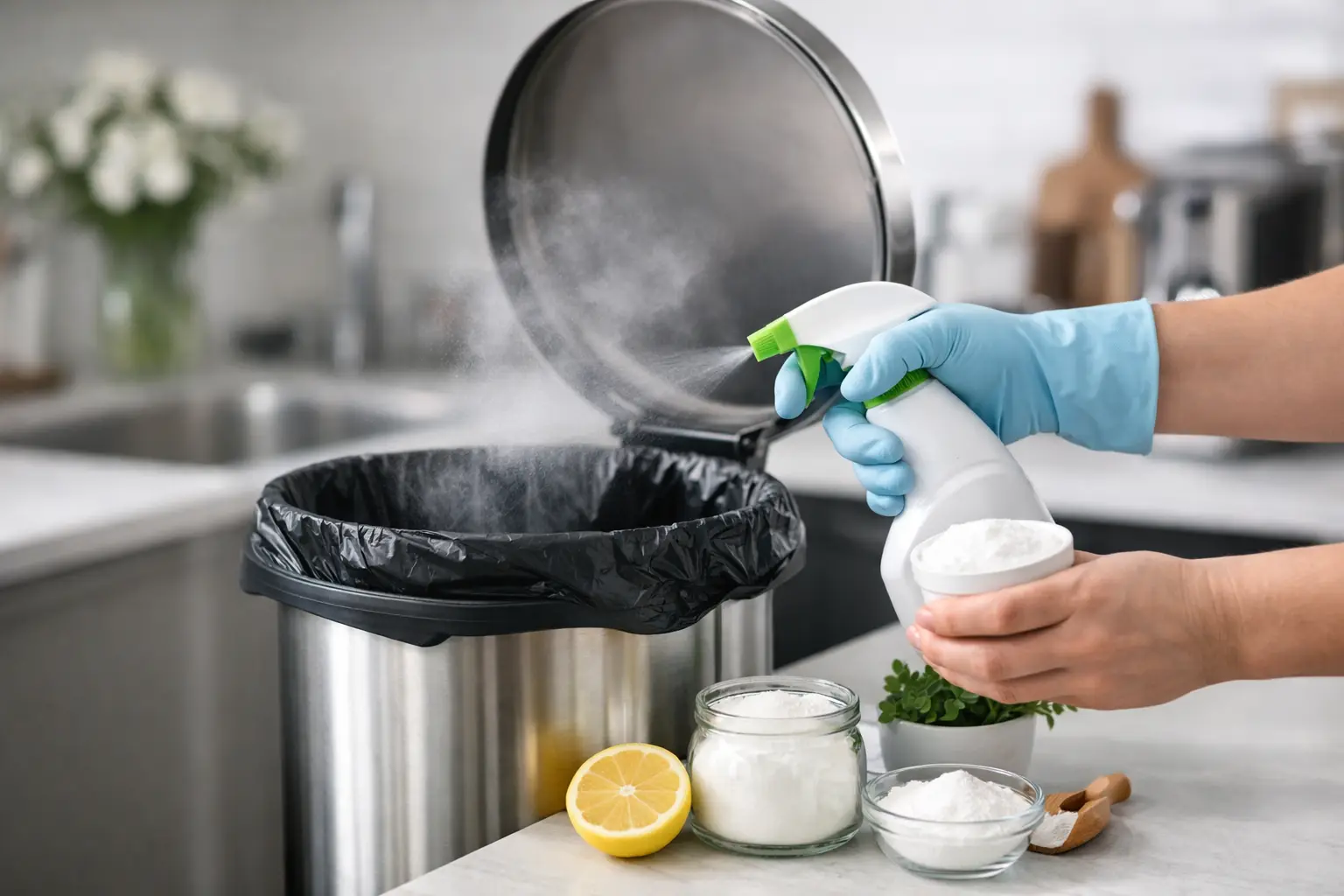
Next, tackle the smell itself. Sprinkle baking soda over the damp interior and add enough water to form a loose paste. Scrub it around the walls and especially into the bottom corners. Baking soda can help absorb and loosen lingering odors, but it works best after you have removed the actual gunk. It is a supporting actor, not the exorcist.
For a more stubborn smell, wipe the bin with a solution of equal parts white vinegar and water, then rinse it well. Vinegar has a strong smell of its own at first, but it fades as it dries. Never mix vinegar with bleach or other household cleaners. That chemical cocktail is not a cleaning hack. It is a bad decision with fumes.
Dry the can completely before adding a fresh liner. This step gets skipped constantly, which is why trash-can odor returns like a sequel nobody asked for. Moisture gives odor-causing bacteria and mildew a friendlier place to hang out, especially in plastic bins with tight-fitting lids.
Find the Hidden Source of the Stink
If you cleaned the bin and it still smells foul, inspect the parts that are easy to miss. The underside of the lid, pedal mechanism, handle, wheels, and the floor beneath the can may all be holding onto drips. In a cabinet pullout, check the cabinet base and rails too. One forgotten spill can perfume an entire kitchen with the aroma of yesterday’s chicken package.
Plastic trash cans are especially prone to holding odors because scratches and textured surfaces trap residue. A metal can may be easier to wipe down, but even stainless steel lids can hold sticky fingerprints, food splatter, and mystery moisture around the hinge. The material changes the cleaning approach a little, but the principle stays the same: remove residue, rinse thoroughly, and dry every surface.
If the odor seems to come from the room rather than the bin, look at nearby soft surfaces. Kitchen runners, fabric bins, reusable grocery bags, and even curtains can absorb cooking and garbage odors over time. Wash what is washable and treat fabric surfaces with an odor eliminator designed to neutralize odors rather than bury them under synthetic fragrance.
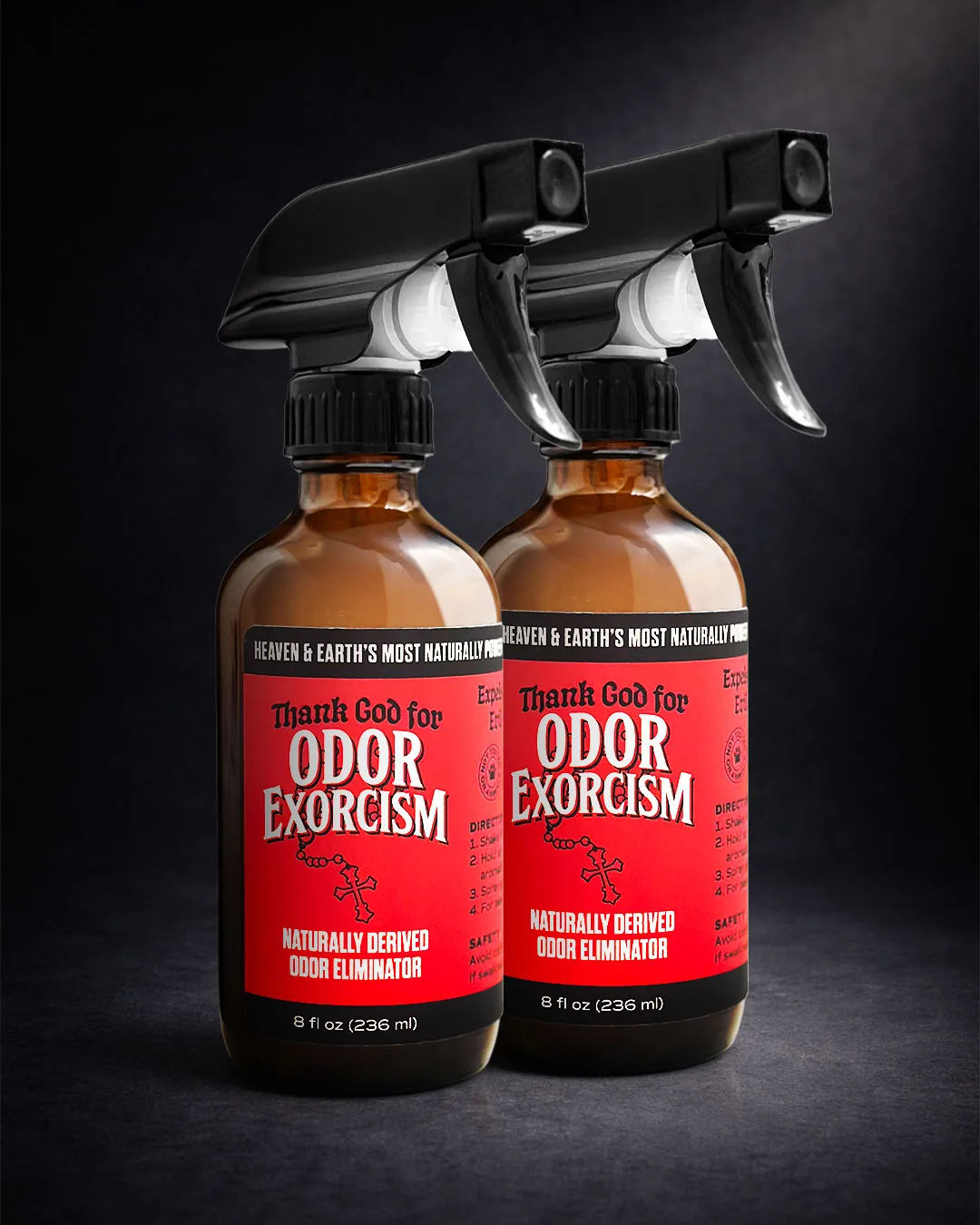
Odor Exorcism can be useful here for the lingering smell around the can, on nearby upholstery, mats, or other household surfaces that have caught the funk. The goal is not to make your kitchen smell like a candle aisle in a department store. It is to get rid of the offending odor so the room smells clean, period.
Keep Trash Can Odor From Coming Back
A clean bin needs a few small habits to stay civilized. First, use a liner that fits. An undersized bag slips down and exposes the sides of the can to leaks, while an oversized bag can bunch at the bottom and tear. Neither is an ideal containment strategy for banana peels and takeout sauce.
Wrap wet, messy trash before it goes in the bin. Meat packaging, seafood scraps, coffee grounds, used pet-food cans, and anything with sauce or grease deserve an extra barrier. A grocery bag, paper towel wrap, or sealed food-scrap container can make a meaningful difference, especially if trash pickup is still days away.
Put a small amount of baking soda in the bottom of the clean, dry can before inserting a new liner. You can also use an absorbent, washable pad beneath the bag if leaks are a frequent problem. Replace or wash it whenever it gets damp. This is particularly helpful for families, pet owners, and anyone whose trash can handles more chaos than a monastery during a possession.
Take out food-heavy garbage before it is full when the weather is hot. Heat accelerates smells, and a closed-lid can traps them for maximum dramatic effect. In apartments and dorms, where the trash may sit close to living areas, this matters even more. A smaller, more frequent trip beats trying to overpower three-day-old food waste with air freshener.
What About Charcoal, Dryer Sheets, or Scented Trash Bags?
Activated charcoal can help absorb odors in a dry trash-can bottom, and it may be a good option if you are sensitive to fragrance. Replace it periodically, because saturated charcoal cannot keep doing the job forever.
Dryer sheets and heavily scented trash bags mostly add fragrance rather than solve the source of the smell. If you like the scent, that is your call. But when garbage residue is still on the can, floral perfume plus old onion juice is not freshness. It is a cursed bouquet.
Scented bags can also be irritating for people who prefer to avoid strong synthetic fragrance in small indoor spaces. A clean, dry bin paired with frequent trash removal is usually more effective than any scented liner. Save fragrance for things you actually want to smell, like a candle burning after the garbage is gone.
When a Trash Can Needs More Than a Quick Wash
Sometimes the bin has crossed the line from dirty to deeply possessed. If odor returns immediately after cleaning, look for cracks, warped plastic, old leaks inside a double wall, or mildew around a sealed lid. A trash can with years of absorbed smells may simply be due for retirement, especially if it has a lot of scratches or cannot be thoroughly cleaned.
Outdoor bins need attention too. Hose them out on a dry day, scrub around the lid and wheels, and leave them open long enough to air-dry in sunlight if possible. Do not spray cleaners into an outdoor bin and leave the residue to run into a storm drain. Use a small amount of cleaner, rinse responsibly, and keep the cleanup contained.
For indoor cans, a regular deep clean every few weeks is reasonable for a busy kitchen. If you mainly toss dry packaging, you may only need to clean monthly. It depends on what goes in the bin, how warm your home is, whether you use a lid, and how often the bag leaks. Your nose is a fairly reliable maintenance schedule.
The best trash-can ritual is gloriously unglamorous: empty it before food waste turns feral, clean leaks when they happen, dry the bin fully, and neutralize any odor that escaped into the surrounding space. Do that, and opening the lid will no longer feel like cracking the seal on an ancient tomb.