Kitchen Sink Deodorizing Without the Chemical Choir
Evangelize


November 16, 2026
That smell rising from the sink is not your kitchen developing character. It is usually a greasy little congregation of food residue, bacteria, and trapped moisture throwing a basement revival inside your drain. Proper kitchen sink deodorizing is less about blasting the room with fake lemon perfume and more about evicting the source of the stink.
A clean-looking sink can still smell cursed. The trouble often lives below the drain opening, inside the garbage disposal, around the sink strainer, or in the overflow channel of the basin. Handle those spots with a little consistency, and your kitchen can smell like food was cooked there, not summoned there.
Why Your Kitchen Sink Smells Like Trouble
Kitchen drains collect more than water. Cooking grease clings to pipe walls. Tiny food scraps lodge under the disposal splash guard. Coffee grounds, sauces, dairy residue, and wet crumbs form a remarkably gross buffet for odor-causing microbes. Add a slow drain or a forgotten sponge, and the whole counter area can start smelling like a swamp in an apron.
The usual mistake is treating the symptom with fragrance. A heavily perfumed spray may make the room smell like tropical fruit battling a garbage can, but it does not remove what is decomposing in the drain. That scent cocktail is not freshness. It is chemical theater with bad reviews.
The better approach is physical cleaning first, followed by targeted odor neutralization on the surrounding hard surfaces. It takes a few minutes, costs less than a panic-buying spree of scented plug-ins, and produces a result that does not announce itself from the next room.
Kitchen Sink Deodorizing Starts at the Drain
Start by clearing the obvious debris. Remove the sink strainer and empty it into the trash or compost. Then wash the strainer with warm water and dish soap, using a small brush to get into the mesh and edges. Those slimy bits are not harmless. They are often the first choir members in the Funk Cathedral.
Next, scrub the sink basin, drain rim, faucet base, and the area behind the faucet. A soft sponge or brush with dish soap works well for routine buildup. If mineral deposits are part of the problem, use a cleaner appropriate for your sink material. Stainless steel, porcelain, composite granite, and natural stone each have different tolerances, so do not bring an abrasive scrubber to a delicate surface fight.
For most household drains, flush with hot tap water for a minute after washing dishes. The goal is to move loose residue along before it settles and starts its dark little kingdom. If your plumbing is older or you have PVC pipes, skip the temptation to pour boiling water down the drain. Very hot tap water is the safer choice.
If You Have a Garbage Disposal
The disposal is frequently the main suspect. Turn it off completely before cleaning it, and never put your hand inside. Lift the rubber splash guard if your model has one, then scrub both sides with a long-handled brush and soapy water. The underside is notorious for holding greasy sludge that never sees the light of day.
Run cold water when using the disposal, then let it run for several seconds after the grinding stops. Cold water helps fats stay more solid so they can move through the system instead of melting into a pipe-coating nightmare. Avoid sending grease, oil, fibrous vegetable peels, large bones, pasta, and coffee grounds into the disposal. It is not an all-devouring pit to hell, no matter how much it sounds like one.
Citrus peels can leave a pleasant temporary scent, but they are not a true cleaning solution. Use them sparingly, if at all, especially if your disposal is older. The fragrance fades. The grime remains unless you actually scrub it away.
If You Do Not Have a Disposal
Without a disposal, food scraps can collect right below the strainer or in the drain opening. Use a drain brush designed for sinks to gently clean the first section of the drain. Follow with hot tap water and a modest amount of dish soap.
If water drains slowly, the odor may be tied to a partial clog. A plunger made for sinks can sometimes dislodge buildup, but a persistent slow drain may call for a plumber. Do not keep escalating with harsh drain chemicals. They can damage pipes, create dangerous fumes, and turn a manageable mess into a plumbing exorcism with an expensive invoice.
The Baking Soda and Vinegar Question
Yes, baking soda and vinegar fizz. No, the fizz is not proof that your drain has been spiritually purified.
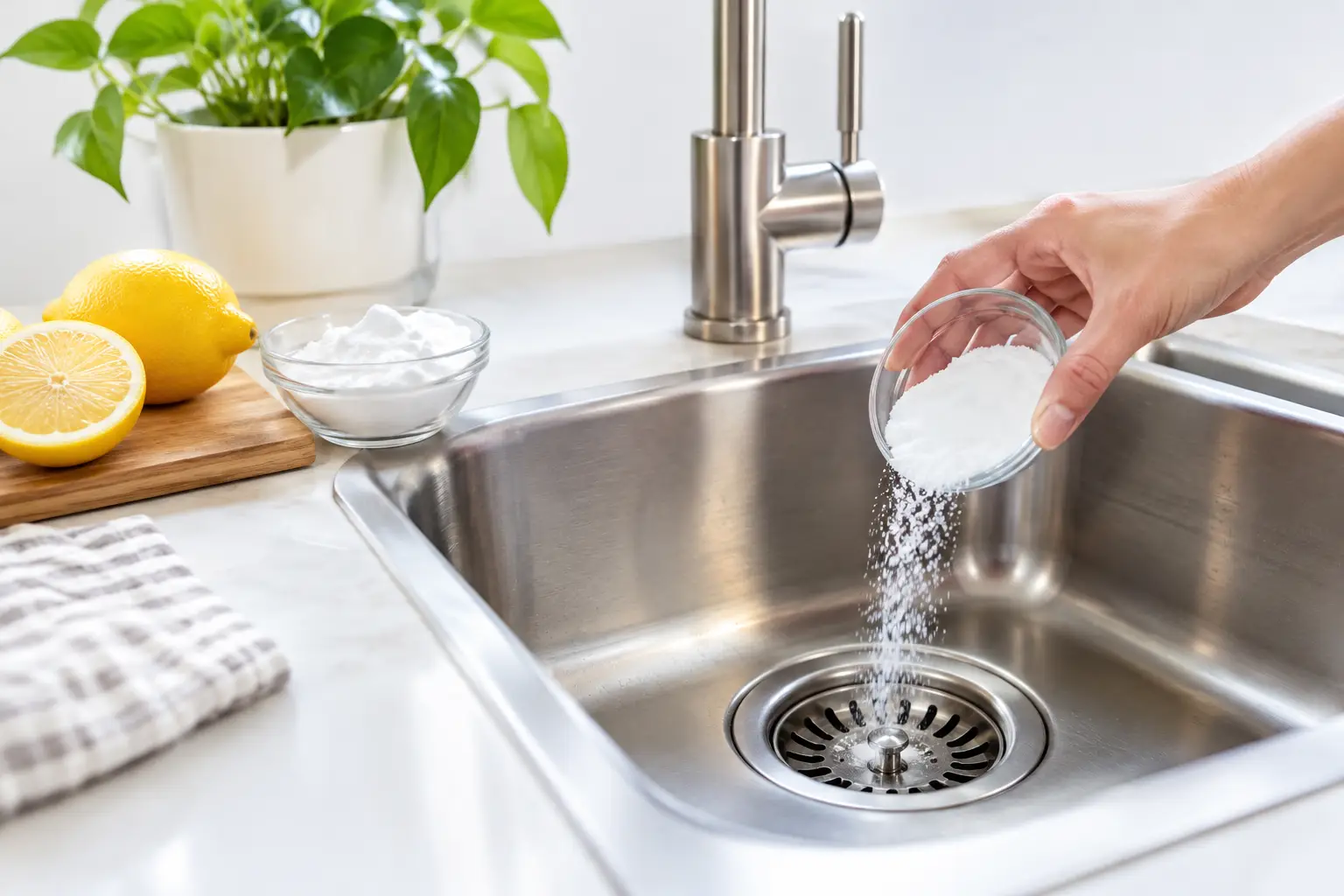
For light maintenance, baking soda can help absorb odors and provide mild scrubbing action around a drain opening. Vinegar can help with certain mineral residues on compatible surfaces. But when combined, their dramatic bubbling reaction mostly produces water, carbon dioxide, and a satisfying science-fair performance. It may loosen minor grime, but it is not a reliable fix for heavy grease, a serious clog, or persistent sewage-like smells.
If you use either ingredient, use it thoughtfully. Do not use vinegar on natural stone surfaces such as marble or some granite, where acid can etch the finish. Never mix vinegar, bleach, ammonia, or commercial drain cleaners. Mixing cleaning chemicals is how an ordinary Tuesday becomes a ventilation emergency.
For stubborn drain odor, physical cleaning beats home-remedy theatrics. Clean the strainer, scrub the disposal guard or drain opening, flush the drain, and address slow drainage. The mundane answer is often the one that works. Tragic for the drama, excellent for your nose.
Do Not Forget the Sink’s Supporting Cast
Sometimes the drain gets blamed for a smell that is actually coming from nearby. A damp dishcloth, sponge, scrub brush, or drying mat can carry enough odor to make a freshly cleaned sink seem guilty by association.
Wash dishcloths regularly and allow them to dry fully between uses. Replace old sponges before they become biological folklore. Clean the drip tray beneath soap dispensers, wipe under countertop appliances near the sink, and check the trash can, recycling bin, and compost container. If the smell appears only after running water, inspect the disposal and drain. If it lingers even when the sink is dry, look outward.
Hard surfaces around the sink can also hold cooking odors, especially wood trim, plastic drying racks, cabinet fronts, and the exterior of the trash can. After cleaning the source, use an odor-neutralizing spray formulated for household surfaces rather than reaching for a synthetic fragrance fog machine. Odor Exorcism can be used on compatible hard surfaces around the sink area to neutralize lingering funk without turning your kitchen into a perfume counter.
Always follow the product label and test an inconspicuous area first, particularly on unfinished wood, painted surfaces, or natural stone. “Natural” does not mean “spray it wildly on every object you own.” Even saints read directions.
A Simple Routine That Keeps Funk From Returning
Kitchen sink deodorizing works best as maintenance, not a once-a-season crisis response. After cooking, scrape plates into the trash or compost before rinsing. Wipe the basin after handling meat, dairy, or strong-smelling foods. At the end of the day, rinse the drain with hot tap water and leave the sink as dry as practical.
Once a week, take a few extra minutes to remove and wash the strainer, scrub the drain rim, clean the faucet base, and inspect the sponge. If you have a garbage disposal, clean the splash guard and run cold water while the disposal operates. This is not glamorous. Neither is discovering your kitchen smells like an abandoned bait shop when friends arrive.
A monthly check is also useful for slow drainage, leaks under the cabinet, and odors that return immediately after cleaning. Persistent rotten-egg, sewage, or moldy smells can point to a plumbing issue, dry trap, leak, or venting problem. At that point, put down the lemon-scented desperation and call a qualified plumber.
Your sink does not need to smell like a fake orchard to smell clean. It just needs the gunk removed, the surrounding surfaces refreshed, and the small daily habits that keep the demons from moving back in.