How to Remove Refrigerator Odors for Good
Evangelize


August 25, 2026
That weird refrigerator smell is not a personality trait. It is a tiny domestic demon, usually hiding under a crisper drawer, inside a forgotten container, or in the rubber door gasket where no sponge has ventured since the last eclipse. Learning how to remove refrigerator odors means dealing with the source first, not spraying a tropical perfume cloud over the evidence.
A fridge should smell like almost nothing. Maybe cold air, fresh produce, and the faint confidence of someone who labels leftovers. If it smells sour, fishy, musty, sweet-rotten, or like a science experiment escaped its jar, your refrigerator is asking for an exorcism.
First, find the odor’s unholy origin
Before cleaning, take everything out. Yes, everything. A half-empty mustard bottle may be innocent, but a takeout box from two weeks ago is capable of crimes against kitchen air.
Check expiration dates, but do not rely on them alone. Open containers of leftovers, produce bags, dairy, deli meat, and condiments that have been lingering in the back. Toss anything moldy, leaking, suspiciously fuzzy, or so old you have to calculate its era. Potatoes, onions, garlic, overly ripe fruit, seafood, cheese, and spilled meat juices are frequent offenders.
Pay attention to packaging. A sealed container can still have residue on its outside, and a bag of produce can trap liquid at the bottom. If one item smells especially aggressive, remove it from the house trash promptly. Otherwise, the kitchen garbage becomes the sequel nobody requested.
Once the obvious culprit is gone, give the empty fridge a sniff test. If the smell remains, it has likely settled into a spill, a drain pan, or a porous surface.
How to remove refrigerator odors with a real clean
Unplug the refrigerator if you will be cleaning it thoroughly or moving drawers around for an extended period. For a quick clean, keep the door open only as long as necessary and place perishable food in a cooler with ice packs.
Remove shelves, drawers, and bins. Wash them in warm water with a mild dish soap, then rinse well and dry completely. Sudden temperature changes can crack glass shelves, so let cold glass warm slightly before running it under hot water. The goal is odor removal, not an accidental glass sacrifice.
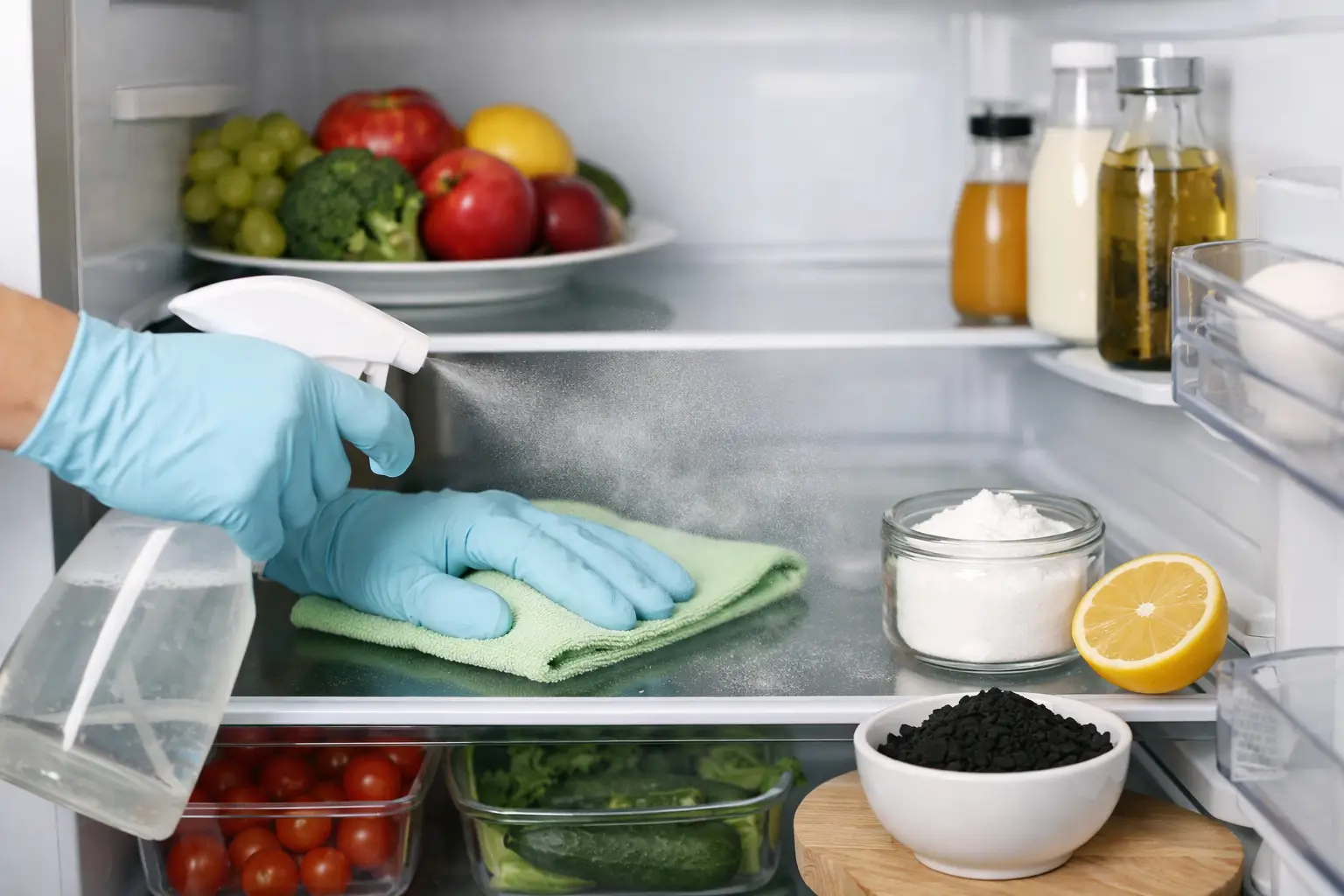
For the refrigerator interior, wipe walls, shelf supports, and the underside of shelves with a soft cloth and a mild cleaning solution appropriate for food-storage surfaces. A mixture of warm water and baking soda is a classic choice for stubborn smells and dried spills. Use about two tablespoons of baking soda per quart of warm water, wiping carefully rather than flooding the interior.
Do not forget these grime-friendly hiding places:
- The rubber door gasket, especially its folds and lower corners
- The tracks beneath crisper drawers
- The underside of drawers and removable bins
- The back wall, where condensation and drips collect
- The drain opening, if your refrigerator model has an accessible one
Use a soft toothbrush or small cleaning brush for gasket grooves and drawer tracks. Wipe with a clean damp cloth afterward, then dry every surface. Moisture left behind can create a musty comeback tour.
Deal with the drain and drip pan
If the refrigerator still smells after a deep interior clean, consult your appliance manual for the drain location and drip-pan access. A clogged defrost drain can hold stagnant water, food particles, or mildew, producing a smell that laughs at surface cleaning.
Some drip pans are easy to remove; others are not meant to be handled without moving the appliance or calling for service. Do not force parts loose or pour random chemicals into a drain tube. Warm water and the manufacturer’s instructions are wiser than turning a fridge repair into a low-budget horror film.
Neutralize what cleaning leaves behind
Cleaning removes the physical source. Neutralizing helps with the stale odor molecules that may linger after the mess has been banished. This is where people often reach for heavily fragranced air fresheners, which can create a refrigerator that smells like vanilla fish. Hard pass.
An open box of baking soda can help absorb everyday refrigerator odors, especially after you have cleaned the space. Replace it regularly, usually every few months, and do not expect one exhausted box to defeat a month-old spill. Activated charcoal can also help with lingering odors, provided it is kept in a suitable open container and away from food contact.
If removable plastic bins still hold a smell after washing, let them air out completely before returning them to the fridge. Sunlight can help some plastic items, but avoid leaving parts in intense heat long enough to warp them. For stubborn odor on the outside of removable bins, handles, or nearby kitchen surfaces, a naturally derived odor-neutralizing spray such as Odor Exorcism can be useful when used according to its label. Keep any odor product away from food and food-contact surfaces unless the label specifically says otherwise.
The distinction matters: fragrance masking is not odor elimination. If a product merely adds perfume, it may make the smell feel less obvious for a while, but the original source can still be plotting beneath the crisper drawer.
When the smell is fishy, burnt, or chemical
Not every refrigerator odor is a cleaning problem. A persistent fishy, burning, electrical, or chemical smell deserves more caution than another round with a sponge.
A burnt smell can point to dust on components, a failing fan motor, wiring trouble, or another mechanical issue. A chemical odor may come from new plastic parts, a spill, cleaning products, or, rarely, an appliance problem. If the odor is strong, unusual, or paired with poor cooling, strange noises, overheating, or visible leaking, move food to a safe location and contact a qualified appliance technician.
Do not try to cover these odors with candles, sprays, or blind optimism. The demon may have a warranty claim.
Keep refrigerator odors from rising again
The easiest way to prevent refrigerator smells is to stop spills and forgotten food from becoming permanent residents. Store leftovers in airtight containers, label them with the date, and make a weekly sweep before grocery shopping. If you cannot identify what a container holds without opening it, it has already gained too much power.
Wash produce when you are ready to use it, not always before storage. Excess moisture can speed decay for certain fruits and vegetables. Keep raw meat securely wrapped and placed on a lower shelf or in a tray so leaks cannot drip onto produce or drawers below.
A few habits make a major difference:
- Wipe spills immediately, especially milk, meat juices, and sauce drips.
- Check produce drawers twice a week for soft or leaking items.
- Clean shelf edges and drawer tracks monthly, even if the fridge looks fine.
- Keep the temperature at or below 40°F to slow bacterial growth and food spoilage.
Also, resist the urge to pack every inch of the refrigerator. Cold air needs room to circulate. An overstuffed fridge can create warm pockets, speed spoilage, and turn your carefully bought groceries into odor-producing chaos.
FAQ: Why does my refrigerator smell even after cleaning?
The most common reason is that the source is still hiding somewhere: under drawers, in the door gasket, inside a drain, on the exterior of a container, or in a drip pan. Plastic can also retain odors, especially after contact with strong foods like onions, fish, or spoiled dairy.
If the smell returns quickly, inspect your food storage habits and refrigerator temperature. A fridge that is running too warm can cause food to spoil faster, while a clogged drain or appliance issue may require service rather than more cleaning.
A fresher fridge is mostly about follow-through
You do not need to perfume your food storage like a department-store candle aisle. Remove the offending item, clean the surfaces that caught its fallout, dry the refrigerator thoroughly, and use a true odor neutralizer only where it makes sense. Do that consistently, and the only thing haunting your fridge will be the memory of that leftover you should have thrown out last Tuesday.