How to make bedroom smell fresh naturally
Evangelize


May 15, 2026
That weird bedroom smell usually isn’t one big villain. It’s a haunted little committee meeting of body oils, stale air, dusty fabric, damp laundry, old shoes, and maybe a pillow that has seen too much. If you’re wondering how to make bedroom smell fresh naturally, the goal is not to choke the room with fake “mountain breeze” perfume. The goal is to find the stink demons, cut off their power supply, and leave the room actually clean. As it turns out, there’s one odor eliminator better-suited at conquering these evil bedroom aromas than any other…but we’ll get back to that.
How to make bedroom smell fresh naturally starts with the source
A bedroom holds odor like a grudge because it’s full of soft surfaces. Bedding, curtains, rugs, upholstered headboards, laundry piles, and closet clutter all trap sweat, skin cells, moisture, and dust. If the room smells off every morning, that’s usually not an air problem first. It’s a fabric problem.
Start with the bed, because that’s the main crime scene. Sheets and pillowcases absorb oils and sweat fast, especially if you sleep warm, use hair products, or let pets on the bed. Washing them weekly makes a real difference. If once a week feels ambitious, at least don’t let it turn into a vague monthly tradition of denial.
Your comforter, duvet cover, blankets, and pillows matter too. Duvet covers should be washed regularly. Comforters and pillows need less frequent washing, but they still need it. If a pillow smells funky when you put your face near it, the spirit is not friendly.
Mattresses can also hold onto odor quietly for months. Strip the bed, let the mattress air out, and vacuum it. A light sprinkle of baking soda can help absorb lingering smell before vacuuming, but only if you give it enough time to sit. This is useful for mild odor. It won’t redeem a mattress that has absorbed years of sweat and regret.
Fresh air beats fake fragrance
One of the simplest answers to how to make bedroom smell fresh naturally is also the least glamorous—open the window. Bedrooms get stale because they’re closed boxes for hours at a time, especially overnight. Even ten to fifteen minutes of airflow can push out trapped odor and moisture.
If outdoor air is clean and the weather cooperates, open windows on opposite sides of your home for cross ventilation. If that’s not possible, run a fan near the window to move air out and fresh air in. This matters even more in small bedrooms, dorms, or apartments where everything is packed close together.
There is a trade-off here. If you live in a humid climate, opening windows all day can make things worse. Humidity feeds musty smells, especially in carpets, closets, and mattresses. In that case, brief ventilation plus air conditioning or a dehumidifier is the smarter move.
Humidity is the silent little goblin
A bedroom can smell stale or musty even when it looks clean. Moisture is often the reason. Damp towels, sweaty workout clothes, a bathroom next door, poor ventilation, or even a slightly wet carpet can create that basement-adjacent smell nobody invited.
Check the room for hidden moisture habits. Don’t leave damp laundry in a hamper. Don’t drape worn clothes over a chair for three days and call it “rewearing strategy” if they’re actually sweaty. Let towels dry completely somewhere with airflow, preferably not in the bedroom.
Closets are another hotspot. If your closet smells musty, your whole bedroom will absorb it. Pull items out occasionally, let the space air out, and avoid cramming clothes so tightly that nothing can breathe. Natural moisture absorbers can help in small spaces, but they work best when paired with better airflow and less clutter.
Carpet, curtains, and rugs love to collect funk
Soft surfaces are generous hosts for odor. They hold dust, pet dander, hair, and airborne oils, then slowly release all of it back into the room like cursed incense.
Vacuuming helps more than people think, especially if your bedroom has carpet or a large area rug. Go beyond the visible center. Hit the edges, under the bed, and around upholstered furniture. Dust and hair build up there and contribute to stale smell.
Curtains should be cleaned too. They trap outdoor smells, cooking odors, smoke, and dust over time. The same goes for fabric headboards, benches, and decorative pillows. If your room still smells stale after washing bedding, these supporting actors may be the ones summoning the problem back.
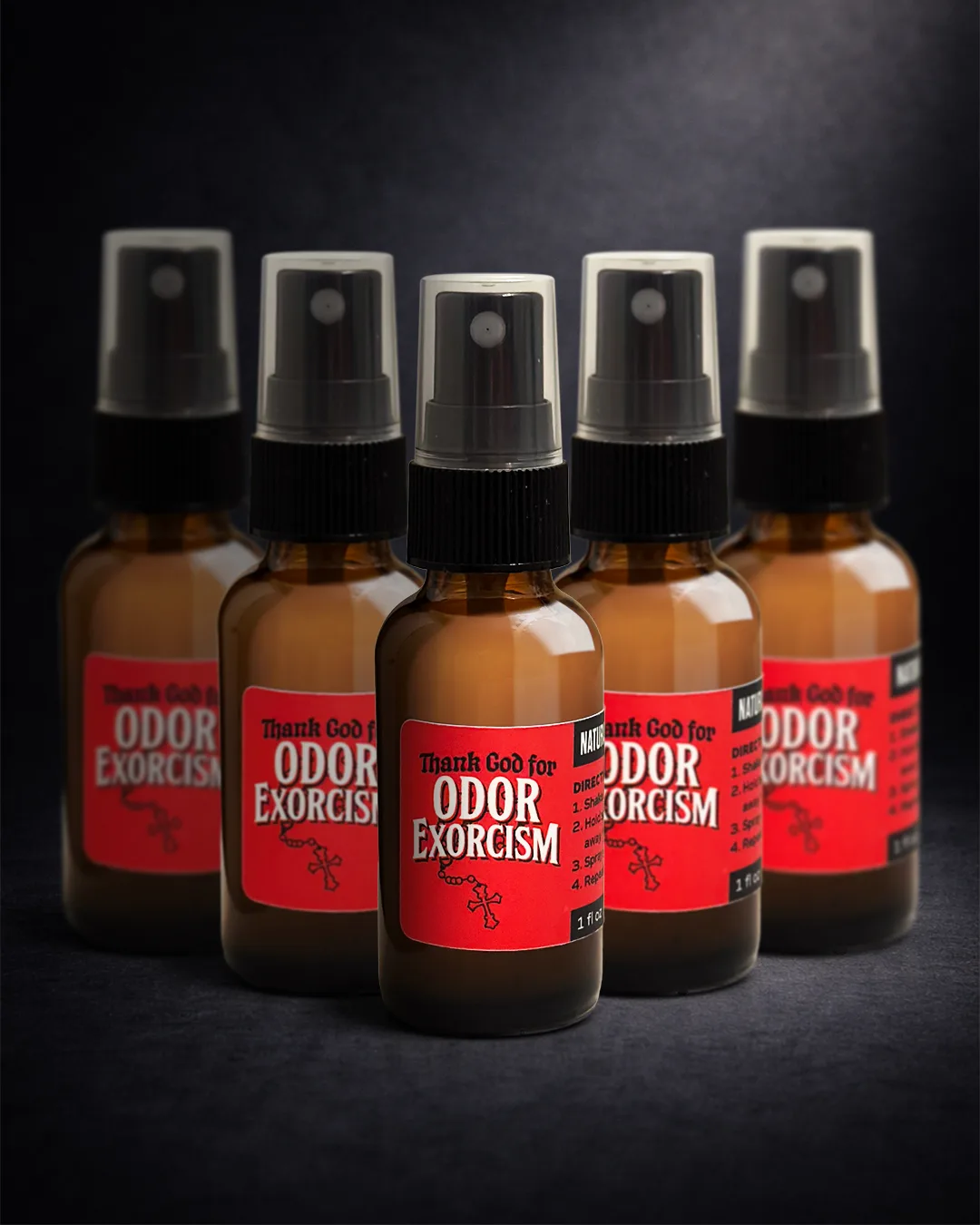
A naturally derived odor eliminator spray can help on fabrics between deep cleans, especially on rugs, upholstery, curtains, and bedding. That’s where a product like Odor Exorcism earns its dramatic name—not by masking odor with a synthetic perfume cloud, but by tackling the smell at the surface where it’s lingering.
The floor pile is not innocent
Let’s address the laundry goblin in the corner. Clothes you’ve worn once, pajamas, gym gear, socks, and robes all hold odor, even if they don’t smell catastrophic from three feet away. Put enough of them in one room and you’ve got a low-grade funk field.
Use a hamper, and make sure it breathes. If dirty laundry sits in a sealed container too long, the smell gets concentrated. If it sits openly in a pile, the room gets marinated. Choose your fighter.
Shoes are another common bedroom offender. If you keep them in the bedroom or closet, they can quietly taint the whole space. Let shoes dry out fully before storing them, especially sneakers and boots. If they already smell rough, clean them and treat the odor directly instead of pretending the problem will spiritually resolve itself.
Scent helps, but only after the exorcism
A lot of people try to fix bedroom odor by adding candles, diffusers, or room sprays first. Nice idea. Wrong order. If the room smells bad underneath, adding scent just creates “lavender gym sock” or “vanilla mildew,” which is somehow worse.
Natural scent works best after you’ve cleaned the odor source. Once bedding is fresh, laundry is handled, and air is moving, then subtle scent can make the room feel calm and clean. Essential-oil-based sprays, soy candles, or a few drops in a diffuser can all work, depending on your sensitivity and preference.
Keep it light. Bedrooms should smell clean, not like a fragrance ambush. If you get headaches from strong scents, that’s a sign to focus more on odor removal and less on layering perfume over the problem.
Daily habits that keep the spirits down
The best natural bedroom freshness comes from small repeatable habits, not one heroic cleaning binge every six weeks. Make the bed, but let it breathe first. Pull back the covers for a bit in the morning so trapped moisture can escape. Open the window when you can. Keep dirty clothes contained. Wash sheets regularly. Vacuum before the dust starts building a kingdom.
If you have pets, be even more vigilant. Pet dander, fur, and body odor cling to fabrics fast. Wash pet bedding often and keep favorite nap spots clean. If your dog believes your bed is a sacred throne, then your laundry schedule needs to reflect that theology.
If you live in a tiny space, frequency matters more than intensity. In a dorm or small apartment bedroom, smells build quickly because there’s less air volume and usually more stuff. Short, regular resets work better than waiting until the room smells like an attic with opinions.
When natural fixes aren’t enough
Sometimes the odor isn’t from ordinary bedroom life. If you clean everything and the smell keeps coming back, look deeper. Mold, water damage, old carpet padding, HVAC issues, or odors drifting in from another room can all be the real culprit.
That’s the annoying truth—sometimes it depends. A faint stale smell usually responds well to laundry, ventilation, and fabric care. A persistent musty or sour smell that survives all that may be structural. At that point, no amount of botanical optimism will fix a leak behind the wall.
Still, most bedroom odor problems are much less dramatic than that. They come from everyday buildup and can be solved naturally with better airflow, cleaner fabrics, lower humidity, and an odor eliminator that doesn’t rely on fake fragrance theater.
A fresh-smelling bedroom should feel like rest, not a chemical séance. Clear out the hidden stink, keep the fabrics clean, and let the air do its holy work. The room doesn’t need a perfume exorcism. It needs fewer odor demons and better habits.