Why cat pee leaves such a demonic odor (and how to exorcise it)
Evangelize


January 7, 2026
If you’ve ever shared your home with a cat, you know one undeniable truth: cat pee is pure odoriferous malevolence.
It’s not just bad—it’s persistent, pungent, and somehow manages to invade every corner of the house if not cleaned up right away. But why does it smell so uniquely foul compared to, say, dog urine? The answer lies in a combination of chemistry, biology, and a little feline instinct.
Let’s break down the science of cat pee, why it lingers, and what you can do to keep your home fresh.
The science behind the stench
Cat urine might seem like a simple bodily waste, but it’s a surprisingly complex cocktail of chemicals. It’s composed of urea, uric acid, creatinine, hormones, and various bacteria. When fresh, it doesn’t actually smell all that terrible. The trouble starts as it begins to break down.
When urea in cat urine decomposes (thanks to bacteria), it releases ammonia, that sharp, eye-watering scent most of us recognize immediately. Leave it a little longer, and it gets worse. Over time, the uric acid breaks down into compounds called thiols—the same sulfur-containing molecules found in skunk spray. That’s right: your cat’s litter box produces a chemical cousin of skunk odor.
And unlike other animals’ waste, cat urine contains highly concentrated uric acid. Cats are efficient desert survivors—they evolved to conserve water, meaning their urine is less diluted than ours (or a dog’s). It’s more potent, more acidic, and therefore much more possessed.
Why male cats smell worse
Not all cat pee is created equal. If you’ve ever noticed that your male cat’s urine seems particularly unbearable, you’re not imagining things. Male cats—especially unneutered ones—produce felinine, a sulfur-containing amino acid derivative linked to scent marking. And that scent is downright unholy.
Felinine helps transmit territorial and mating information. To another cat, this might say “This is my turf” or “I’m available.” To human noses, though, it translates to “burn your nostrils and ruin your couch.” When male cats are neutered, their hormone levels drop, and the production of felinine decreases significantly—making their urine less offensive.
Why it lingers (even after cleaning)
Anyone who’s tried to clean up cat pee knows that the smell seems to stick around forever. That’s because uric acid crystals are insoluble in water and can survive long after you’ve scrubbed and sprayed. Most common cleaners only mask the scent temporarily, while the crystals remain embedded in carpets, furniture, or even hardwood floors.
Whenever humidity rises, those crystals can rehydrate and release their odor all over again. That’s why even a “clean” spot can start to smell days—or weeks—later.
To truly remove the smell, you need an enzyme-based cleaner. These products contain natural enzymes that break down the uric acid into carbon dioxide and ammonia, which then evaporate completely. Without these cleaners, no amount of scrubbing will fully eliminate the odor.
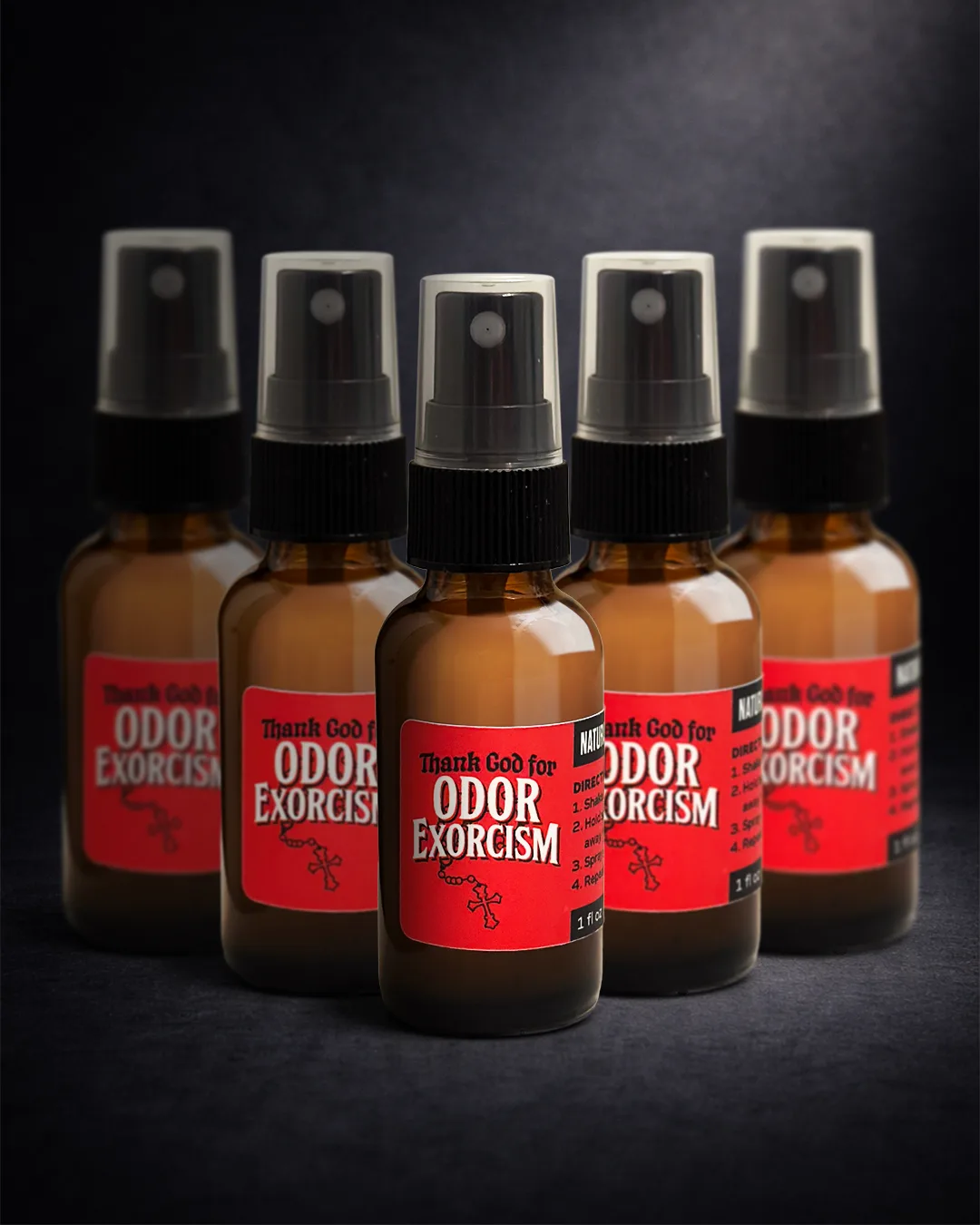
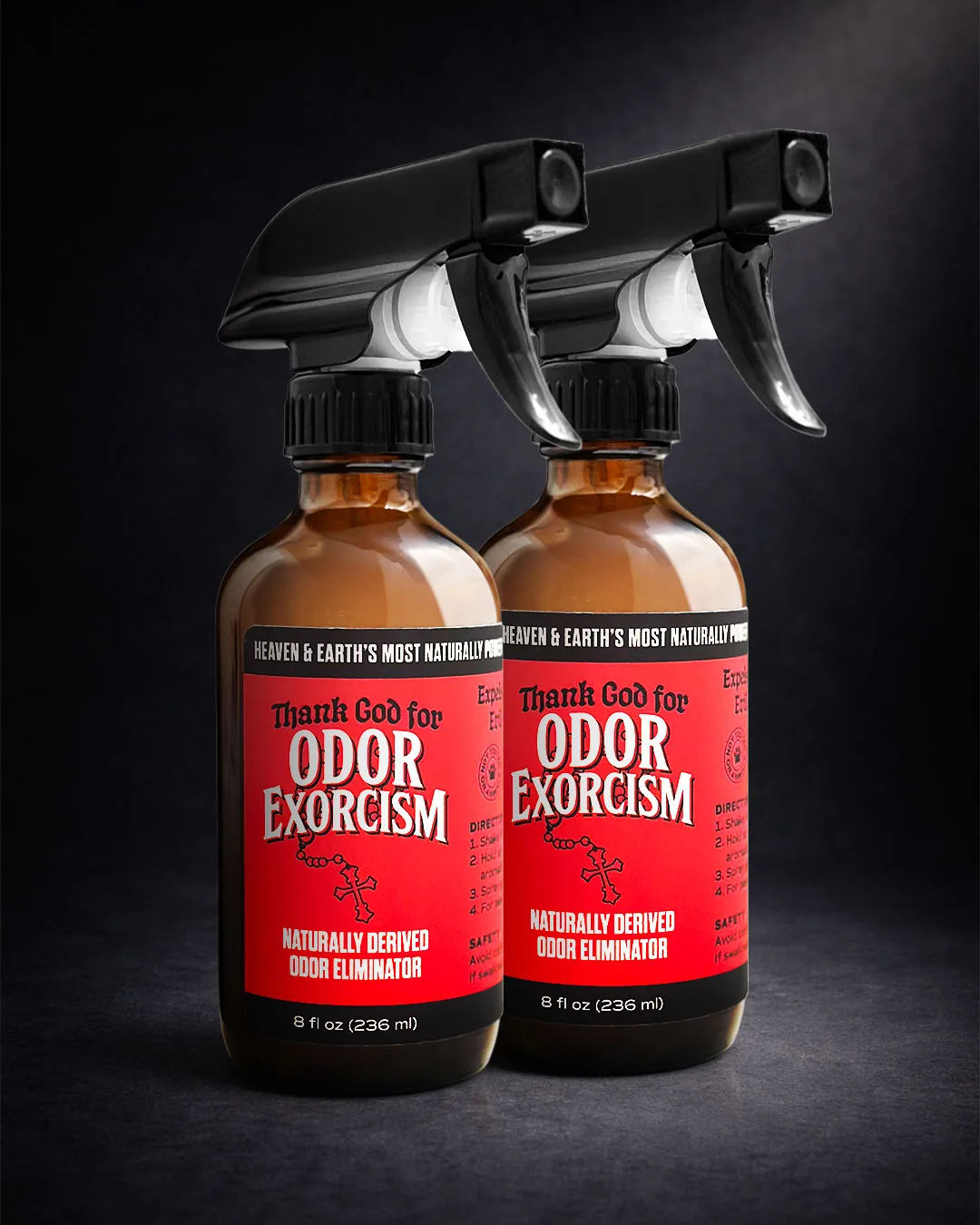
Full-transparency: Odor Exorcism is not an enzyme-based cleaner, and as such, it should only be used as a finishing touch after the spot has been cleaned with such a cleaner (especially for carpet accidents). We recommend Pure & Natural Pet Stain and Odor Remover (Fragrance Free). For plastic litter boxes, on the other hand, ODX is more than capable of cleaning up just such messes!
When the smell is trying to tell you something
Sometimes, a strong urine smell can signal more than a missed litter box. Changes in the scent of your cat’s urine can be a sign of health issues. For instance:
Sweet or fruity odor: May indicate diabetes.
Extremely pungent or ammonia-heavy smell: Could point to dehydration or kidney problems.
Frequent or outside-the-box urination: Might suggest urinary tract infections or bladder stones.
How to prevent and control cat urine odor
You can’t change your cat’s biology, but you can make a huge difference in keeping your home smelling fresh. Here’s how:
1. Scoop daily
Cats are fastidious creatures, and a dirty litter box often drives them to find “cleaner” alternatives—like your carpet. Scooping once or twice a day not only keeps your cat happy but also prevents odors from building up. Be sure to finish your cat litter cleaning with a spritz of Odor Exorcism directly on the plastic litter box.
2. Deep clean weekly
Empty and wash the litter box with mild, unscented soap once a week. Avoid harsh chemicals like bleach or ammonia, which can actually make cats avoid the box (and confuse them, since ammonia smells like urine).
3. Use the right litter
Some litters are specially designed for odor control, with activated charcoal or baking soda. Experiment until you find one your cat likes—because if your cat doesn’t like it, no amount of odor control will help. (Side note: the cats of the ODX clergy loooove ExquisiCat Litter Multi-Cat Paper Pellet Cat Litter – Unscented, Low Dust, Low Tracking, Natural.)
4. Keep enzyme cleaners handy
Accidents happen, even with the best-trained cats. Having an enzyme-based cleaner on hand ensures you can neutralize the smell before it sets.
5. Neuter or spay
If your cat isn’t fixed, marking behavior (and its corresponding odor) can be a persistent issue. Neutering reduces both the urge to mark and the intensity of the scent.
6. Watch their health
If you notice sudden increases in smell or frequency of accidents, a quick vet check can rule out infections, kidney issues, or metabolic problems.
A final thought: it’s not just the smell
Cat urine is one of those inevitable parts of pet ownership that no one talks about until it happens. The good news is that the problem is completely manageable once you understand what’s behind it. The odor isn’t just “bad luck”—it’s a biological signature of a remarkable animal that evolved to survive on minimal water, communicate through scent, and mark territory with precision.
So next time you catch a whiff, take a deep breath (preferably not too deep), and remember: it’s not your cat being gross—it’s nature doing its smelly job.