How odor eliminators actually work (a scientific explanation)
Evangelize



February 19, 2026
A plain-English guide to killing smells at the molecular level
If you’ve ever sprayed something that promised “fresh mountain air” only to watch a bad smell resurface minutes later, you already understand the core problem with most odor solutions.
They don’t eliminate odors. They decorate them. Enter: Odor Exorcism.
True odor elimination is not about scent.
It’s about chemistry, biology, and a little bit of molecular discipline. At Odor Exorcism, we focus on removing the cause of odors instead of disguising the evidence. To understand why that matters, it helps to know what odors actually are and how real odor eliminators shut them down.
Let’s clear the air, properly.
What odors really are (and why your nose can’t be fooled for long)
An odor is not a vague “smelly thing.” It’s a collection of airborne molecules that interact with receptors in your nose. Those molecules come from bacteria, decay, moisture, smoke, food residue, pets, mold, or chemical off-gassing. Once they’re airborne, they linger until something physically changes them or removes them.
Air fresheners typically work by overwhelming your nose with a stronger scent. For a brief moment, your brain is distracted. But the odor molecules are still there, unchanged, waiting for the fragrance to fade.
Odor elimination works differently. Instead of asking your nose to look the other way, it targets the molecules themselves. That’s the difference between hiding a problem and resolving it.
The four ways odor products try to work
Most products on the market fall into one or more of these categories. Understanding them makes it easy to spot what actually works.
1. Masking
This is the most common and least effective approach. Strong petrochemical-derived fragrances cover unpleasant odors temporarily. Once the fragrance dissipates, the original odor returns, often mixed with the scent you sprayed on top.
Masking smells good. It doesn’t solve anything.
2. Absorption
Some materials, like baking soda or activated charcoal, absorb odor molecules from the air. This can be useful in enclosed spaces, but absorption is passive and limited. Once the material is saturated, it stops working unless replaced.
3. Neutralization
Neutralization involves chemically interacting with odor-causing molecules to render them non-odorous. This approach changes the structure of the molecules so they no longer trigger smell receptors.
This is where real odor elimination begins.
4. Antimicrobial Control
Many persistent odors are caused by bacteria. Kill or suppress the bacteria, and the odor stops being produced. This is especially important for organic odors like trash, pet accidents, sweat, mildew, and food waste.
Effective odor eliminators often combine neutralization and antimicrobial action. (Odor Exorcism certainly does.)
Odor elimination at the molecular level (without the lab jargon)
Odor molecules tend to be small, volatile, and reactive. Many contain sulfur compounds, amines, or organic acids that the human nose is extremely sensitive to, even at very low concentrations.
When an effective odor eliminator is applied, one or more of the following happens:
- Odor molecules are broken down into non-smelling components
- Their chemical structure is altered so they no longer bind to odor receptors
- The bacteria producing them are disrupted or destroyed
- The environment that allows odors to regenerate is removed
The key is that the smell doesn’t just “go away.” It stops existing in the same form.
The ingredients that actually do the work
At Odor Exorcism, ingredient selection is deliberate. Each component plays a specific role in neutralizing odors, reducing odor-causing microbes, or preventing smells from returning.
Here’s how some of the key ingredients function behind the scenes (and in the bottle).
Limonene: nature’s solvent with a sharp mind
Limonene is a naturally occurring compound found in citrus peels. It’s often associated with a clean, bright scent, but its real value lies in how it behaves chemically.
Limonene is an effective solvent. That means it can break down greasy residues, oils, and organic buildup where odor-causing bacteria like to hide. Many stubborn odors cling to surfaces that aren’t truly clean, even if they look fine. Limonene helps strip away that invisible layer.
By removing the material that feeds odor-producing microbes, limonene doesn’t just freshen. It destabilizes the odor at its source.
Sodium citrate: quietly correcting the environment
Sodium citrate is a salt derived from citric acid, and its strength lies in pH control. Many odor-causing bacteria thrive in specific pH ranges. Shift the environment, and they struggle to survive.
Sodium citrate helps create conditions that are less hospitable to microbes without being harsh or corrosive. It also supports overall formula stability, ensuring the odor eliminator continues working as intended over time.
Think of it as environmental control rather than brute force.
Alcohol: fast action, broad impact
Alcohol serves multiple purposes in an odor eliminator, and speed is one of them.
It evaporates quickly, which helps carry active ingredients into porous surfaces like fabric, carpet, and upholstery. Alcohol also disrupts microbial cell membranes, reducing bacteria that generate organic odors.
Additionally, alcohol helps dissolve volatile odor compounds so they can be neutralized more efficiently. It doesn’t linger. It works, then gets out of the way.
Leucidal SF Max: targeting the microbial root
Many persistent odors are biological in origin. Trash smells, pet odors, mildew, and “mystery smells” often trace back to microbial activity.
Leucidal SF Max is a naturally derived antimicrobial preservative that helps control the growth of odor-causing bacteria and fungi. By interrupting microbial reproduction, it stops odors from being continuously regenerated.
This matters because even if you neutralize existing odor molecules, bacteria can simply produce more unless they’re addressed. Leucidal SF Max helps shut down that cycle.
Why some odors come back (even after you “got rid of them”)
If you’ve ever cleaned thoroughly, sprayed generously, and still noticed the smell creeping back days later, you’re not imagining things.
Recurring odors usually mean one of three things:
- The odor-causing material wasn’t fully removed
- The bacteria producing the odor survived
- The environment still supports odor regeneration
Surface-level treatments miss what’s embedded deeper in fabrics, cracks, drains, or porous materials. Effective odor elimination needs to penetrate, neutralize, and stabilize.
This is why products that combine solvent action, neutralization, and antimicrobial support outperform single-purpose sprays.
Odor elimination vs. “freshness”
Freshness is subjective. Elimination is measurable.
A truly eliminated odor doesn’t resurface when fragrance fades. It doesn’t reappear when humidity changes. It doesn’t linger in warm air or return when a room is closed up.
That’s the standard Odor Exorcism is built around.
We’re not interested in convincing your nose that everything is fine. We’re interested in ensuring your home smells like a holy sanctuary, for good.
Choosing an odor eliminator that works
When evaluating odor eliminators, look beyond scent descriptions and marketing language. Instead, ask:
- Does this product neutralize odors or mask them?
- Does it address bacteria or only airborne smells?
- Can it penetrate porous surfaces?
- Does it change the conditions that allow odors to return?
If the answer to most of those questions is no, the relief is temporary.
Clearing the air for good
Odors have a way of becoming personal. They affect comfort, confidence, and how spaces feel to the people inside them. Eliminating them properly isn’t about perfuming the air. It’s about restoring balance at the molecular level.
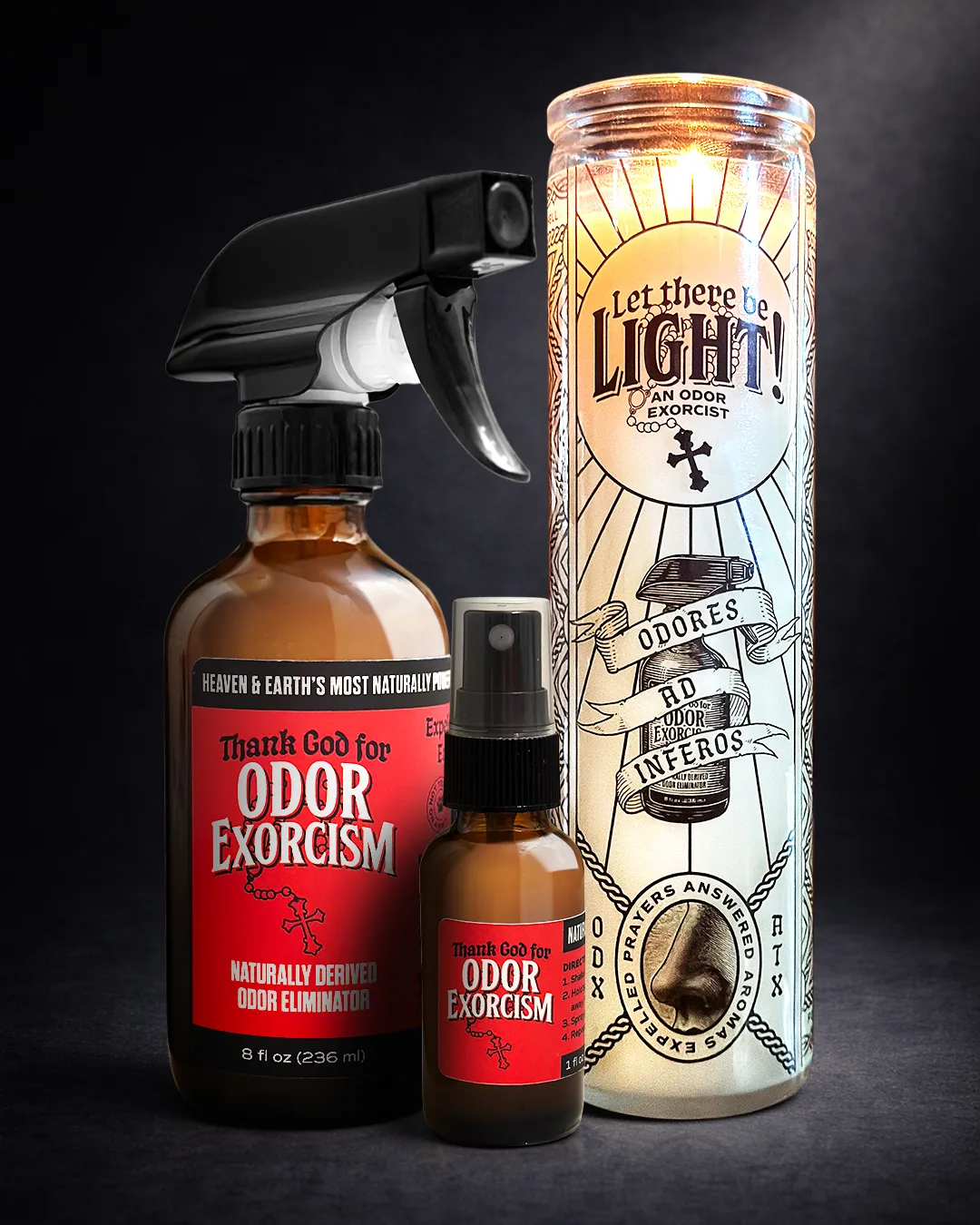
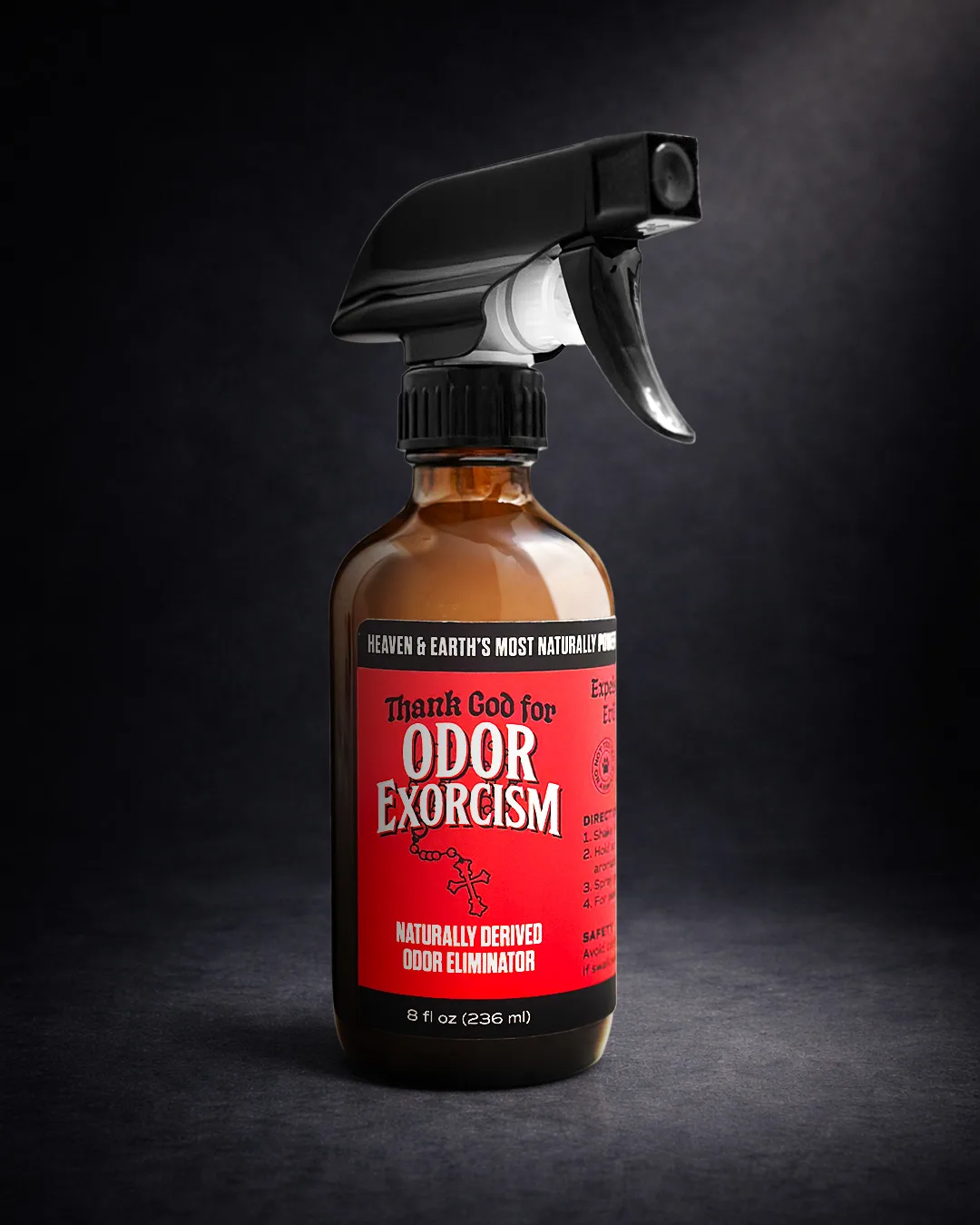
Odor Exorcism was created specifically to serve that end. With ingredients like limonene, sodium citrate, alcohol, and Leucidal SF Max working together, odor elimination becomes a process rather than a promise.
No smoke. No mirrors. Just fewer odor molecules, fewer microbes, and a space that finally smells like nothing at all.
And honestly, nothing smells better than that.